
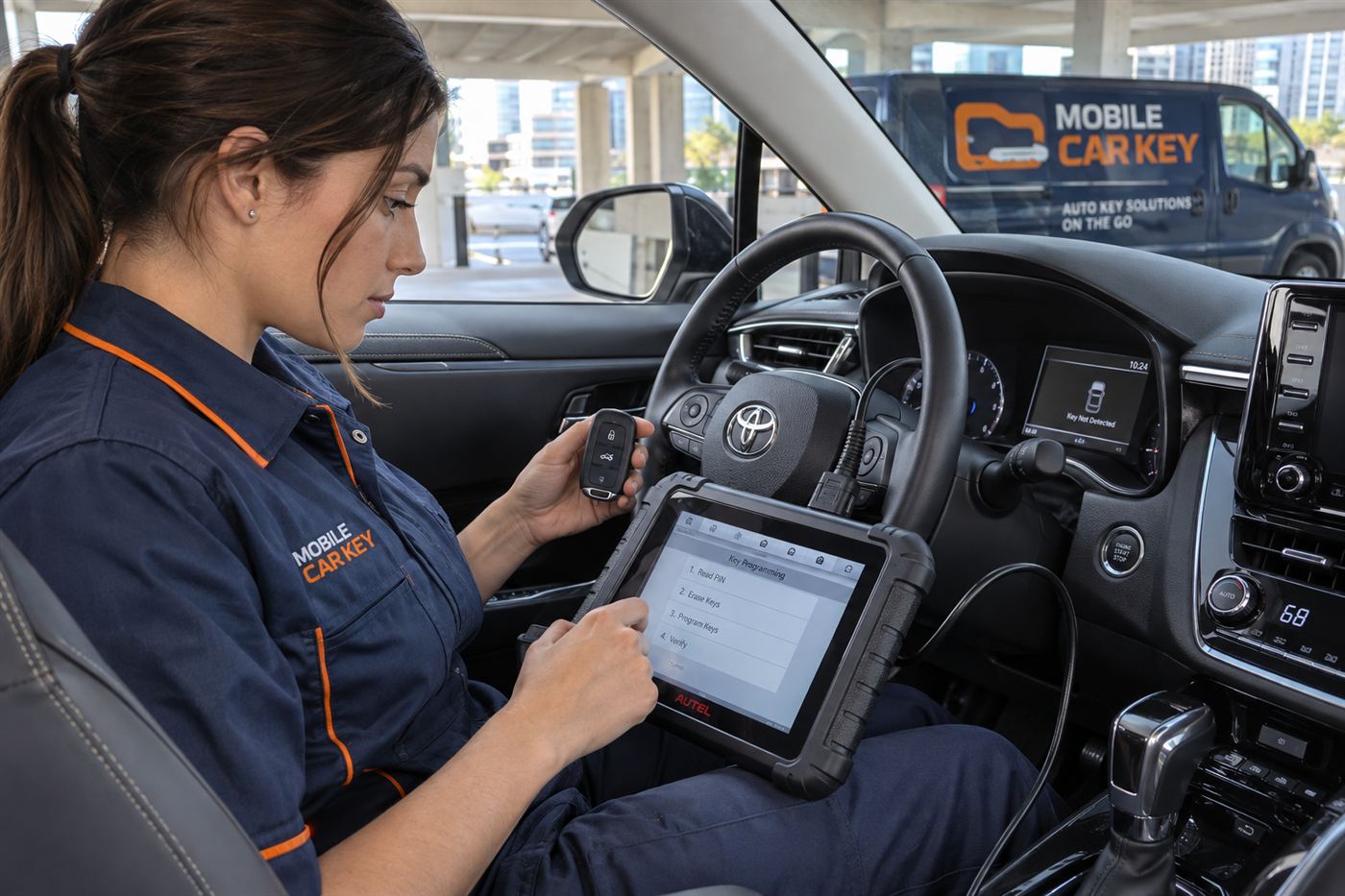
Why vehicle type is a useful way in
Think about how you actually talk about your vehicle. You probably say truck, minivan, hybrid or old convertible before you say the manufacturer. That is not an accident. The type of vehicle shapes how it is used, which in turn shapes the key problems that come up. A work truck faces gravel and job-site losses, a family vehicle faces toddlers and cargo areas, and a weekend sports car faces storage season and dead batteries.
There is a second reason type matters: it hints at who else touches the key. A fleet van is handled by many drivers, a family vehicle by parents, teenagers and children, and a classic car by one owner who barely drives it. The number of hands changes the odds of loss, and the care taken with the key changes its wear. Reading the guide for your type puts the likely risks on your radar before they cost you a day.
The guides in this section follow that logic. Each one looks at a type of vehicle and the situations that tend to follow it. They explain the key formats common to that type, the typical failures and the habits that help, and they point out where a mobile technician can and cannot help.
Everything here is educational. Nothing creates a service agreement, and availability, coverage and terms are confirmed before any technician is dispatched. The guides also never promise support for every model, because limits depend on the vehicle.
Each guide has the same basic bones, so you can move between them without relearning how to read. There is an opening that explains the key formats of that type, a run of sections on typical failures, a section on ownership and paperwork, advice on spares, a checklist of what to tell a service and a closing note on safety. Use whichever parts help and skip the rest.
Work vehicles: trucks, vans and fleets
If your vehicle earns a living, start with the work vehicle guides. Pickup trucks are covered on the pickup truck keys page, which looks at gravel, boat ramps, job sites and shared trucks. Work vans and fleet vehicles are covered separately, with an emphasis on key control, authorization paperwork and what to do when a driver leaves.
These guides share a theme: the person with the key is not always the owner. That affects proof of ownership, and it shapes advice about paperwork. Business owners, fleet managers and employees will find different parts useful.
If you manage several vehicles, read the fleet guide first and then the one for your main vehicle type. The ideas combine well, and you can build a simple key log from the suggestions.
Small operators should not be put off by the word fleet. The same habits work for one van or three trucks: a list of vehicles with key types, a note of who holds each key, a spare stored away from the vehicle, and a folder of authorization letters. An hour spent on this saves much longer on the day a key disappears from a job site.
Family and everyday vehicles
Family vehicles are where keys meet daily life. Crossovers and SUVs, covered on the SUV and crossover keys page, have smart fobs, liftgates and cargo-area lockouts. Minivans and larger family vehicles add sliding doors, car seats and the way young children treat a fob as a toy.
These guides lean on practical scenes: the diaper bag, the grocery run, the school pickup line, the fob in a coat pocket on the back seat. They are meant to be recognized, not just read.
If you share a vehicle between several drivers, read these guides with your household in mind. Agreeing on who holds which fob and where the spare lives prevents most of the trouble described.
Parents of new drivers have an extra reason to read. A teenager who loses a key at school or in a friend's driveway is a rite of passage, and having a plan for it turns a family argument into a short errand. Decide in advance where the spare is, who can retrieve it and what to do if a child or pet is ever locked inside, which is always a call to 911 first.
Luxury and performance vehicles
Luxury and sports vehicles tend to carry the most advanced key systems. Encrypted fobs, key cards, display keys and phone keys are common, and manufacturers often keep tight control over how new keys are made. The luxury vehicle keys page explains these formats, the role of the dealer and the importance of ownership checks.
Sports cars add their own scenes, such as frameless windows, storage season and track days. The sports car guide looks at those, along with the care a technician takes to avoid damaging finishes.
If you drive a high-value vehicle, read both guides. Be prepared for honest answers about dealer-level tools, and have your paperwork ready, since the checks are firm for good reason.
Owners of these vehicles sometimes worry that a mobile visit is a lesser option than going to the dealer. The honest answer is that it depends. For some vehicles, a mobile technician can do the work at the curb, and for others the dealer is the only route. Neither is better in general. The right path is the one that fits your vehicle, and a clear conversation before dispatch tells you which that is.
Hybrid and electric vehicles
Vehicles with batteries at their heart bring a new set of key puzzles. Hybrids start silently, and a dead small battery can mimic a dead fob. Electric vehicles may rely on phones and cards, and manufacturers often control key creation closely. The electric vehicle keys page explains these formats and the importance of a physical backup.
The hybrid guide covers the silent-start puzzle, the two batteries that matter and the risk of leaving a running hybrid locked and unattended. Read it if you drive a standard or plug-in hybrid. The electric vehicle guide explains why a phone key, a card and a fob should be thought of as a team, and why storing the backup away from the phone matters. Both guides share a warning: when a dashboard stays dark, test the small battery before blaming the key.
These vehicles are also popular as used purchases, where the previous owner's phone or account can linger. If you bought one second-hand, read the used car guide as well.
Older and classic vehicles
Older vehicles have simpler security and harder logistics. Their keys are mechanical or early electronic, their locks are worn, and the blanks for them may no longer be made. The older and classic vehicle keys page covers wear, mismatched locks, rekeying and vehicles that arrive with no keys at all.
If you drive a classic, you probably care about originality as well as function. Say so when you call. If your priority is keeping a vehicle as close to original as possible, tell the technician at the start so they can avoid options that change the lock or ignition. If your priority is simply a reliable daily driver, say that instead, and you may be offered simpler solutions. It changes which options a technician should offer, and it helps to separate a daily driver from a show piece.
Older vehicles often have gaps in their paperwork, so the guide also describes how to prepare when the paper trail is thin.
Push-button start, whatever the vehicle
Push-button start crosses all types. Trucks, crossovers, hybrids and luxury vehicles can all use it. The push-button guide covers the checks a vehicle runs before it will start, how to read dashboard messages, the backup start spot and what to do when a fob is not detected.
If your problem is that the button does nothing, read this guide first and then the guide for your vehicle type. The push-button guide helps you decide whether you are dealing with a fob, a vehicle battery or a pairing problem.
It also covers habits such as protecting the fob from relay theft and avoiding the quiet hazard of leaving an engine running.
One more point is worth making. Push-button vehicles often lock themselves in ways their owners do not expect, and many lockouts begin with a fob left in a bag in the cargo area. The guide describes the usual patterns, so that you can avoid them and describe them to a technician if one occurs.
Buying, selling and the single-key problem
Some key problems depend less on the vehicle and more on its history. The used car guide, used cars and private sales, explains how to count and test keys before paying, what documents to keep and how to reset control of keys after a purchase. It also gives sellers a checklist for a clean handover.
The single-key guide covers vehicles that have only one working key left. It explains why adding a spare while the last key works is generally easier than starting from nothing, and how to plan where the spare lives.
These two guides apply to any vehicle type. Read them alongside the guide for your vehicle. If you are weighing a purchase, the used car guide is worth reading before you hand over any payment, not after, because the most useful questions are the ones asked while there is still room to negotiate or walk away.
How to choose when more than one applies
Most vehicles fit several categories at once. A hybrid crossover bought used with one key fits four guides. A work truck that is also a classic fits two. Do not worry about choosing the perfect one.
A simple rule works well. Read the guide that matches your most urgent problem first. If the button does nothing, start with push-button start. If you have only one key, start with the single-key guide. If you are about to buy, start with the used car guide.
Then read the guide for your vehicle type for context. Between them you will build a clear picture of what to tell a service, and the picture will serve you whatever happens next. Keep the guides bookmarked on your phone, since a key problem rarely happens while you are sitting at a desk.
The role of make, model and year
Vehicle type is only part of the picture. The make decides the manufacturer's approach to keys, and the year decides which generation of security applies. The car keys by make hub explains how to read the brand pages and why model and year matter more than the badge.
A technician will ask for the year, make and model before saying what is possible. This is not stalling. These three details are the only reliable way to know which key system your vehicle carries, and the answer shapes everything that follows. Have them ready, along with the trim if you know it. A photograph of the registration or the plate near the windshield gives all of these in seconds.
Remember that limits depend on the vehicle, and newer vehicles from some makes may need dealer-level tools or manufacturer access. A reputable service tells you honestly when that applies.
Situations that cut across every vehicle type
Some problems are not tied to a type at all. A key broken off in a lock, a fob that went through the wash, a key locked in a trunk or a steering wheel that will not release can happen to anything with an ignition. The site has situation pages for these moments, and the vehicle guides link to them where they apply.
If you are not sure which situation you are in, describe what you see and what you tried. Then compare it with the situation pages. They are written as short scenes with clear first steps, and they make it easy to decide whether you can fix the problem yourself or need a technician.
Keep in mind that the right first step is often to stop. Repeated attempts to force a key, pry a window or restart a vehicle can turn a small problem into a larger one. A pause, a photograph and a phone call usually cost less than a rushed fix.
Finally, remember the practical side of timing. Daylight, shelter, a charged phone and a clear view of the vehicle's surroundings all make a lockout or key loss easier to handle, so move to a better spot when you can before you begin to arrange help.
Ownership and paperwork across all types
Whatever you drive, a reputable service asks for proof that you own the vehicle or are authorized to use it before making a key. The reason is simple: key creation is sensitive, and the same checks that protect you stop someone else from making a key to your vehicle.
Typical documents include registration, title, a lease agreement, a work order or letter of authorization, and photo identification. Which ones apply depends on your situation, and the service explains what it needs.
Keep copies of your documents somewhere other than the vehicle. A photograph on your phone and a printed set in a drawer are both useful, and they save time whenever you need help. Make a habit of updating them when something changes, such as a renewed registration or a new lease, so that the folder you reach for in a crisis is current rather than a year out of date.
What to have ready before you call
A clear description helps the service tell you what is possible. You do not need technical language.
This short list covers the essentials for any vehicle type:
- Make, model, year and trim, if you know them.
- The type of vehicle and how it is used.
- A description or photograph of the key or fob.
- What happened: lost, broken, locked in, dead battery or no-start.
- Whether any working key remains.
- Where the vehicle is and how to reach it.
- Proof of ownership or authorization.
Safety comes first
If someone is in danger, call 911 before anything else. A child or pet locked inside a vehicle, especially in warm weather, is an emergency.
For other situations, move to a secure spot away from traffic and keep your phone charged. If the vehicle is on a road, turn on hazard lights if you can and stay clear of passing traffic.
When you are ready, pick your vehicle type from the list that follows this page, read the guide, and then call or request a callback with the details you have collected. For broader help with a lost key, the all car keys lost page explains the process.
Common questions
Which guide should I read if my vehicle fits several types?
Start with the guide that matches your most urgent problem, such as push-button trouble or a single remaining key, and then read the guide for your vehicle type. Most vehicles fit more than one category, and the guides are written to combine well. Pick the one that describes your most urgent problem, and use the others as background for the conversation.
Does vehicle type decide what a locksmith can do?
Only in part. The make, model and year matter more. A mobile technician can handle many vehicles on site, while some newer ones need dealer-level tools or manufacturer access. Describe your vehicle fully, and a reputable service tells you honestly what is possible. Describe the key you hold, because a plain key, a transponder key and a smart fob lead to very different conversations.
Are work vehicles handled differently from personal ones?
The key technology is the same, but ownership is often split between a business and a driver. A service asks for proof of authorization, such as registration plus a letter from the company. Preparing that paperwork in advance speeds the visit. Keep the registration, a letter from the company and identification together, so the service can verify authorization without delay.
What if my vehicle is both older and a hybrid?
Read both guides. Older hybrids can combine early smart-key technology with a small battery that mimics a dead fob. Tell the service the year, make and model, and describe what the dashboard does. They can then say whether a mobile visit suits the job. Mention the dashboard behavior and any warning lights, which help the service separate battery trouble from key trouble.
Do I need all the paperwork before I call?
No, but gathering it first helps. You can call to describe the situation and learn what the service requires. Registration, identification and any title or lease papers are the usual items. The service explains what it needs before dispatch. Photographs of the registration, the key and the vehicle make the call shorter and give the service more to work with.