
What makes a garage different from a street
In a surface lot or on a street, a technician simply drives up and parks near the car. A multilevel structure changes several things at once. The ceilings are low, the ramps are narrow, access may be controlled by a gate or a ticket, and the concrete around you blocks signals.
Those facts affect both the lockout and the help. The fob in your hand may lose range because of the concrete. The phone in your hand may drop calls on lower levels. And the vehicle that brings the technician may need to enter through a gate, which may require a ticket or a code from the operator.
None of these are unusual. Parking structures at airports, hospitals, stadiums, universities, shopping centers and downtown office towers all share these traits, and the people who work around them know how to handle them.
Step one: work out exactly where you are
Large structures look alike. Before you do anything else, find the signs. Note the level number or color, the zone letter, the row or pillar marker, and the nearest stairwell, elevator or exit. Take a photo of the nearest sign and of the car with its surroundings.
If the structure is attached to a building, note the name of the building, the entrance you used and the street you entered from. Many structures have more than one entrance, and giving the wrong one costs time.
If your phone has no service on the level, walk to a ramp, a stairwell near the exit or the street level, where signal is better. Stay in a lit, visible area and keep your phone within reach.
Share your location from the phone
If your phone has a map and a share feature, a dropped pin sent by message adds clarity, though indoor accuracy can be rough. Pair the pin with the level and pillar details, since a pin cannot tell one floor from another.
Check the car, the ticket and the exit plan
Before help arrives, think about the ticket. Many structures issue a paper ticket on entry that you must present on exit. If the ticket is on the dashboard or in a locked cabin, getting the car out later may involve the attendant. Tell the service if the ticket, a permit or a pass is inside the car.
If you paid at a machine and have a receipt, keep it. If you use an app, make sure it shows an active session, since time may be running while you wait.
Also check whether the garage has a time limit for vehicles, a posted rule about work done in the structure, or a rule about service vehicles. A short call to the operator or attendant can save a disagreement later.
If you were parked on a prepaid reservation, such as a spot booked through an app for an event or a trip, keep the confirmation on your phone. It supports your explanation to staff and shows that the car belongs where it is.
Finally, think about your plans for the rest of the day. A lockout in a structure can run longer than one at a curb because of the walking, the gate and the meeting point, so it helps to let anyone expecting you know about the delay.
Tell the attendant or building security
Most large structures have an attendant, a security desk or a phone to the operator. Tell them you are locked out and that help is coming. They may be able to let a service vehicle in, waive a gate for the visit, or advise where to meet.
Security staff also provide reassurance. They know the structure and may monitor the level where you are. If a space is being closed or blocked for work, they can tell you what is allowed.
Do not ask staff to open the car themselves. Most are not trained or equipped for it, and improvised tools can damage paint, seals and wiring.
It is also worth asking whether the structure has cameras that cover your level. They are not there to blame anyone, but they give staff a way to confirm that you are the person who parked the car. That confirmation can ease the conversation about gates and tickets, and it adds to the sense of order while you wait.
Height limits and how the technician arrives
Garages post clearance heights at the entrance, often between six and eight feet. A tall service van may exceed the limit. In that case the technician may park outside or at a rooftop level or street level and bring the tools in on foot.
That is not a problem. The tools for opening a car are portable. The key point is that you may be asked to meet the technician at the entrance and lead them to the car, or to have a staff member escort them. Arrange a meeting point when you call.
If the structure requires a ticket to enter, the technician may need to pull one or be admitted by staff. Be ready to explain that you are expecting someone, and ask the operator whether there is a charge for a short visit.
Narrow ramps and tight spots
A car wedged between pillars or against a wall can be harder to reach than one in an open space. If your car is in a tight corner, say so when you call. The technician plans the approach and may ask you to move nearby cars if that is possible.
Signal problems in concrete
Concrete and steel absorb radio signals. A fob that works in the street may not work on level four of a structure. Pressing the button repeatedly will not help and drains the battery. Walk right up to the driver door with the fob held out, and try once or twice.
Phones struggle too. If you lose the call, return to a spot where it connects well and call back. Share the details you collected so the conversation resumes smoothly.
A few structures have Wi-Fi or cellular boosters, and the operator can tell you where coverage is strongest. Otherwise, the street level entrance is the dependable fallback.
What a technician does once at the car
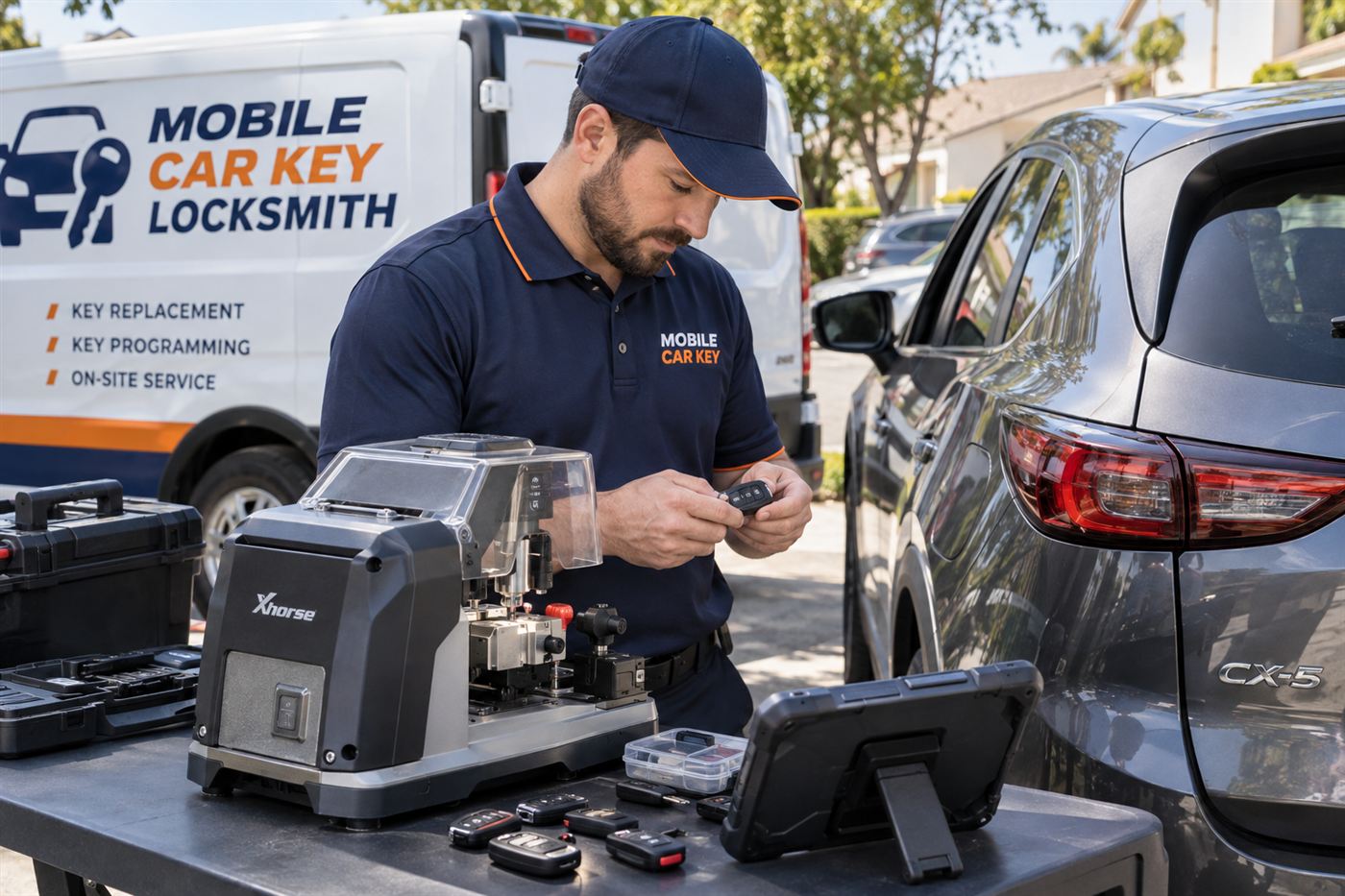
A mobile automotive technician starts by confirming the vehicle and checking ownership or authorization. Then, using tools designed not to harm the paint, seals or wiring, they open a door. The work often takes place beside a pillar, so space is limited.
Once the door is open, the keys can be retrieved, or the technician can unlock the car so you can reach them. The doors and locks are tested to make sure everything works afterward.
A typical garage visit goes like this. The technician meets the driver at the entrance or a stairwell, confirms the vehicle and the paperwork, and walks to the car. In a tight row, they may place a protective cover on the door edge and work carefully around neighboring cars. After the door opens, the driver collects the keys, and the technician checks that the lock still works smoothly. The driver then walks out with the ticket, pays at the machine and leaves.
Throughout, the technician explains what is being done and why. That explanation is part of a good service, and you are welcome to ask questions at any point, especially about anything that touches your car. Asking is a normal part of the visit and never an inconvenience.
If the lockout comes with a lost or broken key, the technician explains the next steps, which may involve cutting or programming a new key. Availability, coverage and terms are confirmed before anyone is dispatched. The page on vehicle lockouts explains the general approach.
Open decks, rooftops and basement levels
Where you parked inside the structure changes the experience. A rooftop level is open to the sky, which means better phone signal and more weather. On a hot day, a rooftop car cabin heats rapidly. In rain, snow or wind, standing next to the car is unpleasant, and a nearby covered stairwell becomes your waiting room.
Basement and lower levels are the opposite. They are shaded and cooler, but the signal is poor and the ceilings are low. Exhaust fumes can collect on busy lower levels, so avoid waiting beside idling cars and move to a stairwell or lobby if the air feels heavy.
Middle levels in the center of a large structure are often the most enclosed, with the weakest signal and the longest walk to an exit. If your car sits in such a spot, plan to walk out to meet the technician instead of staying with the car for the whole wait.
Reserved or specially marked bays add one more layer. Electric vehicle charging bays, accessible spaces, permit only rows and staff areas may have rules about who can stand or work there. Tell the operator what is happening so no one assumes the car is abandoned.
Weather and the key fob battery
Cold weather weakens small batteries, and a fob that has been in a freezing pocket may behave poorly until it warms. Hold it in your hand for a minute before trying again. In heat, a fob left on a sunlit dashboard can also misbehave. Neither case means the fob is broken, but both can look like it.
Alarms, echo and what to expect from the noise
A car alarm in a concrete structure echoes loudly. If opening a door sets off the alarm, it will usually stop when the car recognizes a valid key or when the ignition is switched on. The noise can be startling and attract attention, which is fine, since a witness helps.
Warn the attendant if you expect noise. Tell nearby drivers that you are the owner and that the car is being opened by a professional. A calm statement avoids confusion.
Some cars sound the horn or flash lights when unlocked. That is normal behavior, not a sign that something went wrong.
Proof of ownership in a structure
As in any lockout, a reputable service asks for proof of ownership or authorization before opening a car. A photo ID and a registration or title are typical. In a garage, the parking ticket or pass tied to the vehicle can add context but does not replace those documents.
If the registration is locked in the car, say so when you call. A photo on your phone, an insurance card app or the vehicle identification number visible at the base of the windshield may help in addition to your ID.
The ownership proof guide describes typical documents. Everything on this page is educational and does not create a service agreement.
Information to give when you call
A short, organized description helps the service plan the visit. Be as exact about the location as you can.
If you are not sure of the structure's name, give the address or the nearest intersection, and the building it serves.
- Year, make and model of the vehicle.
- The name of the structure, the street entrance and the level.
- The zone, row or pillar marker, and the nearest stairwell or elevator.
- Whether a ticket or gate is involved, and whether staff are present.
- The clearance height at the entrance, if posted.
- Whether a child, a pet or a person is inside the car.
Safety and comfort while you wait
Wait in a lit, visible spot, ideally near an attendant booth, a stairwell with a camera or an elevator lobby. Avoid empty corners. If you feel uneasy, move toward the street or a busy area, and call 911 if you feel threatened.
If a child or a pet is in the locked car, the situation is an emergency. Cabins heat up rapidly, even in covered structures, so call 911 first. The page on a child or pet locked in the car explains the steps.
If the weather is cold or hot, structures can be stuffy or breezy. Choose the most comfortable spot you can find within sight of the car.
Related garage and public place lockouts
Parking structures show up in other pages too. A lockout at an airport usually happens in a garage like this one, so read about a lockout at the airport. If your car is at a workplace structure, read about a lockout at work.
The ideas in each page overlap but the details differ, and together they help you prepare for whichever setting you are in.
The situations hub lists every page of this kind, and how it works outlines the steps from your call to the finished job.
Habits that prevent a garage lockout
Build a routine at the moment you step out of the car: fob in pocket, door closed, then a touch of the pocket. Take the ticket with you when you leave, since you will need it at the pay machine anyway. Take a photo of your level and pillar so you can find the car later.
Learn how your car locks. Cars that lock when you walk away can lock around a fob left behind. Know whether yours does. Keep a spare key somewhere accessible and check it works occasionally.
Pick a routine for the pay machine too. Many drivers pay on the way back to the car, which means the ticket stays in the pocket and the keys stay in the other. Others pay at a kiosk by the exit. Whatever your system, link it to a physical action, such as touching your pocket, so it becomes automatic even when you are carrying bags, a child or a phone call.
The spare key guide covers ideas for storing and testing a spare.
Common questions
Can a mobile technician get into a parking garage?
Usually yes, with some planning. The technician may need a ticket, a gate opening or an escort from staff, and a tall service van may not fit under the clearance. In that case the tools can be carried in on foot. Tell the service about the entrance, the level and any height limit when you call.
What if my parking ticket is locked inside the car?
Tell the attendant or operator. Many structures can handle a lost or inaccessible ticket once the car is open, or can verify your entry through a pass, an app or a payment record. Once the doors are open you can retrieve the ticket and pay as usual. Keep any receipt you have in the meantime.
Why does my fob not work on a lower level?
Concrete and steel absorb radio signals, so a fob may work only when held close to the door, or not at all. Walking up to the driver door and trying once or twice is reasonable. Pressing the button repeatedly drains the battery. If it still fails, the battery may be weak or the signal may be blocked by the structure.
My phone has no service in the garage. How do I get help?
Walk toward a ramp, a stairwell near the exit, or the street level entrance, where signal is usually stronger. Stay in a lit, visible spot. You can also ask the attendant or use a courtesy phone or call box if the structure has one. Note your level and pillar first so you can describe the location clearly.
Will opening the car set off the alarm?
It can on some vehicles. The alarm normally stops when the car recognizes a valid key or when the ignition is switched on. Sound echoes in a concrete structure, so let the attendant know to expect it. Flashing lights or a horn when the car unlocks are also normal and do not mean damage occurred.
Do I still need to prove ownership if the garage knows my car is there?
Yes. A parking record shows where the car sits, not who owns it. A reputable service asks for a photo ID and registration, title or equivalent proof before opening any vehicle. If your papers are locked inside, say so on the call and the service will explain what else may be accepted.