
The one rule that matters most
If a child or an animal is locked in a car, call 911 before you do anything else. Do not search for the spare key. Do not look for a locksmith. Do not wait to see whether the person inside can open the door. Call emergency services, give your location and follow the operator's instructions.
The reason is simple. A closed car can become dangerous for a living being within a short time, in hot weather and in cold weather. Small children cannot regulate their body temperature as adults do, and animals cannot sweat the way people do. A situation that feels minor to a distracted adult can turn serious while you are making other calls.
Emergency responders have training, tools and legal authority that a mobile key service does not. They are the right first call. A key technician can help later, once everyone is out and the emergency has been handled.
Bystanders matter too. If you walk through a parking lot and see a child or an animal alone in a closed car, do not assume the owner is close. Note the car, the plate and the time, and call 911 yourself. Ask a store manager to page the owner. You are not interfering. You are the person who might make the difference.
What to say to the 911 operator
Speak clearly and keep it short. Say that a child or a pet is locked in a car and say where the car is. Give the street, the name of the business, the parking row or any landmark. If you can, describe the car: make, color, plate number if visible.
Tell the operator how the person or animal looks. Are they awake? Crying? Sweating, red, limp or unresponsive? Is the engine running? Are any windows open a crack? What is the weather like? These facts help the operator decide how urgent the situation is and what to advise.
Stay on the line if you are asked to. Put the call on speaker if you need both hands. The operator may tell you to stay at the car, to talk to the child or to wait for responders. Follow those instructions exactly.
Have your phone ready before an emergency happens. Know the name of the street you live on, the shops you visit and the roads you drive. Being able to describe a location in a few words saves time. If you cannot name the exact spot, share your phone location with the operator when asked.
- The exact location of the car
- Who is inside: child, infant, pet or other
- Their condition if you can see it
- Whether the engine is running
- The weather and whether the car is in sun or shade
What to do while you wait for responders
Stay with the vehicle. Keep your eyes on the person or animal inside, and speak to them if they are conscious. A calm voice can reduce fear. Tell a child that help is coming and that they should stay where they are.
If you are the parent or the owner, try the simple things that cost nothing. Check every door and the trunk, since one may have been left unlatched. Use the fob buttons again. Check whether a family member can bring a spare key right now. Do these while the operator is on the phone, not instead of the call.
Ask a bystander to help. One person can flag down responders, another can check for nearby store staff who may have a master contact or security, and another can bring water or shade for you. Assign tasks plainly, and avoid crowding the car.
Keep your own body in check. Fear tightens the voice and speeds up breathing. Take a slow breath before you speak to the child. A parent who stays steady helps a frightened child stay steady too. If another adult is present, let them take over the phone while you stay at the glass.
Window and glass decisions belong to responders
People often ask whether they should break a window. The honest answer is that this decision belongs to the 911 operator and the responders. They can advise you based on the condition of the person inside and the time it will take to reach you.
Laws about this vary from place to place, and the details can be complicated. Some places protect rescuers in certain conditions and some do not. An operator can tell you what is appropriate where you are. Do not rely on rumor or social media.
If the operator tells you to take a specific action, follow it and describe what you did. Breaking glass can injure the person inside, so the operator may advise a particular window or a way to protect the person. Never try this without an instruction from emergency services.
Why not wait for a locksmith
A key technician must travel to you and confirm details before dispatch. Responders are trained for this emergency and are often already nearby.
Why it happens, and why it is nobody's fault to hide
Many people assume this happens only to careless parents. In truth, it can happen to any busy, tired or distracted person. A change in routine, a sleeping baby in a quiet back seat, a phone call, a delivery or a stressful morning can all be enough. Pets get left in cars for what feels like a short errand that stretches out.
It also happens in a different way: a child climbs into an unlocked parked car to play, the door closes and the car locks. Or the fob is dropped into a cupholder inside while a child sits in the car seat and the door shuts. Whatever the cause, the response is the same.
If it happened to you, you are not alone, and you should not delay the call because of shame. Responders see these calls often and are there to help. The only mistake that matters here is waiting.
Distraction is part of how human memory works. A baby who falls asleep in the back seat gives no sound or movement to prompt attention, and the brain slides into the usual routine of the day. Knowing this makes a good argument for external reminders rather than relying on good intentions.
Signs of trouble to report
Knowing the signs of heat or cold distress helps you tell the operator what you see. In a child, look for flushed or very pale skin, heavy sweating or no sweating, unusual sleepiness, vomiting, confusion or crying that stops suddenly. In an animal, look for heavy panting, drooling, collapse, glazed eyes or lack of movement.
In cold weather, look for shivering, blue lips, pale skin, slow speech or drowsiness. A baby may be quiet and limp. Report anything that looks wrong.
If the person or animal is not responding, tell the operator at once. The words not responding change how urgently help is sent. Do not try to judge the situation yourself, and do not assume that a quiet child is only asleep.
- Heavy sweating, flushed skin or very pale skin
- Crying that stops, drowsiness or limpness
- Vomiting or confusion
- Heavy panting or collapse in a pet
- Blue lips or shivering in cold weather
Cars with the engine running or the air on
Sometimes a parent steps out for a moment and leaves the engine running with the air conditioning on. Then the door shuts and locks. This may seem less urgent, but it is still an emergency. An engine can stall, a fuel tank can empty and a car can shift. Some vehicles also lock automatically while running.
Tell the operator the engine is running. Do not stand behind the exhaust, and keep others away. Do not try to force the door or stop the engine yourself. The car is a moving machine in an unknown state.
If the car is in gear or on a slope, tell the operator, and keep everyone clear. A child inside who can reach the pedals or the shifter adds a risk. Keep the child calm and stay in view.
Once responders arrive
Step aside and let responders do their work. Give them the details you have: how long the person has been inside, any known health conditions, any medication, and what the person was doing before. Answer questions plainly.
If the person inside is a child, responders may ask who the guardian is and may check on the child's health. They may also ask you to stay for a short time. Cooperate and stay calm. These steps exist to protect the child.
If the car was opened by responders, you may need to take the vehicle's condition into account. A broken window, a bent door or a damaged lock may follow. Ask the responders for a report or incident number. You may need it later for repair or insurance.
If you saw how the person came to be locked in, share it clearly with responders: who closed the door, whether the key was inside and whether the engine was running. This helps them decide what to do with the car and the next steps for the child or animal.
After the emergency: the car and the keys
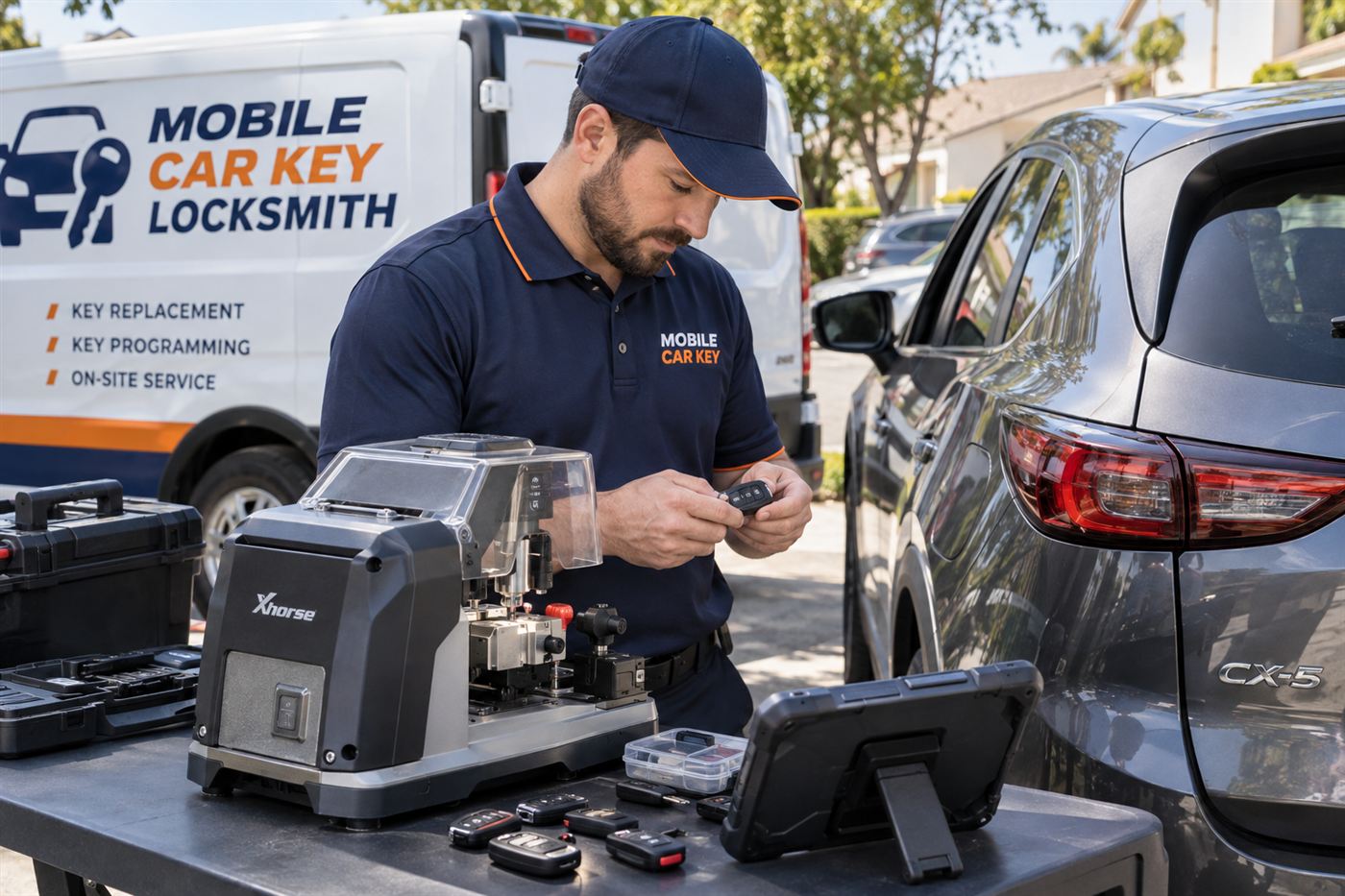
When everyone is out and well, the car may still have a problem. Maybe a window is broken, a door is bent or the key is still locked inside. This is the point where a mobile car key technician becomes useful. The overview of vehicle lockout service explains how a standard visit goes.
If the key is missing, the technician can discuss making a replacement. Limits depend on the vehicle, and some newer models need dealer-level tools or manufacturer access. If all keys are gone, read about all car keys lost.
Availability, coverage and terms are confirmed before dispatch. This page is educational and does not create an agreement. A reputable service asks for proof of ownership or authorization on site, which protects you and the car.
If the vehicle was damaged during the rescue, ask the technician or a repair shop to inspect the door, the lock and the electronics. A forced door can leave problems that show up later, such as a window that will not seal or a latch that sticks. Document what happened with photos.
Take care of the people first
After a scare, adults often feel shaken, guilty or angry. Children and pets may be frightened too. Give everyone time. Offer water, a calm place to sit and a hug if they want one. Do not rush into the next errand.
If a child was in the car for any length of time, ask a medical professional to check them, even if they seem fine. Symptoms can appear later. For a pet, call a veterinarian and describe what happened. A short check can prevent a bigger problem.
It is also fine to take a moment to breathe. The car, the key and the schedule can wait. People and animals matter first.
Prevention habits that actually work
Build a habit that does not rely on memory. Put a bag, a shoe or a phone in the back seat so you have to open the rear door when you leave the car. Many parents use this. Others keep a stuffed toy in the front seat when the child is in the car seat, as a reminder.
Ask the daycare or school to call if your child does not arrive. Set a recurring phone reminder for the morning drive. Lock the car only when you have opened every door and looked at every seat. Make this a rule for every adult who drives the child.
For children, teach them that cars are not play areas. Keep the key and fob out of reach. Keep the car locked in the driveway so a curious child cannot climb in. For pets, never leave them in a parked car, even for a minute, even with the windows cracked.
Keys and children
Keep the fob out of reach and out of sight. A child who plays with a fob can lock the doors with the key inside.
Pets and errands
Plan stops where the pet can come along or stay at the place you are going. Do not run into a store and leave the pet in the car.
Spare keys and smart planning
A spare key does not prevent every emergency, but it can reduce the length of a lockout when the situation is not an emergency. Keep a spare with a trusted person who lives nearby, not in the car and not on a magnetic holder under the bumper where a thief may look.
Learn how your car locks. Read the manual or ask a technician. Some vehicles lock when you walk away, some lock at a set speed and some lock when you shut the door with the fob inside. Knowing your car's settings lets you change them if they cause trouble. The spare key guide explains options for making an extra key.
Keep emergency numbers in your phone and teach older children how to call 911. Practice what to say. A child who knows how to call for help adds a layer of protection.
If your only key is missing and nobody is in danger, you can read about what to do when you lose your only car key. A key that ended up in the trunk is another common case, covered in keys locked in the trunk. Neither replaces the first rule on this page: if a person or animal is inside, call 911.
Daycare, school drop off and shared driving
Shared child care adds opportunities for mistakes. A grandparent drives the child on Tuesday, a parent on Wednesday and a neighbor on Thursday, and each person has a different routine. Agree on one simple system for everyone who drives the child, such as the shoe in the front seat or a phone alert.
Ask the school or daycare to call you if the child does not arrive within a reasonable time. Many programs already have this policy, and it is worth confirming. A call that comes early can prevent a very serious problem.
If you drive a carpool, tell each parent exactly how you handle the end of the trip. Count heads when you stop, and count them again when you leave. Say the names aloud. It may feel silly, but it is a habit that works.
Related pages
Other situations may help you prepare. See locked out in hot weather for more on heat and locked out at night for after dark. The situations hub lists every common car key problem.
This content is educational. It does not replace emergency services, and it does not create a service agreement. Terms are confirmed before dispatch.
If a child or pet is in a locked car right now, stop reading and call 911.
Common questions
Should I call a locksmith or 911 first?
Call 911 first. A child or pet locked in a car is an emergency, and responders are trained and equipped for it. A mobile locksmith must confirm details and travel to you, which can take longer than the situation allows. Key service can help after everyone is out and the emergency is handled.
How soon does a closed car become dangerous?
Conditions inside a closed car can turn dangerous within a short time, in both hot and cold weather. Children and animals are more vulnerable than adults. Because you cannot judge it from outside, treat every case as urgent and call 911 right away instead of waiting to see how things develop.
Can I break the window myself?
Wait for the 911 operator's guidance. Rules about this differ from place to place, and breaking glass can injure the person inside. The operator can tell you what is appropriate and may send responders who have the right tools. If instructed to act, follow the instruction and tell responders what you did.
What if the child is awake and calm?
Still call 911. A calm child can change within a short time, and you cannot always see the signs of distress. Stay by the car, speak to the child in a steady voice and let the operator decide how urgent the response should be.
Will I get in trouble for calling?
Responders see these calls often and their goal is to protect the person inside. Delaying the call is the real risk. Tell the operator the truth, answer questions plainly and cooperate. Local rules differ, and the operator or responders can explain what happens next.
What if my pet is in the car and I am alone?
Call 911 or the local emergency number and describe the pet and the location. Stay near the car. If you cannot reach emergency services, ask nearby store staff to help. Do not leave the area, and do not waste time looking for a locksmith.
When should I call a mobile key service?
After the emergency is over, if the car still needs a door opened, a key made or a fob replaced. A mobile technician can help with lockouts and replacement keys for most vehicles, with limits depending on the make and model. Availability and terms are confirmed before dispatch.