
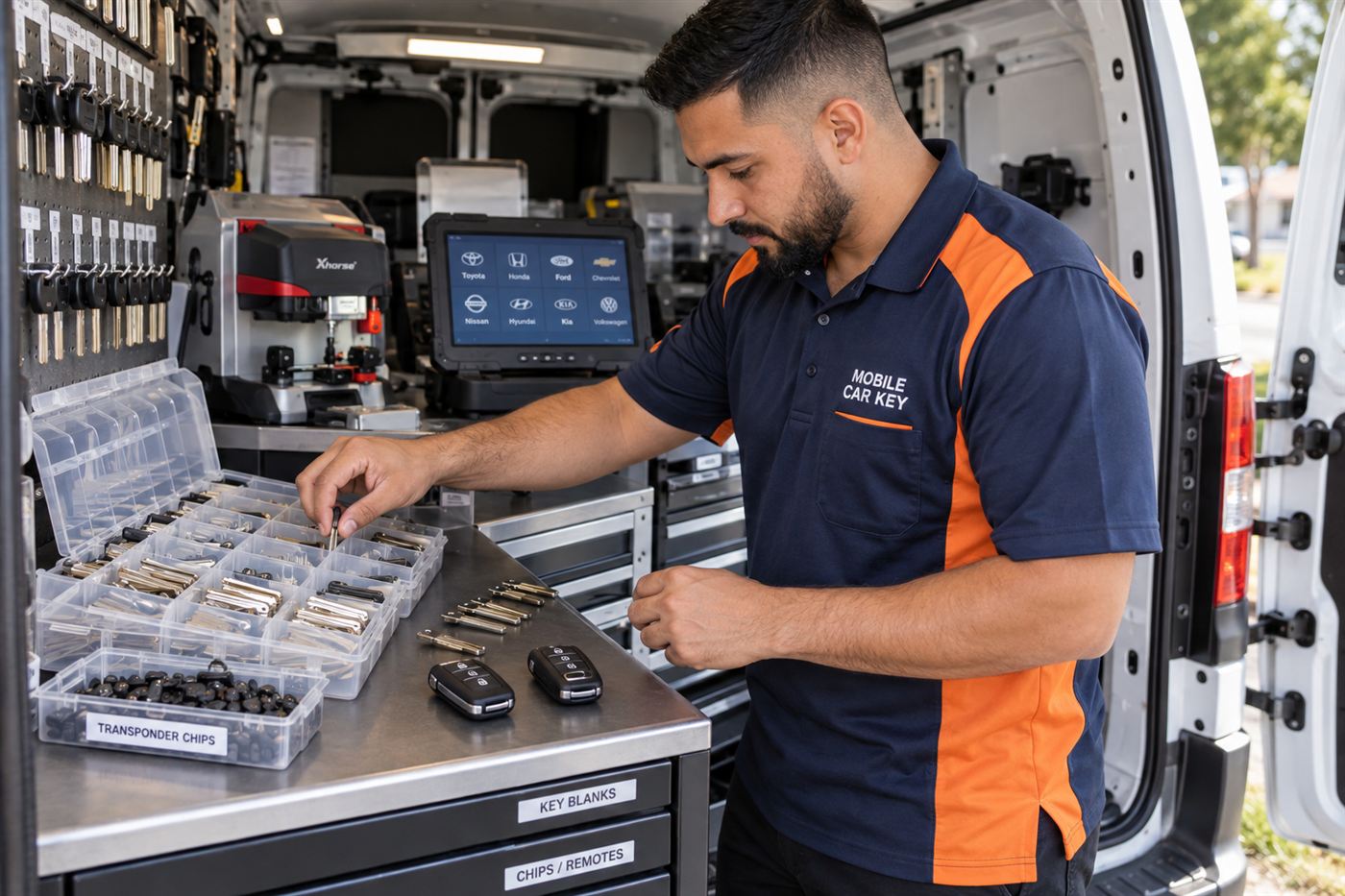
A year of key trouble in central Ohio
Columbus is a city where the calendar shapes what drivers go through. Winter brings snow, ice and road salt. Spring brings rain and a flood of students leaving town. Summer fills streets with festivals and outdoor dining. Autumn belongs to football, when a huge stadium pulls crowds from across the state.
Car key problems follow the same rhythm. A driver in January struggles with a dead fob battery and a frozen door. A driver in April loses a key during a move. A driver in July locks the key inside before a concert. A driver in October forgets where the car is parked after a game. Understanding that rhythm helps you prepare for the season you are in.
This page is general education. It does not create a service agreement, and availability, coverage and terms are confirmed with you before a technician is sent to your vehicle.
Winter: cold batteries, frozen locks and salt
Ohio winters are hard on cars and the electronics that go with them. A key fob battery loses strength in the cold, and a fob that worked well on a mild afternoon may refuse to unlock the car at dawn. The cause is often chemistry, not damage. Warming the fob in your hand and trying again can help, and holding it against the start button works on many push-button vehicles.
Frozen locks create a different issue. Moisture inside a door lock freezes, and a blade forced into it can bend or snap. If a key breaks, resist the urge to dig the piece out with a tool. Our guide on a dead fob battery covers the first checks, and the page on vehicle lockouts explains what a technician can do if the car is locked.
Road salt adds a slow kind of wear. Salt carried into the cabin on boots settles on pedals and floor mats, and sometimes on the key itself. A key kept in a coat pocket may pick up grit that wears the blade. If your key has begun to stick in the ignition, have a spare made before it fails.
- Keep a spare fob battery in a coat pocket or glove box.
- Warm a sluggish fob in your hand before trying again.
- Do not pour hot water on a frozen lock.
- Never force a key that will not turn.
Cold morning, parked on the street
Many older parts of the city have curbside parking with no garage. A car left outside overnight can be buried under snow, and the driver digs for a long while only to find the fob unresponsive. Check the interior lights when you finally open the door. If they are dim, the car battery may be the real problem and no key work will help until it is replaced or charged.
Heated seats, remote starts and fob range
Remote start is popular where winters bite. If your car starts from a distance by using the fob, a weak battery cuts the range noticeably. A fob that works at ten feet but not at fifty is telling you the battery is aging.
Spring: moves, leases and the change of address
Spring in a university city means a wave of moves. Students pack up, families load trucks and apartment leases end. Keys travel in boxes, bags and glove compartments. It is a time when spare keys get misplaced and fobs get lost between old and new places.
If you buy or sell a car during a move, make sure all keys are accounted for. A used car with only one key is a problem waiting to happen. Our page on used cars and private sales explains what to ask about keys before you pay, and why a second key made while you still have the first is far simpler than a replacement from scratch.
Spring weather swings add their own surprises. A sudden downpour sends a driver sprinting to the car, jacket pocket flapping, and the fob drops into a puddle. If a fob gets wet, dry it gently and do not apply heat. A battery contact may have corroded, which is a small repair rather than a replacement.
Summer: festivals, patios and long daylight
Columbus summers are lively. Riverfront events, parks, patios and neighborhood fairs fill weekends. People walk, leaving their cars in garages or on side streets and carrying only what fits in a pocket. A fob in a pocket with a phone and a wallet is easy to dislodge when someone sits on a bench or reaches into a cooler.
Heat is a factor too. A vehicle in direct sun can reach high interior temperatures. If a child or a pet is locked in a closed car on a hot day, call 911 first. That is an emergency, and emergency responders should act before any locksmith service. After the situation is secure, a technician can help with the lock or the key.
Festival days affect where you park and how you describe it. Closed streets and detours can make a normal address hard to reach. If you are calling from an event area, give the service the nearest open road and tell them whether barriers are in place.
Autumn: football Saturdays and the stadium crowd
Autumn Saturdays bring one of the biggest crowds the city sees. Tens of thousands of fans park in campus garages, surface lots and neighborhood streets, many from other parts of the state. Cars sit for hours, and the people who return are tired, chilled and in a hurry. The odds of a lost key, a locked door or a dead battery rise sharply.
Tailgating adds a particular risk. Keys sit on tables, in coolers and in jacket pockets that get tossed in the back of a vehicle. A driver may close a trunk with the key still inside, or leave a fob on a folding table and pack up without it. Before leaving a tailgate, do a pocket check and a table check.
Describing a location on game day
Campus lots may have letter names or numbers, and neighborhood streets can look alike. Note the lot name, the row and a landmark such as a sign or a gate. If you are parked on a side street, record the cross street. Without them, the technician may have trouble finding the car among thousands.
Out of town fans and rental cars
Many visitors drive from other states or rent cars. If the vehicle is a rental, the key belongs to the rental company, and the company's approval may be required. If it is a personal car registered elsewhere, bring the registration and photo identification. The overview of car key service across Ohio explains how coverage is confirmed across the state.
Commuting on the outer belt and the main corridors
Columbus is built around a loop highway with spokes leading to the center. Commuters travel on it every day, and a crash or construction can send drivers onto unfamiliar side streets. A driver who parks to wait out a backup, steps out and locks the key inside is a classic example.
Suburbs and neighboring communities are part of the same commuting pattern. A key problem at a distant office park or a shopping center on the edge of the city needs a precise location. Offer the exit number, the cross street and the name of a store. Those details help a service decide whether it can cover your location and what the arrangement should be.
Drivers who travel between Ohio cities often continue to nearby states. Our pages for Indianapolis and Detroit explain how patterns differ in those cities, and the full list of city pages shows others.
The airport, hotels and visitors
The city's main airport lies on the east side, and hotels sit near it and downtown. Travelers leave a car in a long term lot for days. When they return, a weak fob battery, a locked door or a missing key can ruin a trip. Take a photo of your parking space, including the lot name and row.
Business travelers also face tight schedules. A person may have a meeting an hour away and a key problem in a hotel garage. Plan for it by carrying a spare fob battery and keeping a photo of your registration on your phone. That preparation reduces the number of questions that come up at the vehicle.
Downtown garages and the arts district
Downtown and the nearby arts district have garages that serve offices, theaters and restaurants. Many are multistory with ticket gates, narrow ramps and low ceilings. A mobile technician needs to know the level, the section and the entry process. Some garages ask for staff approval before an outside vehicle can enter.
Brick streets in older districts offer curbside parking with no cameras or lights. If your car is there and you need help, move to a lit area while you wait. Your own security comes before the vehicle.
What to say when you call
Start with the car: year, make and model. If you can read the vehicle identification number from the dashboard or the registration, share it. Then describe what happened, such as a lost key, a broken blade or a fob that no longer works.
Give your location clearly. Name the road, a nearby business and any gate number. Say whether the car is on private property and whether permission is needed.
The service then explains whether it can cover the location and what the terms are. Only after you agree does a technician set out. For a checklist to keep on your phone, see what details to give when you call, which also explains what happens next.
Proving the car is yours
A reputable service asks for evidence that you own or may use the vehicle. Typical proof includes a government photo identification and registration, title, a bill of sale or a rental agreement. If the car is registered to a family member or an employer, that person should confirm permission by phone.
Students sometimes drive a car titled to a parent. In that case, the parent may need to be reachable. Save the number before you need it. A lost key at night is a poor time to discover that the owner is on a flight.
When dealer tools come into the picture
Some newer vehicles from certain makes need manufacturer-level tools or access codes, and only a dealer can supply them. A good service says so at the start so you can decide whether to arrange transport or contact the dealer. In many cases, a mobile technician can finish the job at the roadside.
Is it the key or the car? A simple way to tell
A dead fob and a dead car battery look alike from the driver's seat. Both leave you standing at a door, pressing a button that does nothing. Learning to tell them apart saves a wasted call, and it also gives a technician useful information if you do need help.
Start with the cabin. If you open the door with the metal blade and the dome light comes on brightly, the car battery is probably healthy. If the interior stays dark or the lights are weak, the car battery is the likely culprit. Next, try the horn or the headlights. A strong response points to the key or its signal, while silence points to the car.
Now try the fob. Hold it against the start button, the steering column or a marked spot on the console, since many vehicles have a backup reader there. If the engine starts, the fob battery is low. If a warning appears about the key not being detected, the fob may be damaged, out of sync with the car or blocked by interference from other devices on a key ring.
Our guide to how the immobilizer works explains why a car can crank but refuse to run when it does not recognize the key's chip. When you call, report what you saw. A specific description such as "the dome light is bright, the horn works and the key is not detected" is far more useful than "the car is dead."
- Bright dome light and silent fob: suspect the fob battery.
- Dark cabin and no response at all: suspect the car battery.
- Engine cranks but will not start: suspect the immobilizer or the key chip.
- Security light blinking: the car may not recognize the key.
Shared cars, students and borrowed keys
A university city has more shared vehicles than most. Roommates borrow each other's cars, siblings trade keys and parents lend an older car to a new driver. Each arrangement multiplies the number of hands that touch the key and the number of people who may have a copy.
When a key goes missing in a shared setup, the first question is who owns the vehicle. A student may drive a car titled to a parent in another city. A roommate may have registered it in their name. The person at the car must be able to show a reason to be there, and the owner should be reachable by phone.
Keep these habits in mind:
These small steps remove most of the friction during a stressful moment. They also help if the key is stolen, since you can describe the vehicle precisely and decide what to do next.
- Save the owner's phone number and the registration on your phone.
- Agree on one place where the spare lives, and tell everyone who drives the car.
- Do not leave the only key with someone who is leaving town.
- Take a photo of the vehicle identification number so it is on hand.
Parents, new drivers and first cars
New drivers are more likely to lock a key inside, drop a fob or forget it at a friend's place. Teenagers share keys, lend cars and sometimes carry the only fob on a lanyard that snags on gear. Parents who buy a first car should think about spare keys from day one.
Make the spare a routine. Have a second key cut or programmed while the first still works, store it somewhere secure, and explain to the new driver why. A short conversation now prevents an awkward call later, and a spare kept by a parent can rescue a stranded teen without any outside help. It also helps to agree on a rule: if the key is lost, call a parent first, stay with the vehicle if the location is secure, and do not accept help from strangers who offer to open the car. A calm plan agreed in advance is worth more than any gadget.
After the new key works
Test every function before the technician leaves. Start the engine, press each button on the fob and lock and unlock from a few steps away. Check the trunk release and any remote start feature. Report any problem while the technician is still present.
Make a plan for a spare. A second key made now costs less trouble than a replacement after a total loss. Store it away from the main key, and tell a trusted person where it is.
Common questions
Why does my fob fail on cold mornings and work later in the day?
Cold reduces battery output, so a fob with an aging battery may fail at dawn and recover once warmed. Replacing the battery usually fixes the pattern. If it continues after a new battery, the fob or the car's receiver may need testing, which a technician can check at the vehicle.
Can a technician help in a campus lot on a football Saturday?
Often yes, provided the location can be described and reached. Give the lot name, row and a landmark, and expect that closed streets may change the route. Coverage and terms are confirmed before dispatch, so you will know the arrangement before anyone travels.
My key snapped in a frozen lock. Should I try to remove it?
Avoid digging it out with tools, since that can push the fragment deeper or damage the lock. Leave it and call for help. A technician can often extract the piece and make a new key, depending on the vehicle and the damage.
I bought a used car with one key. Should I get a spare?
Yes, as soon as you can. A spare made while the original works is simpler than replacing all keys after a loss. Bring the registration or bill of sale and photo identification so ownership can be checked when you arrange the work.
What if the car is in a downtown garage with a ticket gate?
Tell the service the garage name, level and section, and whether a ticket or code is needed. Some garages require staff approval for outside vehicles. Coverage and terms are confirmed before dispatch, and height limits may affect what equipment can be brought in.
Is it an emergency if a dog is locked in the car?
Yes, especially in warm weather. Call 911 first, because emergency responders can act before a locksmith service. When the animal is out and secure, a mobile technician can help with the lock or key problem.