
A city of narrow streets and tight parking
Philadelphia was laid out long before cars existed, and it shows. Many blocks of rowhouses open directly onto narrow streets where cars park bumper to bumper on both sides. Finding a space can take a while, and once you find one, you tend to leave the car there as long as you can. That detail matters when a key goes missing, because the vehicle is probably in a tight space with limited room around the doors.
Mobile automotive key service sends a technician to the vehicle rather than asking you to arrange a tow. Whether that is practical on a particular block depends on the vehicle, the space around it, the rules of the street and current availability. Those points are confirmed with you before dispatch.
This page walks through the settings drivers in the region commonly face, from historic neighborhoods to hospital garages, and what to prepare for each.
Working beside a parked car on a tight block
Opening a locked door or programming a key takes some elbow room. A technician needs to stand beside the car, reach the door frame and sometimes sit inside for a while with a diagnostic tool. On a block where the car is boxed in by others, that can be awkward. A neighbor who is willing to move a car for a few minutes can make a real difference, and so can a bit of patience.
If your car is double parked or blocked in, mention it. If you are worried about a street cleaning schedule or a posted sign, say so. The service cannot change the rules, but it can plan around them.
Think about the order of events when a technician arrives. First comes a conversation about who you are and what happened. Then the technician looks at the car, the surroundings and the problem. If the job is opening a locked door, the work is usually short and involves protective tools that avoid scratching the paint. If the job is a new key, it may involve cutting a blade, connecting a programming tool and testing the result several times.
Neighbors often wonder what is going on when a stranger works on a car. A brief explanation to anyone who asks, and your presence beside the vehicle, keep things calm. A reputable technician will also expect to show some form of identification and to explain what is being done.
Never try to force a window or pry a door in a crowded space. A bent frame or a scratched panel on a car pressed against another is easy to cause and expensive to fix. Wait for guidance.
Center City garages and hospital structures
Downtown, the car world moves into parking structures. Center City has many of them, some small and tucked behind buildings, others large and attached to hospitals, hotels and office towers. A lockout or lost key in a garage brings the operator into the picture. Staff may want to confirm the vehicle, and some structures limit who may work inside.
If you have a ticket, keep it. If the garage is automated, find the office phone. Describe the level and the nearest exit when you call. Low ceilings and tight bays can affect the work, so ask whether staff can move the car if that seems helpful.
Valet arrangements at hotels and restaurants are another common source of trouble. A valet may hold a key that you assumed was in your pocket, or a restaurant may have placed a key in a drop box overnight. When a key is in someone else's hands, sort that out first. A phone call to the manager on duty often resolves it without needing any locksmith at all.
If you do need help, tell the service who holds what. A technician needs to know if there is a second key somewhere, because the plan may change from creating a new key to simply retrieving an existing one.
The page on locked out in a parking garage covers this in more detail. It includes advice on what to say to attendants and how to wait without stress.
Universities, students and shared cars
The region holds many colleges and a large student population. Students share cars, borrow them from relatives and park in lots or on streets near campus. A fob can wander from one backpack to another, and a car shared by roommates might have one working key and a pile of excuses.
If a student calls from the street in front of a residence hall, the service will want to confirm authorization. If the car belongs to a parent in another state, a phone call from that parent may be needed. That is not an obstacle, it is part of responsible practice.
Families who have a student driving far from them can reduce stress by making a spare key in advance and agreeing on who holds it. The page about a spare key gives sensible habits for this kind of arrangement.
Stadiums, festivals and heavy event traffic
The sports complex on the south side of the city draws large crowds for games and concerts, and the riverfront and downtown host festivals throughout the year. On event days, lots fill, roads close and the surrounding streets become tangled. A key problem in that environment feels twice as hard, because moving a vehicle or reaching a particular spot may be impossible for hours.
If you call during an event, say so. Barricades, crowd flows and limited stopping places affect how a technician can approach. A meeting point away from the busiest streets may be the practical choice, and the service may ask you to move the car if you can.
Tailgating adds another twist. People walk away from their cars, leave doors open and set keys on tables. Take a moment at the end of the day to count your keys before you head out.
Winter, ice and the salted car
Cold winters bring snow, ice and road salt to the region. Door seams freeze, locks stiffen and batteries weaken. A key fob that has been stored in a coat pocket may suffer less than one left in a cold car, but both are at risk. Salt spray can also work its way into door lock cylinders and key slots, which leads to sticky or grinding locks.
If a door is frozen, resist the urge to yank. Pulling hard can tear weatherstripping or snap a handle. Wait, clear ice gently and, if you must, use a method designed for the job. If you suspect a lock is frozen, avoid pouring hot water on it, because that can refreeze and damage paint and seals.
Think about the fob as well as the lock. A fob that spends a night in a freezing car may show a weak response the next morning, with a shorter range and a lag after you press a button. Warm it in your hand or inside your coat and try again. If it still fails, use the mechanical key hidden inside.
Salt is quietly hard on cars in this climate. It creeps into door handles, lock cylinders and the gaps around buttons. A little care helps: wipe visible grit from the lock area, avoid forcing a key that feels rough, and mention the condition when you call so the technician is prepared.
In snowy conditions, a car may need to be dug out before a technician can reach the door. Tell the service what you see so that expectations are realistic.
Airport, rail and highways
Travelers who park near the airport, at a rail station or at a park-and-ride lot may leave a car for days. Batteries drain, fobs lose their charge and keys get misplaced during trips. The region is also crisscrossed by busy highways that run along the river, and a breakdown or key issue on one of them is a serious hazard.
If you are stopped on a highway shoulder, get yourself and your passengers away from traffic if you can. Call 911 if anyone is in danger. A key service is for the car, not for an accident or injury.
When you are in a station lot, tell the service the name of the lot and the section. For airport garages, give the terminal, level and nearest landmark.
Keys in the past and keys today
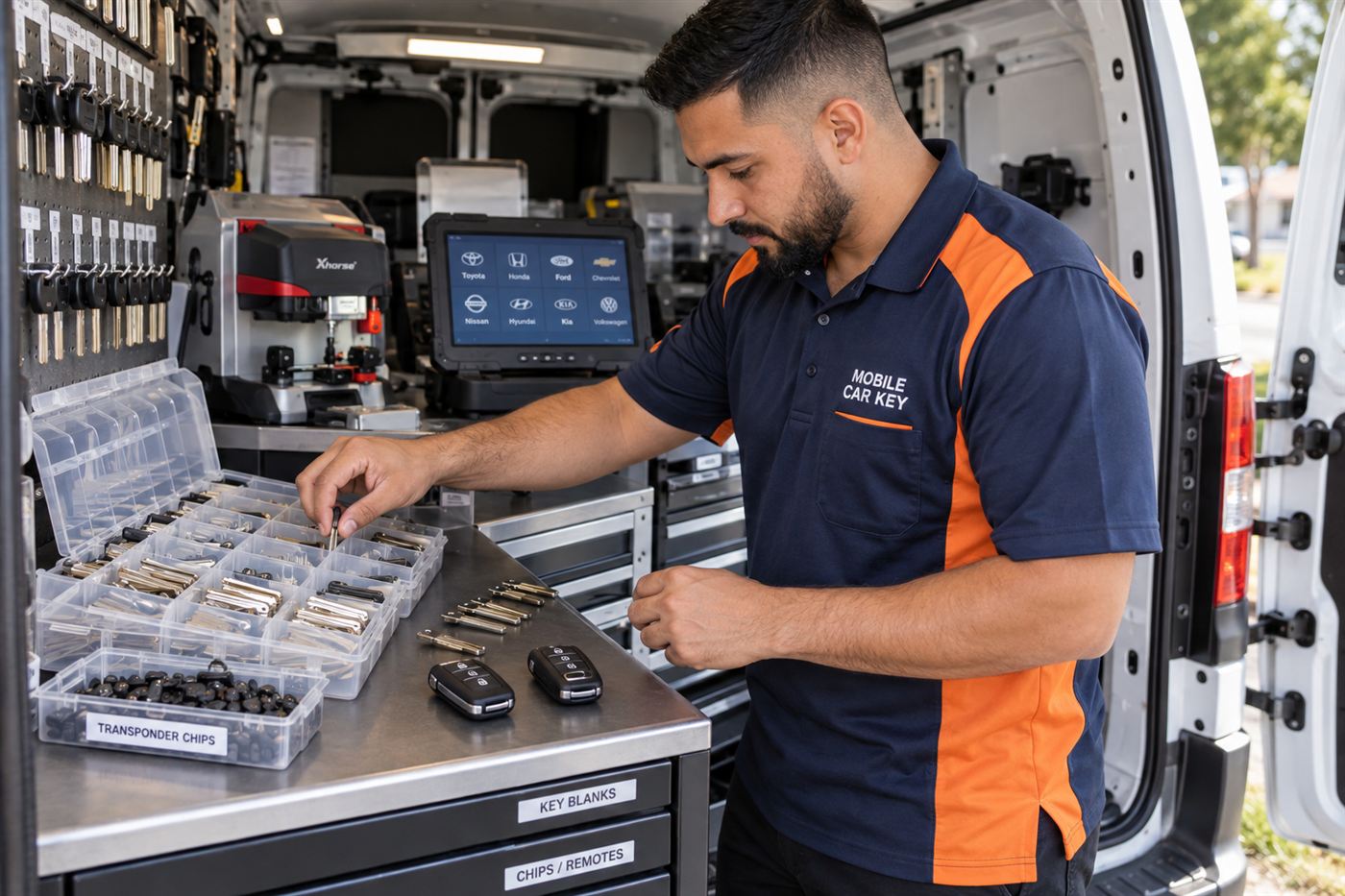
Older cars often use a simple metal key. Newer ones use transponder keys with a chip, remote key heads with buttons and proximity fobs that let the car sense the key nearby. Each type uses different equipment, and the details vary by make, model and year.
Many keys and fobs can be handled by a mobile technician, but limits depend on the vehicle. Some newer cars from certain makes require dealer-level tools or manufacturer access. A reputable service will tell you if your car falls into that category.
It is worth knowing what your car actually uses before trouble strikes. Look at your spare, check your owner's manual and notice whether your car starts with a turn of a blade or a press of a button. Many people are surprised to discover that a key with a plain plastic head contains a chip, which means a hardware store copy might open the door but not start the engine.
Used cars add a twist. A vehicle bought from a private seller may come with one key and a promise. Test every key you receive, including the remote buttons, and ask the seller what was done about spares. A missing second key is the single most common surprise people report after a used car purchase.
The overview of car key replacement explains how a new key is made and programmed in plain language. If you have no key at all, the service will ask a series of questions to identify the likely type.
The classic city mistake: leaving the key in the ignition
In the region's busy streets, drivers sometimes hop out to drop off a package, close the door and realize the key is still in the ignition or on the seat. Newer cars with automatic locks make this more likely, because the door can lock behind you without a click you notice.
If you are locked out with the engine running, tell the service. A running car raises concerns about exhaust, theft and fuel, and it is a good reason to stay close. If the car is parked in a spot that blocks traffic, say so.
Prevention is simple: touch your pocket before you shut the door, and train yourself to take the key with you every time you step out, even for a moment.
Street cleaning days, permits and the pressure of the rules
City parking rules add stress to any car problem. Posted signs, permit zones and cleaning schedules mean that a car that cannot be moved is not just stuck, it is at risk of a ticket or a tow. If you are in that position, say so when you call. The service cannot bend the rules, but it can factor your deadline into the plan and tell you honestly what is possible.
Photograph the signs near your car and the spot it occupies. If you end up with a ticket because the car could not be moved while you waited for a technician, those photos and any record of your call give you something to show when you ask for consideration. They cannot promise a result, but they help.
If you can arrange for the car to be moved by someone with a second key, do so. If not, think about whether a short drive of the vehicle is even needed, or whether the work can happen where the car sits. A technician can often make a new key or open a door on the spot, then you can drive to a legal space once the job is done.
In neighborhoods where a space is hard to find, giving up a spot has a real cost. That is another reason a mobile approach appeals to drivers here: you keep the spot while the problem gets solved at the curb.
Proving ownership
A responsible locksmith will not open a car or create a key for a stranger. Expect to show a photo ID and a document that ties you to the vehicle, such as a registration, title or rental agreement. This is a safeguard for you.
The most common difficulty is that the registration is in the glove box of the car you cannot open. Take photos of the registration and insurance and keep them on your phone. If your name is not on the paperwork, arrange for the registered owner to be reachable.
If documents are missing, tell the service. They may suggest ways to get a copy before work begins.
How to describe your situation
Start with what happened: lost key, broken key, locked out, dead fob or stuck ignition. Then give the vehicle year, make and model, the exact location and any access details. If a key is visible inside, say so. If the engine is running, say that too.
Mention earlier attempts and unusual features, such as an aftermarket alarm or a recent battery change. Those details help the technician choose the right tools and avoid harm.
After the call, the service confirms availability, coverage and terms before dispatch, sends a technician, checks ownership on site, does the work and tests it. The sequence is the same in every city.
Neighboring regions and more reading
The Delaware Valley stretches into New Jersey and Delaware, and many drivers cross state lines daily. Your situation may begin in one state and end in another, and the service will ask where the car actually is. For another dense northeastern city, read the New York City page, and for another historic city with tight streets, see the Boston page.
The Pennsylvania state page covers the wider region, and the city hub lists every metropolitan page. Each is written for its own area, so the examples are different.
If you have lost every key, the process is different from simply duplicating a working one. The page about all keys lost explains why.
A short plan for right now
Move to a secure spot out of traffic. Check pockets and bags. Call anyone who might hold a spare. Write down your location and any access details. Photograph your ID and registration if you can reach them.
Decide what you need: an opened door, a new key, a reprogrammed fob or a broken key removed. If you are not sure, say so. Be skeptical of anyone who offers to fix the problem on the spot without checking ownership.
This page is educational. It does not create a service agreement and does not promise help at a specific place or time. Availability, coverage and terms are confirmed with you before dispatch. If anyone is in danger, call 911 first, and treat a child or pet in a closed car as an emergency.
Common questions
Can a technician work if my car is boxed in on a narrow street?
Sometimes, but it depends on how much room there is. A technician needs space beside the door and sometimes inside the cabin. If neighbors can move their cars briefly, that helps. Describe the situation honestly so the service can tell you what is possible before dispatch.
What if my door is frozen shut?
Do not yank it. Pulling hard can tear seals or break a handle. Clear ice gently and avoid pouring hot water on the door or lock, which can refreeze. If the lock itself is the problem, a technician can often help without damage.
I am a student and the car belongs to a parent. Is that a problem?
It is not a problem, but the service will need confirmation that you are authorized. A call from the registered owner or documents that tie you to the car usually settles it. Prepare ahead and keep photos of the registration on your phone.
Can I get help inside a hospital garage?
Often yes, but garage rules apply. Staff may need to confirm the vehicle and approve entry. Give the level and nearest exit when you call, and ask whether staff can move the car to a roomier spot if that would help.
What if I left the key in the ignition and the engine is running?
Tell the service right away. A running car adds risk, and you should stay close to it. If the car is blocking traffic, say so. Never leave a running vehicle unattended longer than necessary.
Can every kind of key be made?
No honest service can promise that. Many vehicles are workable, but limits depend on make, model and year, and some newer vehicles need dealer-level tools or manufacturer access. The service will say early what it can do for your car.