
The classic grocery lot mistake
Few places create a lockout as reliably as a grocery store parking lot. You come out with a loaded cart, open the trunk or the rear door, unload bags with both hands and walk the cart to the corral. The fob rides along in a pocket, a bag or the child seat, and somewhere in the shuffle it ends up inside the car as the door shuts.
Modern cars add a twist. Many lock themselves after a short time or when you walk away, and some lock when a door closes with the fob inside. The result is a car that quietly sealed itself while your attention was on the cart.
The situation is annoying but rarely serious. Most grocery lot lockouts involve a car in a public, lit, busy place, which is a good environment for a mobile technician to work in. What changes the plan is whether the shopping includes items that cannot wait.
- Fob dropped into a bag during unloading
- Fob left on the seat or in the cupholder
- Automatic locking after the trunk is closed
- Key left in the cart basket or the child seat of the cart
Check the cart, the bags and the store
Before you call anyone, look through everything you carried. Check the cart basket, the child seat, the bottom rack, the receipt, the coat pockets and the bags you set on the pavement. Keys have a way of hiding under a loaf of bread.
Retrace your steps inside the store. Check the customer service desk, the self checkout lanes and the bagging areas. Staff often hold found keys at the front of the store, and a short walk may end the whole problem.
If the fob is truly in the vehicle, look through the windows and note where it is. If it is visible on a seat, tell the dispatcher. A technician sometimes handles a lockout differently when the key is in view than when its location is unknown.
Frozen and refrigerated food
The food is your real clock. Ice cream, frozen meals, raw meat, dairy and prepared deli items all depend on temperature, and a parked car in warm weather can warm up within a short time. Think through what can stay in the car and what should go back inside.
If the groceries are still in the cart and not in the car, take them back into the store and ask whether staff can hold cold items in a refrigerated area while you wait. Many stores will help for a short period, especially if you explain you are locked out. If the groceries are already locked in the car, tell the dispatcher so they understand what is at stake.
Do not try to force the trunk or the door to rescue the food. A damaged lock or window will cost far more than a bag of frozen vegetables. Be honest with yourself about what is worth saving, and let a technician handle the opening.
Items that need cold the most
Raw meat and fish, dairy, ready to eat salads, frozen desserts and anything marked keep refrigerated. These are the items to move or protect first.
Items that can wait
Canned goods, dry pasta, cereal, produce that tolerates a room temperature wait, and paper goods usually hold up without trouble.
Who is with you matters
Before anything else, count the people and animals who rode with you. A child strapped into a car seat, a pet left in the car while you ran in, or a vulnerable adult waiting in the passenger seat changes the situation from a lockout into an emergency.
If a child or pet is locked inside, call 911 first. Do not wait for a locksmith, do not wait for the cart to be returned and do not wait to see if the key turns up. Emergency responders can open a vehicle immediately, and heat builds inside a closed car much faster than most people expect.
If everyone is out of the car and well, you can relax into an organized plan. Move your family to the shade or into the store, keep the children with you, and make your calls from a spot that is away from moving vehicles.
What to tell the service
Give the dispatcher the store name or intersection, the section of the lot and a landmark such as a light pole number or the row nearest the entrance. Large grocery lots can be confusing, and a clear spot saves time. Mention whether the car is near a cart return, a loading zone or a fuel station on the same property.
Share the year, make and model of the vehicle, the type of key it uses, and where the key is. Tell the dispatcher if the car is a rental, a company car or a borrowed vehicle, since each needs a slightly different ownership check.
Ask what the service will confirm before dispatch: availability in your area, coverage and terms. A reputable service explains these first. This page is educational and does not create an agreement, so take your time to understand the answer.
- Store name, cross street and area of the lot
- Year, make and model of the vehicle
- Key type: metal key, remote fob or push button start
- Where the key is and whether anyone is inside
- Whether it is your own car or a rental or company vehicle
Ownership checks in a public lot
A good service asks for proof that you own the vehicle or are authorized to use it. This applies in a busy grocery lot just as anywhere else, and it protects you from a stranger claiming your car. Expect the technician to look at your ID and compare it to documents tied to the vehicle.
If your wallet is in the car with the key, the problem is real. Tell the dispatcher when you call. The service can describe what is workable, such as a copy of the registration on your phone, a matching photo ID on your phone, or a call to someone who can confirm the registration. What counts depends on the service and the vehicle.
For a family car, a spouse or relative who owns it may be able to bring documents. For a company vehicle, a supervisor can confirm authorization. See the ownership proof guide for a clear list of what is commonly accepted.
What the technician can and cannot do
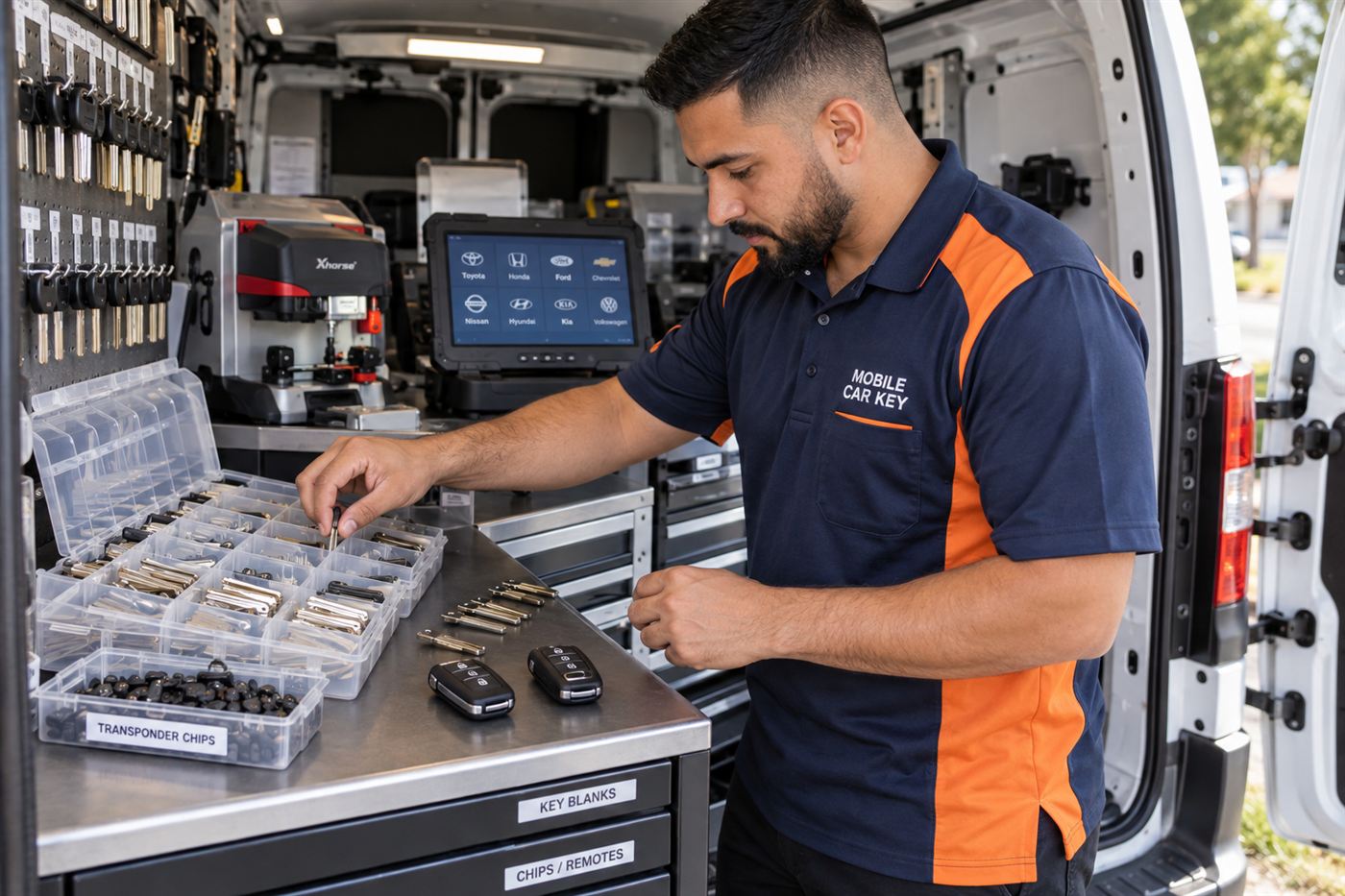
The mobile technician comes to your car with tools made for opening vehicles and, when needed, for making keys. In a standard lockout, the aim is to open the door without damage. The method depends on the vehicle, and the technician will choose a technique that fits.
When the key is simply locked inside, the visit is often limited to opening the car. If the fob is missing and not inside, the job grows into replacement, which depends on the vehicle and may involve programming. The page on vehicle lockouts describes the usual flow in more detail.
There are limits. Some newer vehicles from certain makes may need dealer-level tools or manufacturer access, and a technician will say so openly. Honest expectations are part of good service.
The trunk and rear liftgate problem
Grocery lockouts have a special variation: the trunk. You open the trunk, drop in bags, close it and later learn the key went in with them. Some vehicles lock the cabin when the trunk shuts, and some do not allow the trunk to be opened without the key nearby.
If you can still reach the cabin through a rear seat that folds forward, a technician may use that path. If not, the usual approach is to open a door, then release the trunk from the inside. Tell the dispatcher that the key is in the trunk so the plan can fit.
A related scenario is described in keys locked in the trunk. It has additional ideas for rear access and what to avoid if you are tempted to try a repair on your own.
Do not force the trunk
Pushing a tool into the trunk latch or bending the lid can damage the latch, the wiring and the paint. The damage can exceed the cost of a service call.
If the fob is in your hand but the car will not unlock
Some grocery lot problems have nothing to do with a locked in key. You hold the fob, press the button and nothing happens. Weak batteries, a signal blocked by metal carts or heavy interference near the store can make a fob act up.
Try the built in mechanical key. Most fobs hide a small blade that releases from the body, and most door handles hide a keyhole under a cap. If you have never used it, take your time and follow the lines of the handle.
If you can get in but the car will not start, check for a spot where you can hold the fob against the start button or a console slot. The guide on dead fob batteries explains this clearly for many models.
Waiting well while the technician comes
Choose a comfortable spot. Many grocery stores have benches near the entrance, a small seating area, or a cafe where you can wait. If you must stay near the car, stand in the shade and keep your phone with you.
Tell store staff and the manager you are waiting for an automotive service so no one is surprised. Ask whether any area near the car should be kept clear. If the car sits in a main aisle, ask staff to help you move other traffic away.
Be mindful of your own safety in lots at dusk or in the dark. Keep valuables out of sight, stay near the entrance and leave a message with someone if you are alone. If you feel unsafe, go inside and call 911 if needed.
- Stay near the entrance or in the store
- Keep children with you and away from the traffic lane
- Hold back cold items in a refrigerated area if staff allow
- Keep your phone charged and visible
- Do not hand the fob or documents to anyone who was not called
Weather and the lot surface
A grocery lot sees every kind of weather. In hot sun, pavement and car interiors build heat rapidly. In cold, a fob battery can fade and a lock can stiffen. In rain, wet pavement makes everything slower and more slippery for a technician working at the door.
Tell the dispatcher about the conditions. Heavy rain, ice or deep snow can change how the work is organized. A covered area, such as a cart shelter or a canopy near the entrance, is a useful spot to ask about.
You can help by being practical: bring an umbrella from the store, wear a coat from the trunk if you can reach it, and avoid leaning on the car when it is wet. These small steps keep you comfortable until the car is open.
Habits that stop the next lockout
Pick one place for the fob and use it every time. A zipped pocket, a lanyard on your bag or a dedicated clip works better than the cupholder. Check that spot before closing any door.
Load the car in a steady order. Put the cart on one side, open the trunk, move bags, close the trunk, then walk to the driver door. If the fob is in your hand when you reach the driver door, you cannot have locked it in the trunk.
If you rely on one key, consider making a spare. The guide to spare keys explains how a second key reduces stress. A fob battery that is old or unreliable is another source of trouble, so replace it before it fails, not after.
Working around lot traffic and cart corrals
A grocery lot is a busy place for a technician. Cars circle for spaces, carts roll loose and shoppers cross between rows with their heads down. If your car is in a main lane, tell the dispatcher, because the technician may need a clear spot to stand and open the door.
If you can, ask store staff for help placing a cone or a cart across the end of a row so traffic slows down. Many stores keep cones near the entrance for spills. Do not stand in the lane yourself to hold a space. Let the staff handle it, or choose a position beside the car where you are visible and out of the way.
Parking position matters as well. A car boxed in by a truck on one side and a cart corral on the other leaves little room to swing a door. Mention it on the call. The technician can plan the approach and decide if one side has enough room to work.
- Tell the dispatcher if the car is in a main lane
- Ask staff about cones or a cart barrier
- Keep children away from the driver side while the technician works
- Move your cart out of the technician's path
After the car opens: a short checklist
Once the door is open, take the key before you do anything else. Put it in your pocket, not on the seat, and lock the door only when the fob is in your hand. A second lockout after the first is more common than people expect.
Check the car before you drive off. Confirm the doors lock and unlock with the fob, that the interior lights and dash come on normally and that the car starts. If the technician replaced a fob battery or made a key, test each function while the technician is still there.
Finally, load the groceries and head out. If the lockout shook your routine, plan a better setup for next time, such as a lanyard or a pocket clip. The goal is not perfection, only a system that keeps the key with you at the moments you are most distracted.
- Take the key first
- Test lock, unlock and start before the technician leaves
- Ask what to do if the fob battery is old
- Write down any advice about spare keys
Related pages and next steps
If you are not in a grocery lot but somewhere else, there are other pages built for those places. A similar situation in a hotel lot is covered at locked out at a hotel, and a gas station version is at keys locked in the car at a gas station. The situations hub lists every other common car key problem.
Remember that this content is for education. Nothing here is a service agreement or a promise of availability, and terms are confirmed before dispatch.
A grocery store lockout is one of the easiest car key problems to solve when you stay calm, protect the food, and give a clear description to a mobile technician. The cart will be returned, the car will open and your evening can go on.
Common questions
How long can groceries stay in a locked car?
It depends on the weather, the items and how much shade the car has. Warm days cause cold and frozen items to warm within a short time. Move what you can out of the car, ask the store to hold cold items, and tell the dispatcher about perishables. If a person or pet is inside, call 911 immediately.
Can the store help me open my car?
Store staff usually cannot open vehicles, and many are not allowed to try. They can often hold cold groceries, let you wait inside, check for found keys at the desk and sometimes point out a good meeting spot in the lot. For the car itself, you will need a qualified mobile technician.
What if my phone and wallet are locked in the car too?
Ask a store employee or another customer to let you make a call, or use the store phone if there is one. Then explain the situation to the service. Ownership is checked on site, so ask a family member to help with documents or send a copy of your registration.
Will the technician damage my car while opening it?
A trained technician picks a method that suits your vehicle and aims to avoid damage. Risk grows when drivers pry at doors or force tools into locks first. Give the make, model and year, and ask the technician to explain the approach before the work starts.
My keys are in the trunk with the groceries. Is that harder?
It can need extra steps because some vehicles will not release the trunk without the key nearby. A technician may open a cabin door first and then use an interior release. Tell the dispatcher the key is in the trunk, and avoid forcing the lid yourself.
Is there an emergency exception for children or pets?
Yes. If a child or pet is locked inside, call 911 first and stay with the vehicle. Do not wait for a locksmith. Heat and enclosed air can become dangerous within a short time, and emergency responders are equipped to open the car immediately.