
Where the sun sets the rules
Anyone who has lived through a Phoenix summer knows that the climate is not background scenery. It shapes how people dress, when they exercise, where they park and how they treat their cars. A steering wheel can be too hot to hold, a seat belt buckle can sting, and a metal key left on a dashboard can become uncomfortable to touch. When a key goes missing in these conditions, the clock feels louder.
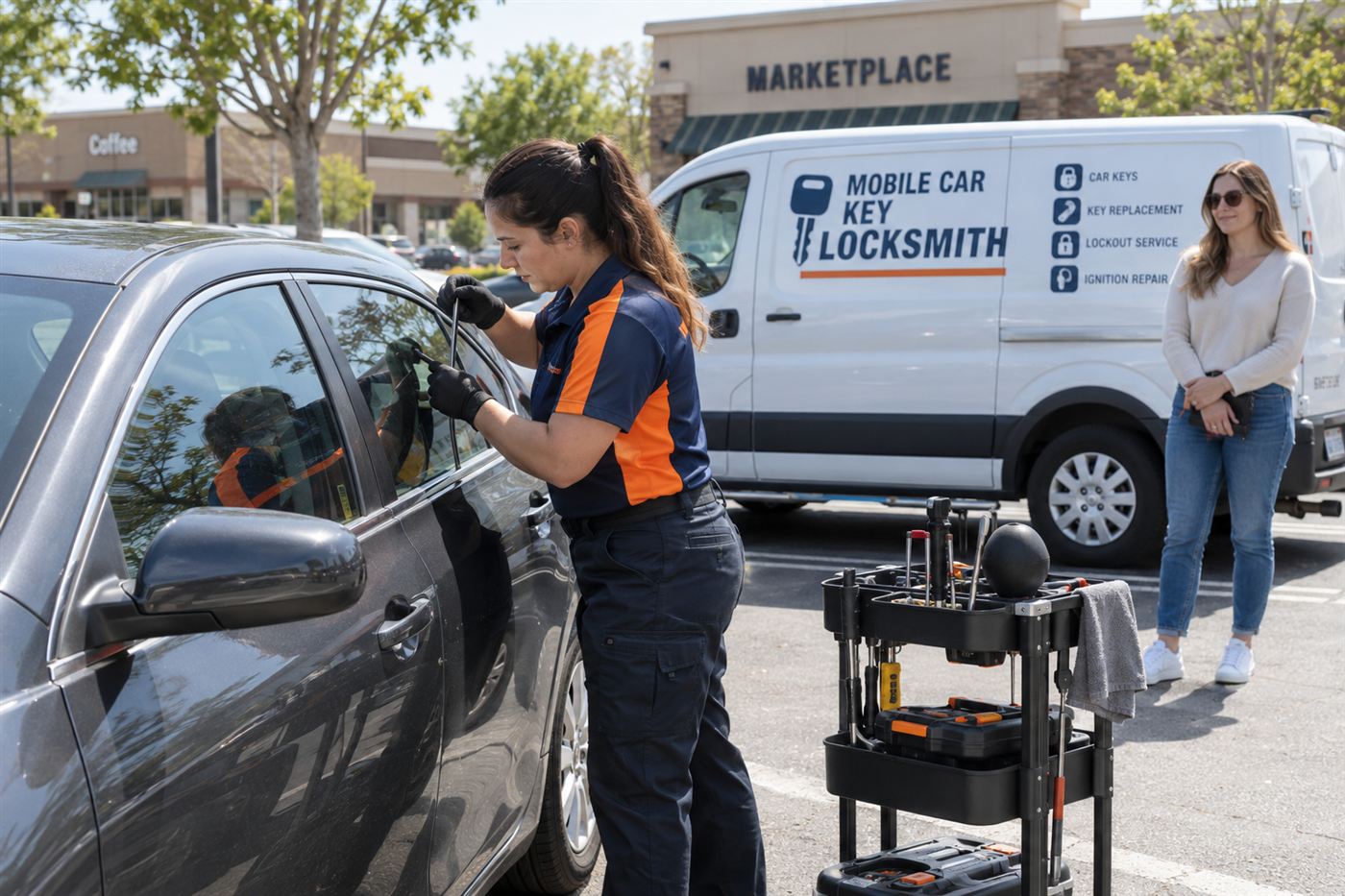
Mobile automotive key service sends a technician to the vehicle instead of requiring you to arrange a tow or a ride to a shop. Whether that can be done at your exact spot depends on the vehicle, the location, the access and current availability, all of which are confirmed with you before dispatch.
What follows is a practical look at the settings and conditions that come up in the Valley, from shopping center lots in triple-digit weather to desert trailheads where the nearest building is miles away.
When a locked car is an emergency
The most serious key-related situation anywhere is a child or an animal locked inside a vehicle. In a hot climate, the danger can build within a short time, even with a window slightly open. If this has happened, do not wait for a locksmith. Call 911 and follow the dispatcher's instructions. Emergency responders are trained and equipped for this, and they put life first.
Adults who are locked out are in a different category, but heat still matters. Waiting on asphalt in the afternoon can lead to dehydration or heat exhaustion. Find shade, go into a nearby building, drink water and tell someone where you are. A car that cannot be opened for a while is a lesser problem than a person who is overheated.
The page about being locked out in hot weather covers this topic in depth, including how to wait sensibly and what to say when you call for help.
What heat does to keys and fobs
Plastic expands, adhesives soften and batteries struggle when temperatures soar. A key fob left on a dashboard or in a cupholder can warp slightly, lose button response or drain its battery early. Over a few summers, many fobs begin to show wear: buttons that stick, a case that cracks, a range that shrinks.
The same applies to transponder keys with plastic heads. A chip inside can survive many cycles, but the casing around it may fail. If a head cracks, the chip may become loose or damaged, and a key that looked fine can stop starting the car.
Interior temperatures matter more than the weather forecast suggests. A closed car parked in direct sun can reach levels far beyond the outdoor air temperature, and everything inside experiences it: phone, plastic cards, medicine, and a spare key tossed in the console. A spare that lives in the car is a poor plan anyway, because if you are locked out, it is locked out with you.
A sunshade, a covered spot and window tint all reduce the load, but none of them make a car a good place to store electronics. Make a habit of carrying your key on your person and keeping the spare somewhere cooler and reachable.
Protect your keys by keeping them out of direct sun, avoiding long stays in a hot cabin and replacing batteries before they fail. The dead fob battery guide explains the signs of a failing battery and what to do about each one.
Sky Harbor, long trips and cars that sat for weeks
The Valley attracts snowbirds, tourists and spring training visitors, and it also sends residents on trips. Cars that sit in long-term lots or in storage for weeks are likely to suffer from weakened batteries. A weak car battery can make a smart key behave strangely, because the car's ability to detect the fob suffers.
When you return from a trip and the car will not respond, check the simple things first. Try the physical key blade hidden in your fob. Hold the fob close to the start button. If the car still does not cooperate, there may be a battery or programming issue that a technician can help diagnose.
Airport structures are large, so give the exact level, row and landmarks when you call. Rules at airport facilities vary, and a service will want to know what access exists before agreeing to come.
Travelers should also think about what happens when they land late. A dark parking structure after a long flight is not the place to discover that the fob is dead. Before you fly, test every key you plan to use, replace tired batteries and tell someone where you left the car. If you carry the only key on the plane, remember to keep it in a place that will not be separated from you during security screening.
Rental cars add another layer. If you lose the key to a rental, contact the rental company first, because the car belongs to them and they set the rules about who may work on it.
Shopping centers, big lots and the long walk
Valley retail centers have enormous parking lots, and a summer afternoon on open pavement is intense. Drivers frequently park far from the entrance, shop for an hour and come back to a car that is hot enough to hurt. Locking the key inside during a short stop is easy to do in that kind of rush, and then comes the long, sweaty wait.
If you are in this position, move into shade or inside a store. Tell store staff what is happening, because many managers will let you wait inside and may even know a suitable place for a technician to meet you. Note a landmark such as a store entrance or a numbered light pole so that the service can find your car.
On a busy weekend, lots can be crowded and hard to navigate. If your car is in the middle of a sea of vehicles, a clear description helps more than the street address.
Some drivers lean on a hidden key box to avoid this exact situation. In the Valley's heat, a magnetic box under a bumper can bake, and the key inside can warp. A box also advertises itself to anyone who knows to look. A trusted friend with a copy is a better choice.
If you share a car with a partner, agree on a routine: whoever drives gets the key, and the key goes into the same pocket every time. It sounds simple, but it prevents the classic scene of one person walking away with the only fob while the other waits in a locked car.
Desert trailheads and keys that fell out on the hike
The Valley's mountain preserves and desert trails attract thousands of hikers. Many people carry a key fob in a pocket or a fanny pack, and on a rough trail it can slip out unnoticed. Others lock a spare key in the car and then lose the main one. Trailhead lots can be dusty, remote and far from services.
If you reach the trailhead and cannot find your key, retrace the path with care, but do not go back into the heat if you are tired or short of water. Many people carry a spare key in a trusted place such as a trail partner's bag. That small habit can save a long wait on a hot day.
When you contact a service from a remote lot, describe the road, the lot name and landmarks. Mention cell coverage if it is spotty, and give a way to reach you later in case the signal drops.
Monsoon storms, dust and sudden weather
Late summer brings monsoon storms to the Valley, with gusty winds, dust and heavy rain. Dust can clog locks and buttons, and a sudden downpour can soak a fob left in an open car. After a storm, drivers sometimes find that a door lock sticks or that a key refuses to turn smoothly.
If a lock feels gritty, avoid forcing the key. Brute force can bend a blade or break it off inside the cylinder, and a broken key is a larger problem than a stiff lock. A technician can often clean or ease a stiff lock without damage if you stop pushing early.
During storms, waiting in the car is not always secure either. Look for a spot away from flooded washes and downed branches, and keep away from places where water can rush through. If conditions are dangerous, the key problem can wait.
Universities, sports venues and event nights
The area includes a large university campus and several sports and entertainment venues. On game days and concert nights, lots fill early, streets close and traffic builds. A driver who locks keys in a car near an arena may find that the surrounding streets are full of pedestrians and barricades.
Students add to the mix by sharing cars and keys. A fob might travel between roommates and end up in the wrong bag. If you are a parent trying to help from far away, remember that the service checks authorization before working on a vehicle.
Spring and fall bring crowds for baseball, football and festivals, and parking lots near venues turn into small cities. Some people tailgate with the car open and the key in a pocket that later goes through a wash. Others leave a fob on a cooler or a table and walk away. Look around your spot before you leave, and count your keys the way you would count your wallet and phone.
Rideshare drop-offs are common after events, and some drivers realize later that the key stayed in the car they left behind. If you left your own car at the venue and the key is missing, tell the service the full story.
On event days, tell the service about closures and crowds. A technician benefits from knowing where to stop and how to reach you, and a clear meeting point makes the whole process less stressful.
Understanding your key type
Keys vary widely. A traditional key has a cut blade only. A transponder key adds a chip that the car must recognize before the engine runs. A remote key head adds buttons for locking and unlocking. A proximity fob lets the vehicle sense the key nearby and start with a push of a button.
Many keys and fobs can be handled by a mobile technician, but limits depend on the make, model and year. Some newer vehicles from certain makes require dealer-level tools or manufacturer access. A reputable service will tell you if your car falls into that category rather than letting you wait for something it cannot deliver.
For a description of how the work is done, the vehicle lockouts page and the other service pages explain each kind of job in clear terms.
Proving the car belongs to you
A responsible automotive locksmith will check that you own or are authorized to use the vehicle before opening it or creating a key. Expect to show photo identification and a document tying you to the car, such as a registration, title or rental agreement.
In a hot climate, you do not want to dig through a sizzling glove box for paperwork. Take photos of your registration and insurance and keep them on your phone. If you do not own the car, arrange for the registered owner to be available by phone.
If something is missing, tell the service. They may be able to suggest ways to obtain a copy of the document before work begins.
How to describe your situation
Begin with the problem: lost key, broken key, locked out, dead fob or key stuck in the ignition. Next, give the year, make and model, the exact location and any access details. If the engine is running or a key is visible inside, say so.
Be open about earlier attempts and unusual features. If you tried to open the door with a tool, or if the vehicle has an aftermarket alarm, the technician should know.
After the call, the service confirms availability, coverage and terms before dispatch, sends a technician, checks ownership on site, performs the work and tests it. If you want to see it all in order, the how it works page is the place to look.
Neighbors and nearby regions
The Valley is part of a larger Southwest network of cities that share heat, distance and car-centered life. For a similar climate with a different feel, see the Tucson page, and for a destination city built around tourism and desert driving, read the Las Vegas page. The Arizona state page covers the broader picture, and the city hub lists every metropolitan page.
Nearby states pull on Valley drivers too. Weekend trips to California beaches, Utah parks and New Mexico mountains are common. A key problem on a road trip is harder because you are far from your usual support. Carry a copy of your registration and consider keeping a spare key with a family member at your destination.
Desert distances matter. If you break down on a highway between cities, cell coverage may be uneven, and the nearest exit may be far. Give the highway name, the direction and the nearest mile marker.
Carry water, keep your phone charged and let someone know your route on long drives. These habits protect you on a trip even when keys are not the issue.
Habits that keep a hot-climate key working
Treat your key like a small piece of electronics, because that is what it is. Store it away from sun and heat, keep it dry, and avoid hanging a heavy bundle of other keys from the fob. A heavy ring can wear out the ignition cylinder over time and loosen the internal parts of a key head.
Replace the battery on a schedule, not after a failure. If you cannot remember when it was last changed, it is probably time. Keep a small spare battery with your emergency supplies at your residence, and make a note of the model number printed on the cell.
Check the physical key blade hidden in your fob. Many people never use it and never confirm that it still turns the door lock. Test it once while you are not in a hurry. A blade that works gives you a way in when the electronics fail.
A calm plan for right now
Get out of the sun if you can. Drink water. Check pockets and bags. Call anyone who might hold a spare. Write down your location with as much detail as possible. Photograph your ID and registration if they are accessible.
Decide what you need: the car opened, a key made, a fob reprogrammed or a broken key removed. If you are not sure, say so. Be skeptical of anyone who offers to fix the problem on the spot without verifying ownership.
This page is educational. It does not create a service agreement and does not promise help at a specific time or place. Availability, coverage and terms are confirmed with you before dispatch. If anyone is in danger, call 911 first.
Common questions
What should I do if my child is locked in the car?
Call 911 right away. A closed car in the Phoenix heat can become dangerous within a short time, even with a window cracked. Emergency responders are equipped to handle this and come first. Do not wait for a locksmith, and follow the dispatcher's instructions until help arrives.
Can heat really break a key fob?
Heat can warp plastic, soften adhesives and drain batteries early. Over time, buttons may stick and the case may crack. Keep your fob out of direct sun, replace the battery before it dies and consider a spare while your original still works reliably.
I am at a remote trailhead with spotty signal. Can anyone reach me?
Possibly, but access and distance matter. Describe the road, the lot and landmarks, and share another way to reach you if the signal drops. Availability and terms are confirmed before dispatch, and the service will tell you honestly whether it can help at that location.
Will dust or monsoon rain damage my lock?
Dust can make locks gritty and rain can soak a fob. If a key resists, stop pushing, because forcing it can bend or break the blade. A technician can often ease a stiff lock without damage if you avoid brute force.
What proof of ownership will I need?
A photo ID and a registration, title or rental agreement are the usual items. If the car belongs to someone else, the owner may need to confirm authorization. Keep photos of your documents on your phone in case the paper copies are in the locked car.
Can every car key be replaced?
No service can honestly promise that. Many vehicles are workable, but limits depend on make, model and year, and some newer vehicles need dealer-level tools or manufacturer access. The service will tell you early what it can do for your vehicle.