
Why fuel stops produce so many lockouts
A gas station asks you to do many small things in a hurry. You pull in, switch off or leave the engine on, step out, swipe a card, pump, perhaps walk into the shop for a drink or a receipt, and return. At some point the fob ends up on a seat, in a cup holder or in the pocket of a jacket you left behind, and the door swings shut.
Cars that lock automatically add to the problem. Many vehicles lock the doors at a certain speed or when the fob moves away from the vehicle. If you leave the fob in the cabin and close the door while walking to the shop, the car may lock around it.
Another classic is the car left running. A driver steps out to pay or to check the tire pressure, the engine idles, and the door closes with the key still in the ignition or the fob on the seat. The situation is common, and technicians see it regularly.
Take care of the immediate surroundings
Your first job is to make the scene orderly. If the nozzle is still in the tank, stop the pump, remove the nozzle and hang it up, or tell the attendant if you cannot reach it. Do not leave a nozzle hanging in a locked car.
If the engine is running, it will continue to run until the fuel runs out or someone switches it off. That is a concern near a pump. Tell the station staff you have a running vehicle you cannot enter, so they know and can decide how to handle the area.
If there are other people in your party, gather them away from the traffic lane of the lot. Fuel stops have cars entering and leaving constantly, and a group standing around a locked car is easy to miss from behind the wheel. A clear spot on the sidewalk or by the shop wall keeps everyone out of the way and keeps the wait calm.
Take your phone and wallet with you if you have them, and keep your distance from the pumps while you sort things out. Avoid making calls right at the pump if the station posts a sign against it, and use the safer spot a few steps back.
Fuel vapor and open flames
Fuel vapors collect near the ground at a pump. Do not smoke, do not use lighters and do not run tools that make sparks. A technician follows the station's rules for working near the pumps, and the station may ask for the car to be moved first.
Tell the attendant or the manager
Station staff are used to this. Tell them the car is locked, the engine is running if it is, and you are arranging help. They may point you to a better spot or ask to see the vehicle. Some stations have rules about work near pumps, and the manager can say what is allowed.
If the vehicle blocks a pump, say so. Staff may be able to redirect other drivers while you wait. Waiting in a place that does not hold up other customers is courteous and often a requirement.
Do not ask staff to attempt to open the vehicle. Most employees are not trained to do it and tools used carelessly can scratch paint and tear seals.
It also helps to ask whether the station has cameras covering the pump area. They are not there to judge you, but a record of where the car sat and when can be useful if anyone later has a question about a scratch or a delay. Most drivers never need it, and it costs nothing to know.
If you came in on a long drive, keep in mind that your plans may change. A lockout at a fuel stop is a good moment to message anyone expecting you, so they are not left wondering. A short note is enough, and it takes pressure off the wait.
Check every way in
Walk around the car and try each handle. Fuel stop lockouts frequently involve only one locked door, and the others may open. Check the hatch or trunk too.
If you left the engine running and a window is partly open, resist any urge to reach in with a tool. Hooking a bag or a stick at a door lock risks the paint, the wiring and the window seal, and it rarely works on newer door designs.
If you have a second key, ask someone to bring it. Phone apps that unlock the car remotely are another option if you set them up beforehand. Roadside assistance from your insurer, a membership or the manufacturer may also include lockout help.
When the engine is still running
A running engine in a locked car is a special case. It means the keys, or at least the fob, are inside, the engine continues to idle, and the car will keep consuming fuel. It also means the dashboard is lit and some systems are active, which is another reason to avoid hurried attempts.
A mobile technician opens the door with non damaging tools and then lets you switch the engine off. Once you have the fob, you can lock, unlock and start the car normally. Because the engine is running, the technician will usually ask you to stay clear of the exhaust and the pump area.
If the car has been idling for a long time, check the fuel level and the temperature gauge once you are in. An idle car in warm weather can heat up more than you expect.
Some cars with push button starts will keep running with no fob inside, then refuse to restart once switched off. That is by design, and it is why you should not shut the engine off until the fob is back in your hand. Once you have the fob, restarting is routine.
If anyone or anything is inside the car
If a child, an infant or a pet is in the locked car, the situation becomes an emergency. Call 911 first. Cabins heat up rapidly, even on a mild day with the engine running and air conditioning, and a running engine can fail or run out of fuel.
Emergency responders can open a vehicle right away and are the right people for a person in distress. A technician can help with the lock afterward. Do not wait for private help in this case.
The page on a child or pet locked in the car explains the steps for this scenario in more detail. Read it once so you know what to do before it matters.
How a mobile technician works at a fuel stop
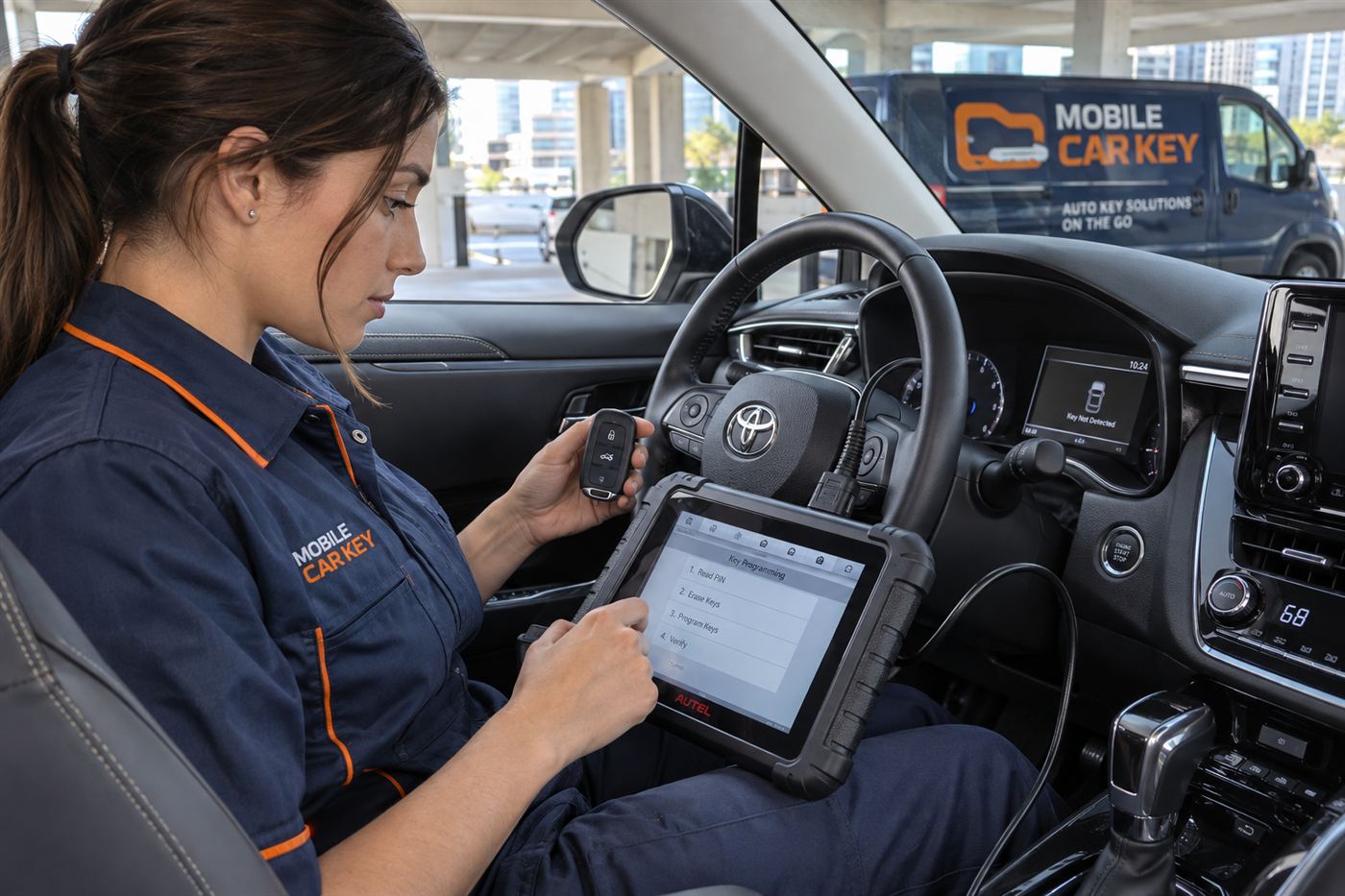
A mobile automotive technician comes to the vehicle, so a station lot is as workable as any other lot. The technician confirms the vehicle and the situation, checks that ownership or authorization is shown, and uses tools designed to open a door without harming it.
Working near pumps requires judgment. The technician may ask that the car be moved a short distance from the pumps first, or may work at the edge of the fuel area. If the keys are in the cabin, the door is opened, the keys are retrieved and the lock is tested.
The availability, coverage and terms of any service are confirmed before dispatch. The page on vehicle lockouts describes the general approach to opening a car without damage.
What if the car cannot be moved?
If the car is stuck beside a pump with no way to roll it, tell the station staff and the service. The station may close that pump temporarily. The technician will plan around the spot, using the most careful approach available.
Charging stations and mixed fuel stops
Many fuel stops now include electric vehicle chargers, and some drivers find themselves locked out beside a charging post rather than a pump. The same basics apply: make the scene orderly, check every door, and tell whoever manages the site.
A charging cable plugged into the car adds a detail. Most vehicles lock the charging port while the doors are locked, which holds the plug in place. That is a feature meant to prevent theft of the cable, and it means the plug will stay put until the car is unlocked. Do not yank the cable. Once the doors are open, the charge can be ended in the usual way.
Charging sessions often run on a timer or a payment app. If you are locked out mid session, you may want to check the app on your phone for the charge status. A session that keeps running while you wait is not harmful, but a station that bills by time may add up, so ending the session when you regain access is sensible.
Electric and hybrid vehicles use smart keys heavily, so a lockout can involve a dead fob battery or a car that cannot detect the fob. The pages on a smart key that says key not detected and a key fob that stopped working cover related fob problems.
Late hours, lighting and personal security
Fuel stops stay open at odd hours, and a lockout after dark has its own feel. Choose a well lit spot near the shop window or the entrance where staff and cameras can see you. Let someone you know understand where you are and how long you expect to wait.
If anyone nearby makes you uncomfortable, go inside the shop and stay there. Your car and your keys matter less than your well being. If you feel threatened at any point, call 911.
When the technician arrives, you are entitled to see how they identify themselves and to ask about the plan before work starts. A reputable service confirms the details of the vehicle and the location with you during the call, so the person who arrives matches what you were told.
A pump area at night is also a place where people notice a car with its engine running. If you can, ask staff to keep an eye on it. That small courtesy gives you some peace of mind while you wait.
Proof that the car is yours
A reputable service asks for proof of ownership or authorization before opening a vehicle. A photo ID that matches the registration or title is typical. At a fuel stop you may be carrying your wallet but not the registration, and that is something to mention on the call.
Details such as the vehicle identification number visible through the windshield, a registration photo on your phone or an insurance card app may help. The service explains what it accepts so you can prepare while you wait.
More general guidance is in the ownership proof guide. For rentals, tell the service so the rental company's authorization can be arranged.
What to share when you contact the service
Be ready to give the vehicle details and the exact spot. The station's name or the nearest cross street is usually enough, and a landmark such as the car wash or the shop door helps.
Add any detail that affects the plan. Mention whether the engine is running, whether the car blocks a pump and whether anyone is inside.
- Year, make and model of the vehicle.
- The station name, cross street or landmark, and which pump or area the car is in.
- Whether the engine is running and whether the nozzle has been removed.
- Whether the keys are visible inside the car or elsewhere.
- Whether a spare key or roadside assistance is available.
- Whether a child, a pet or a person is inside.
Waiting comfortably and politely
Choose a spot out of the way of the pumps and the exit. A bench, a shaded wall or the shop entrance may do. Keep your phone charged and your belongings with you.
If the station is busy, offer to move the car or ask staff to guide others around it. Many stations are tolerant of a short wait, and a clear explanation helps. If the wait stretches, check with the manager again.
In bad weather, wait inside the shop if the manager agrees. Stay in view of the car so you can meet the technician and show where it is.
Habits that stop the next fuel stop lockout
Develop a ritual at the pump. Put the fob in a pocket you zip or button, and check it before you close the door. Never leave it on the seat or in the cup holder when you step out.
If you often leave the engine running, rethink that. Turning the engine off and taking the fob means the car cannot lock around it. Some cars warn you if the fob is left inside; learn what your car does.
Keep a spare in a location you can reach, or carry a wallet card key if your vehicle supports one. The spare key guide has ideas.
Using the car's own safeguards
Some vehicles will not lock if the fob is detected inside, while others will. Test yours in a calm moment so you know. A short experiment in your own driveway can save a long wait later.
Related situations and where to read next
A fuel stop lockout shares a lot with other public place lockouts. If it happened at a store lot, read about a lockout at a grocery store. If it happened in a covered structure, read about a lockout in a parking garage.
For the full overview, the situations hub gathers every page of this kind, and how it works explains the path from request to finished job.
This information is educational only and does not create a service agreement. Availability, coverage and terms are confirmed before a technician is dispatched.
Common questions
Can a technician work near the gas pumps at all?
Technicians follow the station's rules and common sense about fuel areas. They avoid sparks, open flame and unnecessary tools, and they may ask to move the car a short distance away from the pumps first. Tell the station staff what is happening so they can guide the area, and expect the plan to be explained before work begins.
My car is running and locked. Should I be worried?
Take it seriously but calmly. Tell the staff, keep people away from the exhaust and the pump, and arrange help promptly. A running engine will continue until fuel runs out, so do not leave it for hours. If a child or pet is inside, call 911 first because heat builds rapidly in a closed cabin.
Can the station staff open my car for me?
Most cannot and should not try. Improvised tools can scratch paint, damage door seals and wiring, and may set off alarms. Staff can help by guiding traffic, closing a pump or letting you wait inside. For the lock itself, a spare key, a roadside assistance provider or a mobile automotive technician is the sensible route.
What if I left the nozzle in the tank?
Stop the pump and remove the nozzle if you can reach it, or ask the attendant to do so. Do not leave a nozzle hanging in a locked car, since the car may be moved later. Then continue with the lockout. If there was any fuel spill, tell the staff right away and keep clear of the area.
Do I need to move the car away from the pump first?
That depends on the station and the technician. Some stations ask for work to be done away from the pumps, and some vehicles can be pushed a short distance. If the car cannot be moved, tell the staff and the service so they can plan. The goal is to work in a way the station is comfortable with.
Will I need a new key after a lockout like this?
Usually not. If the keys are inside the car, the technician opens the door and you take them out. A new key is needed only if the keys are lost, damaged or cannot be reached. Ownership is checked in any case, and the service confirms availability and terms before sending anyone.