
Why a car key problem feels different in New York
A lost key in a small town is an inconvenience. In New York City it can be a puzzle with moving parts. Your car may be tucked into a tight garage ramp, parked on a street where the next spot is blocks away, or sitting in a lot across a river from where you are standing. Public transit makes it easy to leave a vehicle for a day, which also makes it easy to discover the problem long after you walked away from the car.
Mobile automotive key service exists for exactly this kind of situation. Instead of arranging a tow to a shop, a technician travels to the vehicle with the equipment needed to open it, cut a key or program a fob, depending on what happened. Whether that is practical at your specific spot depends on access, parking rules and the vehicle itself, and those details are confirmed with you before anyone is sent.
The sections below walk through the settings that are most common in the five boroughs, the kinds of key problems they tend to create, and the small preparations that make a call go smoothly.
The five boroughs and why distance is relative
Manhattan, Brooklyn, Queens, the Bronx and Staten Island each have their own driving rhythm. A driver in Queens may park beside a street lined with rowhouses and use the car every day. A Manhattan resident might pay for a garage spot and drive twice a month. A Staten Island commuter may rely on the bridge and the ferry system for most trips. A mobile key service has to think about all of these patterns at once, because the same lost key looks very different in each.
When you describe your situation, the most useful details are the borough or neighborhood, the nearest cross streets or the name of the garage, and anything about access such as gates, ramps or a staffed attendant. These details help the service decide whether it can reach you and what to bring.
Because the region borders New Jersey, Connecticut and Long Island, some calls begin in one place and end in another. A driver who loses a key in a parking lot just across a state line still needs the same help, and the service will ask where the vehicle is rather than where you live. If you are curious about the broader picture, the New York state page covers driving across the rest of the state.
Garages, ramps and tight parking
Garages are a fact of life in much of the city. Many are attended, with valet staff who move cars around on a regular basis, and some are automated systems where the vehicle is carried by a platform. A key problem inside one of these has special wrinkles. You may need the garage operator to confirm that the car belongs to you, to let a technician onto the premises, or to move the car to a more workable spot.
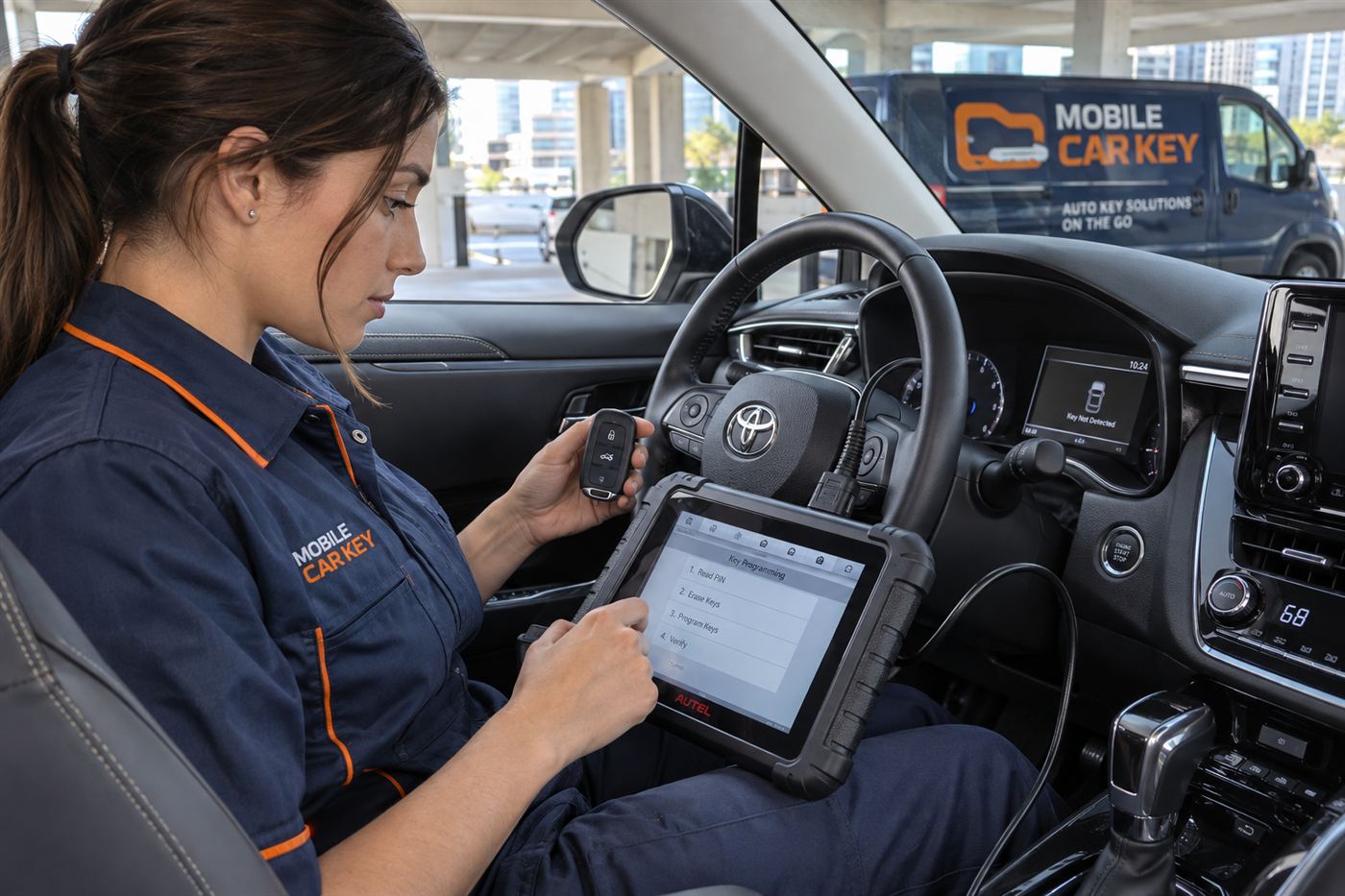
Low ceilings and narrow lanes affect how a technician can work. Opening a locked door usually needs room to stand beside the vehicle and reach the door frame. Programming a new key often requires sitting inside the car for a while with a diagnostic tool plugged in. If the car is wedged between pillars, it may help to ask staff whether it can be moved before work starts.
If you are locked out inside a structure, the situation resembles the one described on the locked out in a parking garage page, which goes deeper into what to tell the operator and what to expect.
Street parking and the alternate side routine
Anyone who parks on a New York street learns the rhythm of cleaning days and shifting rules. That routine can collide with a lost key in an uncomfortable way. If your car must be moved by a certain time and you cannot start it, the clock matters. It is worth saying so on the call, because it affects how urgent your situation is and whether the work needs to happen where the car sits or somewhere nearby.
Working on a curb comes with its own constraints. Traffic passes close, space for tools is limited, and a technician has to think about both safety and the rules that apply to standing vehicles. Some jobs, like opening a locked car, are straightforward at the curb. Others, like cutting and programming a replacement key, may take longer and require a steady power supply and a calm environment.
Never leave a running car unattended while you hunt for a spare, and do not stand in the traffic lane to wait for help. If the vehicle is blocking something important or you feel unsafe, move to a protected spot and describe where you are.
Airports, bridges and tunnels
The region has three major airports, LaGuardia, John F. Kennedy and Newark across the river, and each has long-term lots, rental counters and garages. Travelers often come back from a trip to discover that the key fob battery died while the car sat, or that the spare they thought was in the bag is somewhere else entirely. Airport settings add rules about who may enter and where a vehicle may be worked on, so the service will want to know exactly which lot or level you are in.
Bridges and tunnels shape how far apart two points in the city really are. A technician who is a short distance from you on a map may still face a long detour. That is one reason availability is checked before dispatch rather than promised in advance. Be ready to tell the service which side of a river or harbor you are on.
If you are traveling and the problem began far from the car, the locked out at the airport page and the rental car key guide cover related situations in more detail.
Winter, salt and the way weather hurts keys
New York winters are cold and wet, and road salt is part of the picture. Freezing temperatures can sap a key fob battery, stiffen a lock cylinder and make plastic parts brittle. A fob that works fine in October may act strangely in January, flickering between responses or failing entirely on the coldest morning of the year.
Snow adds practical complications. A car buried by a plow may need to be dug out before a technician can reach the door. Ice on door seams can make a locked car harder to open without damage, and a technician may need to take extra steps to avoid scratching paint or bending weatherstripping.
Summer has its own hazards. Heat and humidity can cause a fob to fail, and a car in direct sunlight becomes dangerous within a short time for any child or animal inside. If a child or pet is locked in a hot car, call 911 first. That is an emergency, not a key service call.
Ride apps, taxis and the lost key in the back seat
Plenty of New Yorkers do not own a car, but those who do often use it for weekend trips and errands, not daily commuting. Keys get lost in unusual ways when a vehicle sits idle. A fob may be left in a coat that went to the cleaners, in a bag that was checked on a flight or in the back of a taxi. Before assuming the worst, retrace where the key last was and check the usual hiding places such as jacket pockets and bag linings.
If you think you left the key in a ride or on a train, contacting the carrier or transit lost property office is worth a try. In the meantime, the car may still need attention, particularly if it is parked where rules are strict. A service can tell you what is needed to replace a key when none of the originals can be found, and the all keys lost page explains that path.
Keep in mind that newer keys are tied electronically to the vehicle. A key found weeks later may no longer be the only key that matters, because a replacement may have been programmed in the meantime.
Valet stands, restaurants and event nights
The city runs on valet service. Restaurants, hotels and theaters hand out tickets and park cars in lots you may never see. That arrangement creates a specific kind of key trouble: the attendant has a key, you have a ticket, and something goes wrong. Maybe the valet key only opens the door, or a smart fob was not returned properly, or the car is locked with the real key inside.
If the hotel or venue holds the car, the first step is to talk to the manager on duty. They can confirm the vehicle and sometimes provide access to the area where it sits. A mobile technician may then be able to work on site, provided the venue agrees. Ownership still has to be verified, so bring your ID and registration even if you left the car with someone else.
Event nights bring heavy traffic and road closures. If you are calling on a night when a game, concert or parade is underway, mention it. It affects both travel and the level of availability.
What kind of key do you have
Most modern vehicles use more than a simple cut piece of metal. A transponder key contains a chip that talks to the car, a remote key head adds buttons for locking and unlocking, and a proximity fob lets the car detect the key nearby so that you can start it with a push of a button. Each type needs different tools and steps, and the details vary by make, model and year.
Knowing which kind you have helps the conversation. If you can find a spare, look for a logo, a button layout or a plastic casing. If you have nothing, the service can walk through questions about how your car starts to identify the likely type. The pages on transponder keys and remote and proximity fobs explain the differences in plain language.
Some newer vehicles from certain makes need dealer-level tools or manufacturer access for programming. A reputable service will tell you that early rather than letting you wait for something it cannot do.
Proving the car is yours
A responsible locksmith will not open a car or create a key for someone who cannot show a right to the vehicle. That protects you as much as anyone else. Expect to show a government issued photo ID and a document that ties you to the car, such as a registration or title, or a rental agreement if the car is rented.
In a city where cars are often parked far from where the owner lives, it is easy to forget that the registration may be tucked inside the very car you cannot open. Take a photo of the registration and insurance card and keep it in your phone. If someone else owns the vehicle, such as a family member or an employer, arrange for them to confirm authorization.
The ownership proof guide lists the documents that usually help. Having them ready can shave real time off the process even though no one can promise a specific arrival window.
How to describe your situation on the call
A clear description makes everything easier. Start with the problem: lost key, broken key, locked out, dead fob, or key stuck in the ignition. Then give the vehicle year, make and model, the exact location, and whether the engine is running or the keys are visible inside. If you have a spare, say so, because a spare changes the job.
Be honest about anything unusual, such as an aftermarket alarm, a recent battery replacement or a prior attempt to open the door. These facts can change which tools are appropriate. Also mention access issues like gates, garage codes or a need for the attendant to approve entry.
The how it works page outlines the general sequence. In short, you call or request a callback, the service asks about the vehicle and location, confirms availability, coverage and terms before dispatch, sends a technician, checks ownership on site, does the work and tests it.
Nearby cities and the wider network of pages
Many people in the region do not stay inside the city limits. Work, family and weekend plans carry drivers across state lines every week. If your situation involves another metropolitan area, you may find the Philadelphia page useful for a similar dense, rowhouse flavored environment, or the Chicago page for another big city that deals with harsh winters.
You can also browse the full list of city pages to see how the same services work in different settings. Each page is written for its own area and driving habits, so the details differ from city to city.
For the core service explanations, the car key replacement page covers what is involved when a key must be made from scratch.
A calm checklist for the next few minutes
If you are standing next to a car you cannot get into or start, take a breath and run through the basics. Make sure you are in a secure spot away from traffic. Check every pocket and bag. Try the spare, if there is one, even if it is far away and someone else could bring it. Check whether a family member or roommate has a key and can meet you.
Then gather your information: vehicle details, exact location, photo ID and proof of ownership. Decide whether you need the car opened, a key replaced or a fob reprogrammed. If you are not sure, say so and let the service help you narrow it down.
Think about timing too. A car parked under a rule that requires moving it, a rental that is due back, a shift that starts soon or a child who needs a pickup all change what you ask for. Say which of these applies, because a technician can only plan around what the service knows. Be flexible about the working spot when you can. Sometimes a car that is stuck in an awkward place can be moved a short distance by a garage attendant, and that single change makes the work calmer for everyone.
Finally, resist the urge to try risky shortcuts. Forcing a lock, prying at a window seal or hammering on a stuck ignition can turn a small problem into a repair bill for a bent door frame or a damaged cylinder. A patient, informed approach is usually kinder to the vehicle and to your schedule.
This page is educational. It does not create a service agreement, and nothing here promises that help is available at a particular place or time. Availability, coverage and terms are confirmed with you before dispatch.
Common questions
Can a mobile car key service reach all five boroughs?
Mobile service is designed to come to the vehicle, but reach depends on the exact location, access and current availability. Tell the service the borough, cross streets or garage name when you call. Coverage and terms for your spot are confirmed before a technician is dispatched, so you know the situation before anything is committed.
What if my car is inside a parking garage?
It is often possible, but you may need the garage operator to approve entry and confirm the vehicle. Tell the service the level, the garage name and any access rules. Low ceilings and tight spaces can affect how work is done, so staff may be asked to help move the car.
Do I need proof that the car is mine even in an emergency?
Yes. A reputable service checks ownership or authorization on site before opening a car or making a key. A photo ID and a registration, title or rental agreement usually work. If someone else owns the car, arrange for them to confirm that you are allowed to use it.
Can a lost key be replaced if I have no spare at all?
In many cases a new key can be created and programmed to the vehicle even when every original is missing, though limits depend on the make, model and year. Some newer vehicles require dealer-level tools. The service can tell you what applies to your car during the first call.
Is cold weather really a problem for key fobs?
Yes. Low temperatures weaken batteries and can make fobs respond poorly. If a fob works only sometimes in winter, replace the battery early and keep a spare key somewhere reliable. A fob that fails completely may still start the car if held close to the start button, depending on the design.
What should I do if a child or pet is locked inside the car?
Call 911 immediately. A child or animal in a closed car can be in danger within a short period, especially in warm weather. Do not wait for a locksmith. Emergency responders can open the vehicle and are the right first call for any life-threatening situation.