
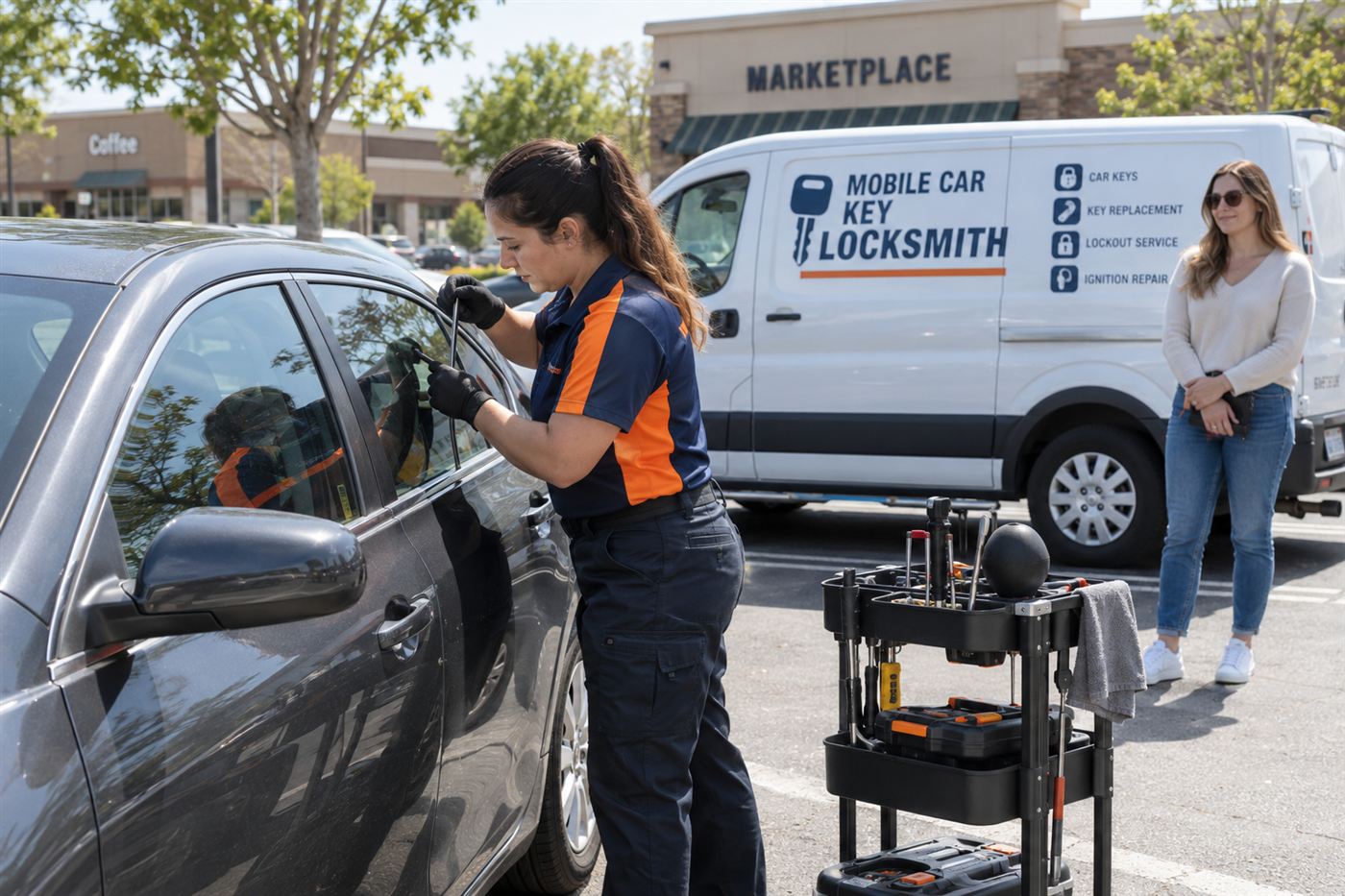
A city that still drives like the West
Fort Worth built its identity on cattle, rail and open land, and the habits of that history still show. Pickup trucks are everywhere, horse trailers roll through on weekends, and people think nothing of driving a long way for dinner. That shapes the kind of key trouble that comes up. Truck keys, trailer hitches and big parking areas are part of daily life.
At the same time, the city has grown into a place with museums, universities, corporate offices and a busy airport corridor. A driver can go from a gravel lot to a downtown garage in one afternoon. The service you call has to understand both ends of that range, and so do you when you describe where you are.
This page is general education. It does not create a service agreement, and availability, coverage and terms are confirmed with you before a technician is sent to your vehicle.
Truck keys, work keys and the pickup problem
Many Fort Worth households own at least one pickup, and trucks tend to see rough use. Keys ride on carabiners with tools, get dropped in mud, fall off tailgates and are lost in the bed or under a seat. A truck key may be a simple metal blade, a transponder key with a chip or a push-button fob, depending on the model and the year. Our page on pickup truck keys explains the range in more detail.
Work trucks bring another twist. A vehicle used on a job site may be keyed with a single copy, and the person who actually drives it may not be the owner. If the key is lost, the technician still needs proof that someone with authority approves the work. A phone call from the company owner or a copy of the registration often settles it.
Keys lost in the truck bed
It sounds odd, but a key that falls from a shirt pocket into an open bed is easy to miss. Before assuming it is gone, look through toolboxes, bags and loose gear. If the truck is locked with the key inside, the lockout page explains what a technician can do without damaging the door.
Keys worn by mud and weather
Dirt, rain and hail can damage fobs and make buttons sticky. If a fob needs more and more pressure to work, the battery or the rubber pad may be failing. Replacing it before it dies prevents a stranded morning.
The Stockyards, Sundance Square and tourist parking
Visitors come to Fort Worth for the Stockyards, the downtown square with its restaurants and theaters and the cluster of art museums to the west. Parking in those areas ranges from brick-lined streets to paid garages and large surface lots. Tourists often arrive with rental cars and unfamiliar vehicles, which raises the chance of a lockout or a lost fob.
When someone is stranded in a crowd, the temptation is to walk away to find help and then forget the exact location. Do not leave without writing down the street name, the nearest business and the lot color or level. A technician can only arrive where you can point.
Events such as rodeos, stock shows and festivals add crowds and temporary parking in fields and fairgrounds. Gravel and grass lots are open, easy to describe and often hard to search for a lost key. If your key vanished in a field, retrace your steps slowly before calling.
- Photograph the parking sign or garage level.
- Note the nearest cross street or business name.
- Keep the rental agreement and a photo identification on your phone.
- If valets handled your car, ask them first whether your key was returned.
Hail, heat and what weather does to keys
North Texas is known for dramatic weather. Summer heat bakes parked vehicles, spring storms bring hail and winter can produce ice. Each has a connection to keys. Heat weakens fob batteries and softens plastic. Hail can dent a roof but also cause drivers to dash from the car to shelter, leaving the key behind or locking it inside.
Ice and cold present their own trouble. A frozen door lock can refuse a blade, a cold battery can make a fob appear dead and a driver in a hurry might force a key and snap it. If a key breaks in a lock or ignition, do not try to pull it out with pliers. Our guide on a key broken in the ignition explains why a gentle approach protects the lock.
If a child or a pet is trapped inside a closed vehicle in hot weather, call 911 first. That is an emergency, and emergency responders should act before any locksmith service.
Campus parking and game days
A well-known university sits just south of downtown, and on game days thousands of people arrive by car. Students, alumni and visitors park in garages, lots and on neighborhood streets. Cars may sit for many hours, and the people returning to them are tired and in a hurry.
A student in a shared car or a parent visiting for the weekend may not have the vehicle title with them. If a key is lost, bring a photo identification, and if the car is registered to someone else, arrange for that person to confirm permission by phone. The page on proving you own the car has a list of documents that typically work.
During move-in and move-out periods, many students pack car keys into boxes. A spare key stored away from the main one protects against the common mistake of locking both in the same trunk.
Airport corridors and long term parking
Fort Worth shares a large international airport with its neighbor to the east, and a second airfield serves the northern side of the city. Travelers leave cars in long term lots for days, then return to find a weak or dead battery in the fob. A lot map usually has section letters or numbers, and those are essential when you describe the car.
Rental returns bring a related issue: a driver drops a key in a return slot and then realizes a personal item is still locked inside. Because a rental key belongs to the rental company, a mobile service may need that company's approval. Our rental car key guide explains who should be contacted first.
Parking structures at the airport may have height limits, tickets and security checkpoints. Tell the service what the car's location looks like, what level it is on and how a technician would enter the structure.
The logistics belt and the commuter reality
North of downtown, warehouses and distribution centers employ many drivers who arrive at all hours for shifts. Employee lots are large, security gates are common and some areas may restrict outside vehicles. If your car is inside a gated employer lot, tell the service whether you can meet a technician at the gate and whether a badge or escort is needed.
Commuting across the metro area often means long drives on busy highways between Fort Worth and the cities nearby. A key problem at a distant park and ride lot or office can leave a driver far from the usual territory. Describing your location carefully matters more than naming the city.
For neighboring places, the page on Dallas drivers and the page on Austin drivers describe how patterns differ in those cities, and the full set of city pages covers others.
The key types you are likely to meet
Texas roads carry a wide range of vehicles. Many models have a simple metal key with no chip, others use transponder keys and many newer vehicles use smart fobs with push-button start. Which type your car uses affects the tools and the time a job needs, and so it affects what the service asks you before sending a technician.
A transponder key contains a small chip that the car checks before it will start. A copy cut without the right chip will turn in the lock but not run the engine. Our page on transponder keys explains how duplication works and why a blade cut alone is not enough.
Smart fobs let the car detect the key in a pocket or bag. When those fobs fail, the car may display a message, and the engine may refuse to start. Replacement often needs programming that matches the new fob to the car. Some newer models from certain makes may require dealer-level tools, and the service tells you in advance if that applies.
What to say when you call
A clear call helps a technician arrive prepared. Start with the vehicle: year, make and model, and the vehicle identification number if you can read it from the dashboard or the registration. Then describe what happened. Say whether a key broke, vanished or stopped working, and whether any key still opens the doors.
Next, give the location in plain language. Fort Worth has many long roads, so a road name alone may not narrow it enough. Add a business name, a gate number or a landmark. If the car is on private property, say whether permission is needed.
The service then explains whether it covers the location and what the terms are. You are not committed until you agree. Only after that does a technician start toward you. Read what details to give when you call for a short checklist to keep on your phone.
Proof that the vehicle is yours
Making a key for a car is a serious act. A reputable service asks for evidence that you own or may use the vehicle. Typical proof includes a government photo identification and a registration, title, bill of sale or rental agreement.
If the car belongs to a family member, an employer or a friend, the owner should confirm permission, ideally by phone while the technician is present. This check can feel slow when you are stuck, but it protects every car owner, including you.
If you bought a vehicle recently, the final title may still be in the mail. A bill of sale and temporary paperwork often help, and the technician may ask additional questions. Explaining the situation honestly is better than guessing which document counts.
Stretching beyond the city
Drivers in Fort Worth frequently head west toward open ranch country or north toward lakes and small towns. On those roads, a vehicle can be many miles from the nearest business, and cell coverage may drop. If you are traveling, tell someone where you plan to be, and keep a spare key with a companion rather than in the vehicle.
The overview of car key service across Texas explains how coverage is confirmed. Distance changes what is realistic, so give the technician every detail you have. A job in a remote area may be arranged differently from one in a parking garage.
Towing, trailers and the key you do not notice missing
Fort Worth has a strong tradition of hauling: horse trailers, cargo trailers, boats and equipment. A tow vehicle sees more key handling than most cars. Drivers get in and out several times to check hitches, safety chains and lights, and a key can slip from a pocket while bending down at the bumper. Others leave the engine running while checking the trailer, then close the door with the key inside.
There is a particular pattern to watch for. A driver steps out to look at a trailer tire, shuts the door out of habit and hears the lock click. The key is in the cup holder, the engine is on and the trailer is attached. In that situation, move away from traffic, keep animals calm and contact the service with your exact location. If the road is narrow or the shoulder is soft, say so, since a technician needs room to park.
Animals add urgency. If a trailer carries livestock or horses in hot weather, the situation can become an emergency for them as well. Call emergency services if animals are at risk, and ask the roadside help you trust to attend. A locksmith service handles the vehicle, not the animals.
Plan for the second key
If you tow often, give a trusted person a spare. A spare in the glove box defeats the purpose when the car is locked. Some owners keep a spare at a relative's place or with a coworker who works nearby.
Check the hitch lights and the key battery
Many modern trucks use fobs that control the tailgate and lights. A low battery can make the buttons act unpredictably. Replace the battery on a schedule, not only after it fails.
A sample afternoon, step by step
Consider a general scenario, not a real person. A driver parks near a museum in the cultural district on a hot afternoon. After two hours indoors, she returns to a car that will not unlock. The fob lights briefly and nothing happens. She tries the door with the metal blade hidden inside the fob, which works, but the car refuses to start and flashes a security light.
She does not panic. She first checks the fob battery by holding it against the start button, as the manual suggests, and the engine starts. She now knows the battery is weak, not the whole fob. On the drive back she buys a battery and replaces it, then tests the buttons. The problem is solved without a service call.
Now imagine the same driver, but the car still does not start even with the fob against the button. At that point she calls a mobile service, gives her year, make and model, the garage name and level, and her identification details. The service confirms coverage and terms, and only then sends a technician. On arrival, the technician checks ownership, tests the fob and either programs a new one or explains that the job needs dealer-level tools.
This example shows two things. Simple steps solve many problems, and a clear, calm call solves the rest. You do not need technical knowledge, only accurate answers and patience.
Parking lots at shopping centers and workplaces
Large retail centers and office campuses across the metro area have lots with no landmarks. Rows of cars look alike, light poles are numbered but easy to ignore and a driver returning after dark may struggle to find the car at all. The risk is not only a lost key but a lost vehicle.
Develop a habit: when you park, take a photo showing the car and a nearby sign or pole. If you later lose a key, that photo becomes a location tool you can send or describe. It also helps if a property manager must approve a technician's visit.
Workplaces may require visitors to sign in. If your car is on an employer's property, ask a manager to tell security that a technician may arrive. That step avoids a gate delay after the technician has already traveled. Our guide on staying secure when locked out covers how to protect yourself while you wait.
After the key works
Test everything before the technician leaves. Start the engine, lock and unlock with each button and check the trunk or tailgate release. If something fails, say so on the spot. A fault is simplest to fix while the work is fresh.
Then plan a spare. If you have only one key, a second one made now is much simpler than starting over after a total loss. Keep it apart from the main key and tell a trusted person where it is. A spare hidden under a bumper is a risk, so choose a better place.
Common questions
Can a technician reach a car at the Stockyards or downtown garages?
Often yes, if the technician can get to the spot and the property allows the work. Give the street, lot or garage level and whether a ticket or code is needed. Coverage and terms are confirmed before dispatch, so you know the arrangement before anyone travels.
I lost the only key to my pickup. Can a new one be made?
In many cases yes. A mobile technician can create a new key after confirming you own or may use the truck, though some newer trucks require dealer-level tools. The service asks for the year, make and model and tells you in advance whether the job may need dealer access.
What if my work truck belongs to my employer?
The technician still needs proof that someone with authority approves the key. Have the owner or manager available by phone and bring a copy of the registration if possible. Explaining the situation at the start of the call avoids delays at the vehicle.
Should I try to pull out a key that snapped in the lock?
It is better not to. Pliers and tools can push the broken piece deeper or damage the lock. Leave it alone and call for help. A technician can often remove the fragment and make a new key, depending on the vehicle and the damage.
My fob works only when I hold it against the start button. What does that mean?
It often means the fob battery is weak. Many fobs have a backup reader that works without strong signal. Replace the battery and test the fob again. If problems continue, the fob may be damaged and may need to be replaced or reprogrammed.
What should I do if I am locked out near a field or lot with no landmarks?
Use your phone map to find the nearest road names and read them to the service. Mention fences, signs or businesses you can see. Details like these help a technician reach the vehicle after coverage and terms are confirmed.