
A visitor city and a working city at once
San Antonio wears two faces. For millions of visitors it is the Alamo, the River Walk and a calendar of festivals. For residents it is a place where people commute to hospitals, offices, schools and bases, run errands on wide boulevards and drive out to the Hill Country on weekends. Both groups depend on their vehicles, and both can run into key trouble in unfamiliar and familiar spots.
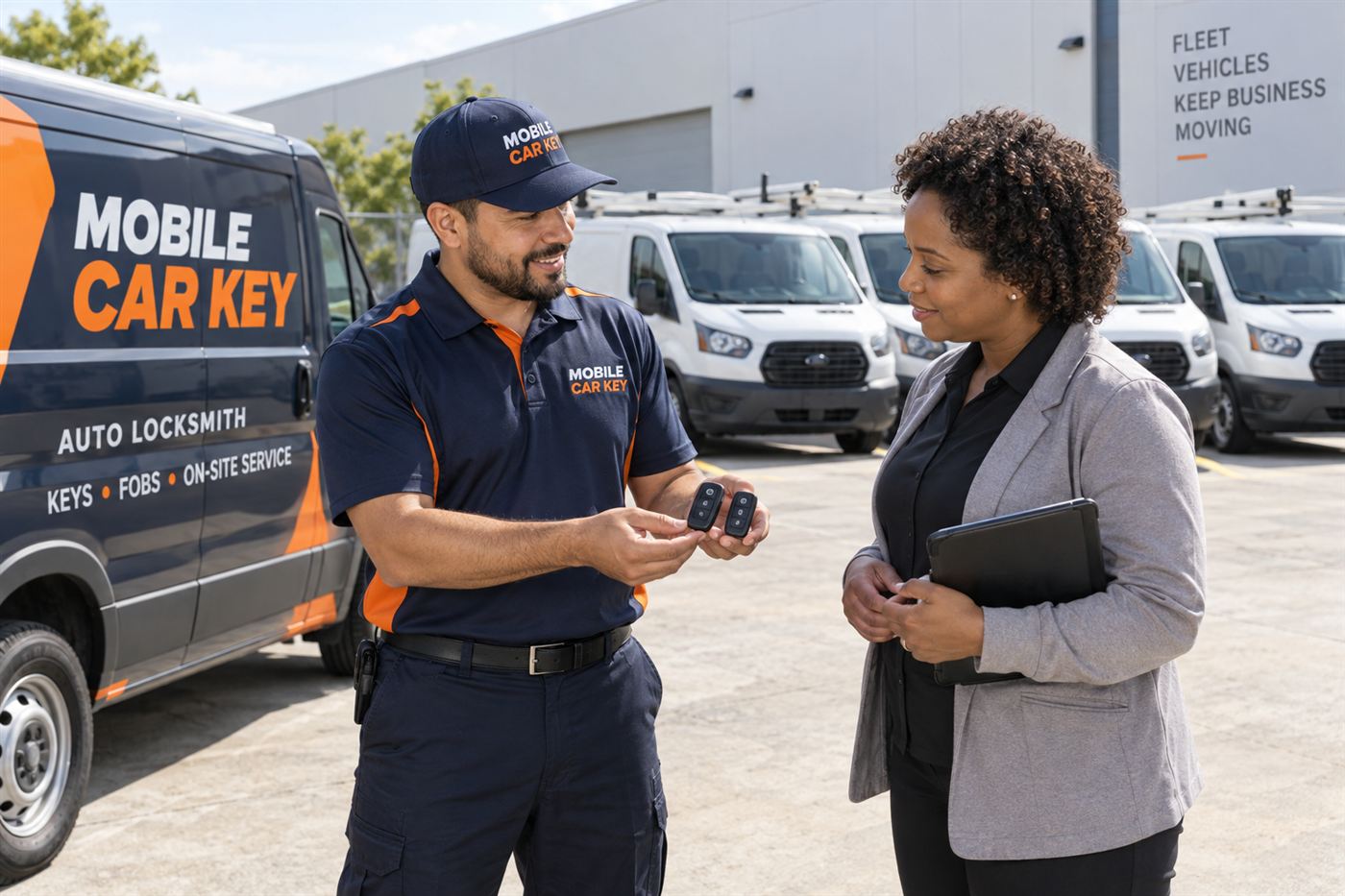
Mobile automotive key service sends a technician to the vehicle, which avoids a tow and a ride to a shop. Whether that can be done at your exact place depends on the vehicle, the surroundings and current availability. Those points are confirmed with you before anyone is dispatched.
The sections below describe the settings drivers meet most often in the region, from downtown garages to ranch roads, and the practical steps that make a key problem easier to solve.
Downtown, the River Walk and tourist garages
The downtown core is crowded with parking structures and surface lots aimed at visitors. A traveler who locks a key in the car, loses a fob on a boat ride or drops it into a bag that goes back to a hotel can end up far from the problem. Tourists also tend to be unfamiliar with local streets, so describing a location can be harder than it sounds.
Use landmarks. The name of the garage, the hotel across the street, the level number and the nearest elevator all help. If you are staying at a hotel, tell the front desk what happened. Hotel staff often know the surrounding area well and can help you reach a technician or arrange a meeting point.
Crowds during festivals and holidays slow everything. Ask whether streets are closed near your car, and say so when you call. A technician needs to know the practical conditions.
Boat tours, walking tours and riverside restaurants add a special wrinkle. People set bags down on benches, leave jackets on chairs and hand keys to companions for safekeeping. A fob that rides in a jacket on a boat can easily end up in the water or left on a seat. If a key goes missing along the river or at a restaurant, call the venue first, since staff often collect lost items promptly and may be holding yours.
Visitors in rental cars should also remember that the rental company has its own process. Many agreements spell out what to do about a lost key, and acting outside that process can complicate the paperwork. Read the contract or call the number on the keychain before arranging anything else.
Military families, base access and authorization
The region has a strong military presence, and many drivers live and work behind secured gates. If your car is on a base, access is controlled and a technician cannot simply drive in. Arrange permission through the appropriate office or security gate, and be ready to provide the details they ask for.
Military life also means frequent moves and deployments. A family may have only one set of keys for a vehicle, and a spouse may be responsible for a car that is registered to a service member who is far away. In that situation, proof of authorization matters. A phone call from the registered owner, or documents that show shared ownership, often settles it.
If a service member returns to find that the car's battery died while stored, the page about lost car keys and the other guides can help sort out which problem is which.
Frequent moves create another habit worth building: keep a list of how many keys exist for each vehicle and where each one is. After a move, boxes get opened in odd orders, and a spare fob can sit in a drawer for weeks. A family that knows exactly where each key is will not panic when one goes missing.
Younger drivers on base housing streets, new to a city and new to driving, also benefit from clear rules. Agree on where the key lives at night, and who holds the spare. It sounds basic, but it prevents most key emergencies from becoming major problems.
Texas heat and the dashboard fob
Summers are hot, and a parked car can become extremely uncomfortable within a short time. Key fobs left on dashboards or in cupholders can warp, lose button response or drain their batteries early. Plastic key heads can crack after repeated heating and cooling.
If a child or animal is locked in a hot car, call 911 immediately. That is an emergency, and emergency responders are the right first call. For adults who are locked out, find shade, drink water and tell someone where you are.
Make a habit of carrying your fob on your person rather than leaving it in the car. Replace batteries on a schedule, and keep a spare key somewhere cooler and reachable.
Think about parking choices too. A covered garage or a shaded spot reduces the heat load on both the car and the keys inside it. A reflective windshield cover helps. None of this is a replacement for keeping your key with you, but it adds a margin of protection when a fob happens to be in the cabin for a while.
If you notice a fob that responds slowly in the heat, give it attention before it fails completely. Try a new battery, clean the contacts gently and test the range. If trouble continues, a technician can look at it and tell you whether it is simple wear or a deeper fault.
Campuses, hospitals and the medical district
The area has several universities and a large medical district with sprawling parking facilities. Students, staff and patients all park here, often in a hurry. Hospital visitors are distracted and may leave keys inside the car. Night-shift workers may return at odd hours to find a dead battery or a missing fob.
When calling from a campus lot, give the lot number or name and the nearest building. Security offices can often tell you where a technician may park and whether a permit is needed. At hospitals, ask the parking office about approval for outside providers.
If you are a parent helping a student from far away, remember that the service will want confirmation of authorization. A call from the registered owner usually clears this up smoothly.
Hill Country drives and long rural stretches
Beyond the city, the road opens into rolling country with small towns, winding highways and long gaps between services. A key problem there feels different. Cell coverage can be uneven, the nearest town may be many miles away and a roadside stop may have little shade.
If you break down or lose a key far from town, give the highway name, the direction you were traveling and the nearest mile marker or landmark. Tell the service about cell coverage and give a backup way to reach you. Availability in remote areas depends on distance, and the service will tell you honestly what is possible.
Rural roads also bring wildlife, low water crossings and gravel stretches that make a roadside stop less comfortable. Pull as far off the pavement as you can, turn on hazard lights and stay clear of passing traffic. If the car is in a spot where other drivers might not see it, stand well away from the road until help arrives.
Ranch gates and private roads add another layer. If your car is on land that someone else controls, a technician needs permission to enter. Arrange access with the landowner or manager in advance, and give clear directions.
Plan ahead for road trips. Carry a spare key with a companion who stays with you, keep your phone charged and tell someone where you are headed. If you are in a state park or at a trailhead, note the lot name.
Storms, hail and dust on the plains
Central Texas weather can turn abruptly. Heavy rain, hail and strong winds can come with little warning. Water can reach key fobs, door locks and electronic modules. A fob that got soaked may keep working for a while and then fail, because corrosion progresses slowly.
If a storm hits and you are in your car, keep away from low spots that flood. If you are walking back to the vehicle from a park or event, protect your fob from rain by keeping it in a zipped pocket. After a storm, check that locks and buttons work normally.
The page on a keys lost on vacation covers situations where weather or travel complicates the picture.
Festival season and big events
The city is famous for Fiesta, concerts, rodeo season and sports. Event weeks fill parking lots and close streets. Drivers walk long distances between their cars and their destinations, and a key lost in the crowd can be impossible to find.
If you lose a key at a festival, retrace your steps if you can do so without losing your place, and ask event staff whether a lost-and-found exists. Many keys are turned in. If yours is not, you will need a plan for the car.
Parades and fairs bring vendors, rides and large groups. Keys get lost in grass, dropped in line for food and left on ride platforms. Check the places you visited most recently, and ask staff at those places whether anyone turned in a key. Many events have a central lost-and-found at an information tent.
If you have children with you, consider keeping them in a calm spot while you sort out the key problem. A lengthy wait is hard on kids, and a technician's work is easier when the surroundings are calm.
Tell the service about crowds and closures when you call. The technician needs a place to stop, and the meeting point may have to be a few blocks from where the car sits.
Understanding the key you hold
Keys range from simple cut blades to complex smart fobs. A transponder key has a chip that the vehicle must recognize before the engine starts. A remote key head adds buttons for lock and unlock functions. A proximity fob lets the car detect the key nearby and start with a button.
Many keys and fobs can be handled by a mobile technician, but limits depend on the make, model and year. Some newer vehicles from certain makes need dealer-level tools or manufacturer access. A reputable service will say so early.
The page on transponder keys explains what the chip does and why a plain copy does not always start the car.
Proving the car is yours
A responsible locksmith will not open a car or create a key for a stranger. Expect to show photo identification and a document linking you to the vehicle, such as a registration, title or rental agreement. This protects you.
A common snag is that the registration is in the glove box of the car you cannot open. Photograph the registration and insurance and store the images on your phone. If you do not own the car, have the registered owner available by phone.
If documents are missing, say so. The service may help you work out how to get a copy before work begins.
Keeping a spare and a plan in a car-dependent city
Driving defines daily life here. That is why a missing key causes so much disruption, and it is also why a bit of planning pays off. A spare key is the simplest form of protection, but only if it is stored with some thought. Leaving it in a drawer at your residence helps only if you can get there. Giving a copy to a trusted relative who lives a short drive from your workplace is more useful.
Check each key periodically. Press the buttons, turn the blade in the door lock and make sure the car starts with every key you own. Fobs can lose programming, batteries can die silently, and a spare that has not been tested may not work when you need it.
For smart keys and fobs with complex programming, remember that creating a replacement from scratch is a bigger job than copying an existing one. Acting while you still hold a working key saves effort and avoids the scramble of an all-keys-lost situation.
Finally, keep a small card or note in your phone with the vehicle's year, make, model and the location of every key. When a problem strikes, those details are easy to give and save time in the first minutes of a call.
How to describe your situation
Lead with the problem: lost key, broken key, locked out, dead fob or key stuck in the ignition. Then give the year, make and model, the exact location and any access details. If a key is visible inside the car, say so. If the engine is running, say that too.
Be honest about earlier attempts and unusual features. If someone tried to open the door with a tool or if the car has an aftermarket alarm, the technician should know.
Have a pen or your phone's notes app ready. The service may ask you to read a vehicle identification number, a license plate or the text on a key blade. Those details help confirm the vehicle and identify the correct key blank or fob type. If the VIN is on the dashboard near the windshield or on a door jamb sticker, you may be able to read it from outside without opening the car. Photos of those spots, taken in advance, make the first minutes of the call much easier.
After the call, the service confirms availability, coverage and terms before dispatch, sends a technician, checks ownership on site, does the work and tests it. That sequence is the same everywhere.
More Texas cities and where to look next
San Antonio sits on the same interstate corridor as Austin and is a few hours from Houston and Dallas. If you drive between them, your situation may begin in one city and end in another. The Houston page covers a sprawling Gulf Coast city, and the Dallas page covers a major airport and business hub.
The Texas state page explains the wider picture, and the city hub lists every metropolitan page. Each is written for its own area.
Texas distances are large. Always give the highway and direction if you are outside city limits.
A calm plan for right now
Move to a secure spot in shade if you can. Check pockets and bags. Call anyone who might hold a spare. Write down your location with as much detail as possible. Photograph your ID and registration if they are within reach.
Decide what you need: an opened door, a replacement key, a reprogrammed fob or a broken key removed. If unsure, say so. Be skeptical of anyone who offers to fix the problem on the spot without checking ownership.
This page is educational. It does not create a service agreement and does not promise help at a specific time or place. Availability, coverage and terms are confirmed with you before dispatch. If anyone is in danger, call 911 first.
Common questions
Can a technician come to a military base?
Only if base access is arranged. Security rules apply, and a technician cannot simply drive in. Coordinate with the appropriate gate or office, and tell the service what access exists. Availability and terms are confirmed before dispatch, so you will know whether it can work.
I am a tourist and my fob is missing. What do I do first?
Retrace your steps, check bags and ask hotels or tour operators about lost items. If the key is not found, contact the service with the car's location, year, make and model. If the car is a rental, call the rental company first.
Can service reach the Hill Country?
Sometimes, depending on distance and availability. Give the highway, direction and a landmark, and share a backup way to reach you. The service will tell you honestly what is possible, and terms are confirmed before any technician is sent.
Is heat hard on car keys?
Yes. It can warp plastic, soften adhesives and weaken batteries. Keep your fob out of direct sun, replace the battery on a schedule and consider a spare. If a child or pet is locked in a hot car, call 911 right away.
What if the car belongs to a family member who is away?
The service needs confirmation that you are authorized. The registered owner may need to call or provide documents. Prepare this ahead of time, since a delay in verification delays the whole job.
Will every vehicle be supported?
No service can truthfully promise that. Many vehicles are workable, but limits depend on make, model and year, and some newer vehicles need dealer-level tools or manufacturer access. The service will tell you early what it can do.