
What water does to a key fob
A modern key fob is a tiny radio. Inside the plastic shell sit a circuit board, a small battery, a few buttons with rubber pads, an antenna, and in many cases a transponder chip that talks to the car. Water is a problem for two reasons. It conducts electricity between parts that should stay apart, and it carries minerals that leave a residue after drying.
Fresh water from rain is usually kinder than salt water, sugary drinks or pool water. Salt and sugar leave deposits that keep attracting moisture, and chlorine can eat into thin metal traces on the board. The longer the fob stays wet, the more time those effects have to work.
Many fobs survive a short splash with no lasting issue. Others fail days later after corrosion slowly builds. That delayed pattern is why a fob that seems fine after a soaking should still be treated with care.
The first minutes matter most
Act as soon as you notice. Do not press the buttons to test whether it still works, because pressing a wet fob can send current through paths that were not meant to carry it. Instead, take the fob out of the water and shake off the loose liquid.
Find the small seam or screw on the case and open it. Many fobs pry open with a thumbnail or a flat plastic tool, and some have a tiny screw. If you cannot find how to open yours, a technician can do it, but if you can open it, pop the battery out right away. Removing power stops the current that causes the worst damage.
If the fob also has a metal emergency blade, slide it out and set it aside. You will probably need it to open the door while the electronics dry.
Note what the liquid was
Remember whether it was clean rain, a pool, the sea, coffee, soda or soapy water. When you describe the situation to a technician, this detail changes the advice. Sugar and salt call for a gentle rinse with clean water followed by drying, while plain rain usually needs only time to dry.
Drying the right way
Lay the open halves of the case, the board and the battery on a clean towel or paper in a spot with good airflow. Let them sit for a full day or longer. Patience is the entire technique. Moisture trapped under the board or beneath the button pads can take much longer to leave than the surface suggests.
If the fob was exposed to anything other than clean water, a brief rinse with a small amount of clean distilled water, then drying, can remove the residue. Some technicians use isopropyl alcohol on a cotton swab to lift moisture and grime from the board. If you try this, keep it gentle and keep the board away from any flame or heat source.
Silica gel packets, the kind found in shoe boxes, can sit in a sealed container with the parts to draw out moisture. Uncooked rice is an old habit that helps little and can leave dust. Whatever you choose, avoid anything that heats the plastic.
Habits that make things worse
Wet fobs are often ruined by well meant attempts to hurry the process. The list below describes the habits that cause the most harm.
Treat the fob like any small electronic device that has been in water, with the added fact that its chip is the key to starting your vehicle.
- Putting the fob in a hair dryer airflow, oven, microwave or on a radiator, which can warp the case and harm the chip.
- Pressing buttons repeatedly to see if it works while it is still wet.
- Putting a fresh battery into a damp fob.
- Scraping the board with a knife or a sharp tool to remove residue.
- Using strong cleaners, solvents or bleach.
- Leaving it sealed in a bag while it is still wet, which traps moisture.
When the fob seems dead after drying
After drying, fit a fresh battery, matching the type printed on the old one, and test the buttons while standing near the vehicle. If the remote works, lock and unlock a few times and check the other functions such as the trunk or remote start.
If nothing happens, check the basics. Make sure the battery sits in the correct direction, that the contacts are clean and not green or white with corrosion, and that the case closes without pinching the board. A battery that is weak from age can also look like a failed fob, which is why a new one is the right test.
If the fob still does nothing, the problem is probably on the board. Corrosion under a chip or a cracked solder joint cannot be fixed by drying. That is the point where a technician earns their place.
Remote dead but chip alive
In many vehicles, the part of the key that starts the engine works independently of the buttons. A fob with dead buttons can still start the car if the transponder chip survived and you hold the fob where the vehicle expects it. On push button cars there is often a spot, such as the steering column or the center console, where the fob is held to start the engine when its battery or radio is not working.
Getting into and starting the car meanwhile
Most fobs carry a mechanical key hidden inside, for exactly this kind of day. Look for a small release switch or slot on the fob. The key blade opens the driver door, usually through a lock cylinder that may be covered by a small cap on the door handle on some models.
Opening the door with the blade can set off the alarm on some vehicles. Starting the car then depends on the type. A blade key vehicle with a chip needs the chip to be recognized. A push button vehicle uses a backup position described in the owner manual.
If you cannot get in or the car refuses to start, the situation resembles other fob problems described on the page about a key fob that stopped working, and the steps in the dead fob battery guide may help.
What a technician can check that you cannot
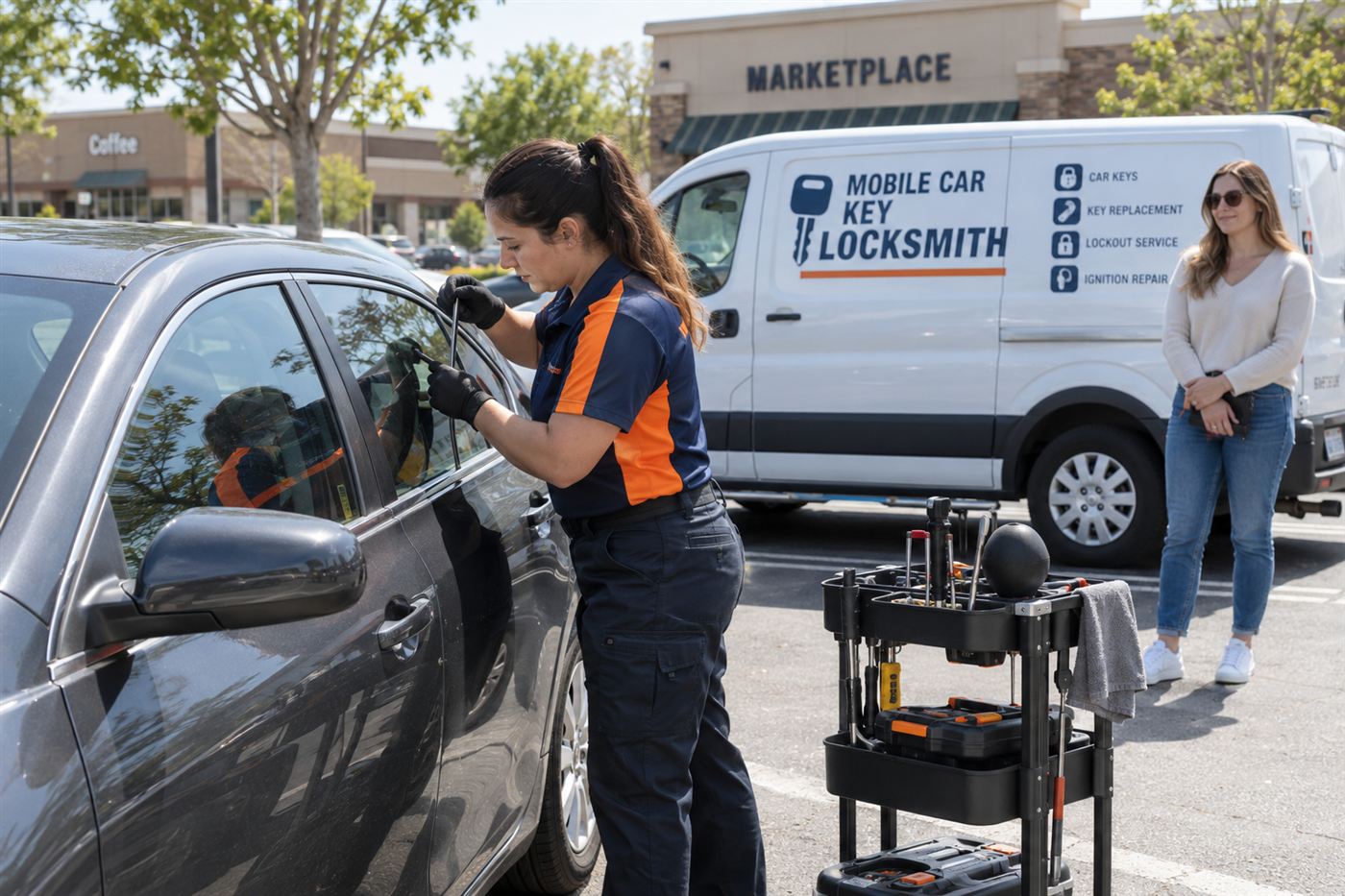
A mobile automotive technician can test whether the fob transmits, whether the car sees the chip, and whether the board shows corrosion. Diagnostic tools can read the fob's signal and the vehicle's response, which tells them early on whether the fob, the battery, or the vehicle is at fault.
If the board is lightly affected, cleaning and a new battery may be all that is needed. If the shell is cracked or the buttons are swollen, a new shell housing can sometimes hold the original electronics. If the board is badly corroded, the sensible answer is a new fob or key.
Whether the original can be saved is an honest judgment call. Technicians know that no one wants to buy a new key if the old one still has life, and they also know that a repair that fails again in a month is no bargain.
Signs that point toward repair
A fob that still blinks its indicator light, whose buttons feel normal, and whose case shows no cracks has the strongest chance of recovering. A little white dust around the battery contacts can often be cleaned away. If the vehicle still recognizes the chip, there is a good chance the expensive part is fine and only the radio section needs attention.
Signs that point toward replacement
Green or white crust across the board, swollen or sticky buttons, a cracked shell, a battery that leaked, or a fob that has gone through a hot wash all suggest the damage runs deep. A chip that the car no longer recognizes is another strong sign. In these cases, time spent trying to revive the old unit may only delay the day you have a dependable key.
Replacing and programming a fob that did not survive
A replacement fob must be matched to the car. That generally means a unit of the right type and frequency, programmed so the vehicle accepts it. Some can be programmed with onboard steps followed at the vehicle, while others need a programming tool connected to the diagnostic port.
Newer vehicles from some makes may need dealer level tools or manufacturer access for the programming step. Limits depend on the vehicle, and a reputable service confirms what is possible before sending anyone. The pages on key fob programming and remote and proximity fobs explain the general approach.
If your fob was your only key, losing it to water moves you into a bigger category. In that case read about what happens when all keys are lost, because making a first key from nothing is a different job from adding a spare.
Proving the vehicle is yours
Programming a fob lets someone start your car, so a reputable service asks you to show that the vehicle is yours or that you are authorized to use it. A photo ID and the registration or title are the usual items.
A wet fob does not make that requirement go away, and it does not matter that you are standing next to the car. If you rent, lease or drive a company vehicle, the paperwork is slightly different, and you should mention that when you call.
Having these documents ready is one of the easiest ways to keep a visit smooth.
What to tell the service when you call
A concise description helps the service prepare. You do not have to know technical terms.
Availability, coverage and terms are confirmed before dispatch, and nothing on this page is an offer or a service agreement.
- The year, make and model of the vehicle.
- Whether the fob has a separate blade, a push button start, or both.
- What kind of liquid it was and how long it was wet.
- Whether you removed the battery and when.
- Whether any of the buttons still respond, or the light on the fob still flashes.
- Whether you have a second key and where it is.
Water risks by situation
Fobs get wet in predictable ways. A key in a jacket pocket that goes through the washing machine takes a long soak with detergent. A fob dropped in a pool takes chlorine. A fob dropped at a beach takes salt water and sand. Rain gets in through a worn case, especially if the seal has aged.
Detergent from a wash is mildly alkaline and can leave residue, so it usually needs rinsing with clean water before drying. Chlorine and salt are tougher, and a rinse with clean fresh water is worth doing promptly. Sand needs careful brushing with a soft brush, never forceful scraping.
Heat adds its own twist. A fob that rode through a hot dryer cycle may have a softened case, loosened solder or a battery that swelled. Even if the buttons seem to work afterward, the fob has been stressed in ways that are hard to see. Treat it as a candidate for a spare key, and do not wait until it fails completely.
Drinks deserve a special mention. Coffee with sugar, soda and juice leave a sticky film that glues button pads and attracts more moisture. If the fob went into a cup holder spill, opening it and gently rinsing the board with clean water before drying is the right instinct, followed by the same patient drying period.
If you spend time near water, a silicone fob cover or a waterproof pouch is inexpensive protection that costs little effort. Keep in mind that covers can trap moisture if they are put on a fob that is still damp.
Habits that protect a fob in the future
Check pockets before laundry. Put the key in a bag or a hook by the door rather than in the swim bag. If you have a spare, keep it somewhere dry so a single accident does not leave you stranded. The spare key guide explains how to approach a spare, and the same idea applies whether your fob is a simple remote or a full smart key.
Replace the battery before it dies. A weak battery makes a fob work poorly and hides other problems. Open the case occasionally to look for green or white deposits, which are early warning signs of moisture.
Think about where the fob lives during the day. A pocket shared with coins, a gym bag with a water bottle, or a beach tote are all places where moisture and impact collect. A fixed spot, such as a hook or a small dish, keeps the fob dry and also keeps it from being lost, which is the more common problem of the two.
These small steps keep a fob working longer and make the day it fails less stressful.
The full process, step by step
Contact the service by phone or callback request. Describe the car, the place and what happened to the fob. Coverage, availability and terms are confirmed first, then a technician is sent to the vehicle.
At the car, ownership is checked, the fob is tested, and the options are explained. If a replacement is needed it is programmed and tested before the technician leaves. The whole path is described on how it works.
If water damage is part of a larger story, such as a flood affecting the entire vehicle, read the page on car keys after a flood. For other everyday problems, the situations hub is a good starting point.
Common questions
Can a key fob really recover after being soaked?
Often, yes, especially after a short exposure to clean water. The keys to recovery are removing the battery at once, opening the case and allowing a long, patient drying period. Salt water, sugary drinks and chlorine are harder because they leave residue. Some fobs work again immediately and others fail weeks later as corrosion develops.
Is putting a wet fob in rice a good idea?
It does little. Rice absorbs a small amount of moisture and can leave dust in the case. Open air with good airflow and a day or more of patience works better, and sealed containers with silica gel packets are better still. Never use heat sources such as ovens, microwaves or hair dryers on the fob.
My fob works but only sometimes after getting wet. What does that mean?
That usually points to moisture or early corrosion on the board or the battery contacts. It can get worse without warning, so it is worth getting a spare made while the fob still works. A technician can inspect the board, clean the contacts and tell you whether replacement is a wise step.
Will a new fob need to be programmed to my car?
In most cases, yes. A replacement fob has to be matched to the vehicle's security system so the car recognizes it. Some vehicles allow onboard programming steps, while others need a tool connected to the diagnostic port. Some newer vehicles need dealer level tools, and limits depend on the vehicle.
Can I still start my car if the fob buttons are dead?
Often you can. The engine start function usually depends on the chip inside the fob rather than the buttons, so a fob with dead buttons may still start the car when held in the position the owner manual describes. If the chip itself is damaged by water, the car will not recognize the key and help is needed.
Should I try to open the fob myself?
If the case opens easily with a fingernail or a small screwdriver, removing the battery promptly is helpful. If it is glued or sealed, do not force it, because you can crack the shell or tear the board. In that case, keep the fob dry, avoid pressing buttons and let a technician open it.