
Why water is hard on car keys
A modern key or fob is a small electronic device. Inside the plastic head sits a circuit board, a battery, tiny contacts and, in many cases, a transponder chip wrapped in a glass or ceramic capsule. Some parts are sealed, others are not. Water can find a way into the seams and the battery compartment.
Fresh water can corrode metal contacts over days. Salt water and floodwater, which often carries mud, oil and chemicals, are far more aggressive. They leave conductive residue that can short circuits and eat through thin traces on the board.
A key that seems to work immediately after drying may fail days later as corrosion spreads. That delayed failure is one of the reasons water damage is such a frustrating problem, and why careful handling in the first hours matters.
Immediate steps for a soaked fob or key
Act calmly and without delay, but do not rush the work. The goal is to stop moisture from doing further harm and to avoid putting power through a wet circuit.
- Remove the fob from the water and pat it dry with a soft cloth.
- If the case opens easily, take out the battery right away.
- Do not press buttons or try to use the fob while it is wet.
- Open the case only if it is designed to open; do not pry sealed units.
- Let all parts air dry in a dry, room temperature spot for a day or more.
- Keep it away from heat sources.
What about rice?
Rice is a popular tip, but it does little compared with open air and time. A dry room with a gentle air flow is just as useful. A packet of the silica gel that comes in shoe boxes can help absorb moisture in an enclosed container.
What not to do to a wet key
Heat is the most common mistake. A hair dryer on high, an oven, a microwave or leaving the fob on a radiator can warp the case, melt solder and damage the battery. Gentle air is fine, but heat is not.
Do not shake the fob to get the water out, since that can push moisture deeper. Do not use compressed air at close range, because strong blasts can drive droplets into places they would not otherwise reach.
Do not test the buttons repeatedly. Every press runs current through a damp board. Wait until the fob is fully dry before you try anything.
No hair dryers, ovens or microwaves.
No shaking or tapping to drain water.
No repeated button tests while damp.
No spraying contact cleaner without knowing it is suitable for plastics.
No inserting a fresh battery into a wet case.
When the car itself was flooded
If the vehicle sat in rising water, the key is only part of the story. Water that reaches the engine intake, the electrical connectors or the cabin electronics can cause damage that grows worse the moment power is applied. Turning the key or pressing the start button can send current through wet modules and, if water has entered the engine, can bend internal parts.
Do not try to start the vehicle. If the water level reached the seats, the dash or the engine bay, treat the car as one that needs a professional inspection. If the water is still around, do not walk through it to reach the car, since floodwater can hide hazards, including moving currents and electrical risks.
If anyone is in danger, call 911 first. Property can be dealt with later. Many insurers and local authorities offer guidance after a flood, so keep photos and notes of the water level and condition of the vehicle.
The car is flooded and the key is inside
Sometimes the key is in the vehicle while the vehicle is surrounded by water. Do not wade into deep or moving water to retrieve it. Wait until the area is secure and the water has dropped, and consider asking local authorities when it is reasonable to return.
Once you can reach the vehicle, remove the key and treat it as a wet key. Dry it as described above. Note that the lock cylinders may also have taken on water or mud, so avoid forcing the key into a door or ignition that resists.
If the doors will not open, or the electronic locks fail, you may need lockout help, which is a different job. Our page on vehicle lockout service explains how that works. Be ready to explain that the vehicle was in a flood, since the technician will adjust the approach.
Signs the key has been damaged
After the fob has dried, test it carefully. Signs of trouble include buttons that do not respond, buttons that respond only sometimes, a dash that no longer recognizes the key, a security light that stays on, a key that turns the ignition but does not start the engine, and visible corrosion on the board or battery contacts.
A fob with green or white crust around the battery contacts has been exposed to moisture and needs attention. A fob that works for a day and then dies is behaving as corroded electronics often do.
If the key has a physical blade, check it too. A blade that sat in muddy water may carry grit that scratches the lock when inserted. Wipe it gently before use.
Keep a short written log while you test: what you tried, on which day, and what happened. Water damage rarely behaves in a straight line, and a log helps you see whether the fob is improving, holding steady or sliding downhill. It also gives a technician something concrete to work from, instead of a vague memory that the fob was acting strange.
Transponder chips and water
The transponder chip inside many keys is sealed and fairly resistant to moisture. Many keys survive a splash or a short dip. But the chip can be damaged by prolonged soaking, strong chemicals or a crack in the head that lets water in.
The chip is a passive device in most designs, which means it has no battery and gets its power from the car's reader. That makes it tougher than a powered fob, but not invincible. If the key turns the ignition and the engine will not start, the chip may be the issue. Our transponder keys page explains how the chip and car work together.
A technician can test whether the chip responds. If it does not, a replacement key can be cut and programmed. The rest of the head, including the remote, is replaced at the same time.
If you are unsure whether the chip survived, try the key in the ignition only after the vehicle has been cleared for use. A vehicle that was never flooded, with only the key getting wet, can be tested at once. A technician with a diagnostic tool can read whether the chip answers, without needing the engine to run at all.
Smart fobs and remote buttons
Proximity fobs and remote heads have more parts exposed to damage. The battery, the button contacts, the antenna and the circuit board all matter. A fob may still open the doors from a short distance but fail to start the car, or the reverse.
After drying, replace the battery with a fresh one of the correct type. If the fob responds, test its range and every button. If anything is inconsistent, treat the fob as unreliable. A key that works only on some days is a risk for being stranded.
Replacement fobs must be matched to the car. Our page on key fob programming explains the process, and remote and proximity fobs covers the types.
Fresh water, pool water, salt water and floodwater compared
Not all water is equal. Fresh rain or a short dunk in clean tap water is the mildest case. Chlorinated pool water adds chemicals that can attack rubber seals and metal contacts over time. Seawater and brackish water carry salt that is highly conductive and corrosive, and it can leave a crust that keeps drawing moisture from the air.
Floodwater is the hardest case. It often contains silt, sewage, fuel, oil and cleaning chemicals, and it can leave a film on every surface it touches. A key exposed to floodwater deserves a careful rinse with clean water after the battery is removed, followed by a thorough dry, or simply a replacement if it will not recover.
If the exposure was to salt or flood water, lean toward replacing the fob even if it seems to work. A corroded board may behave well for a week and fail the next time you are miles from help. A technician can advise whether the fob is worth saving.
Cleaning a key that spent time in mud or floodwater
Muddy keys need gentle cleaning before anything else. Rinse the outside of the fob briefly under clean running water while keeping the battery cover closed, then pat dry. If the case opens, remove the battery first, because water in contact with a live cell adds current to the problem.
Use a soft brush, such as a clean paintbrush, to dislodge dried silt around buttons and seams. Avoid abrasive pads. If you can see residue on the contacts, a cotton swab lightly moistened with isopropyl alcohol can lift it, as long as you let it evaporate fully afterward.
The metal blade can be wiped with a damp cloth and then dried. Before you put the blade in a lock, check that it is clean and without grit, because grit scratches the pins inside the cylinder. A little patience here protects the lock that must serve you for years.
A scene after a storm
Picture a driver who evacuated before a heavy storm and returns days later to find water marks halfway up the car doors. The key ring sat in a cupholder inside the car. The driver is tempted to climb in, turn the key and see whether the engine runs. That curiosity is the thing to resist.
A calmer plan is to photograph the car and the water line, note the date and condition, retrieve the key if it is easy to reach, remove and dry the battery from the fob and leave the ignition alone. The car likely needs a tow and an inspection before anyone starts it.
Meanwhile, the question becomes whether the key itself will survive. If it fails the tests above, a replacement is arranged, with proof of ownership at hand. If the vehicle is declared a total loss by an insurer, the key is a separate matter that may not need replacement at all. Taking things in sequence avoids spending money on a key for a car that will not be repaired.
How mobile service helps after water damage
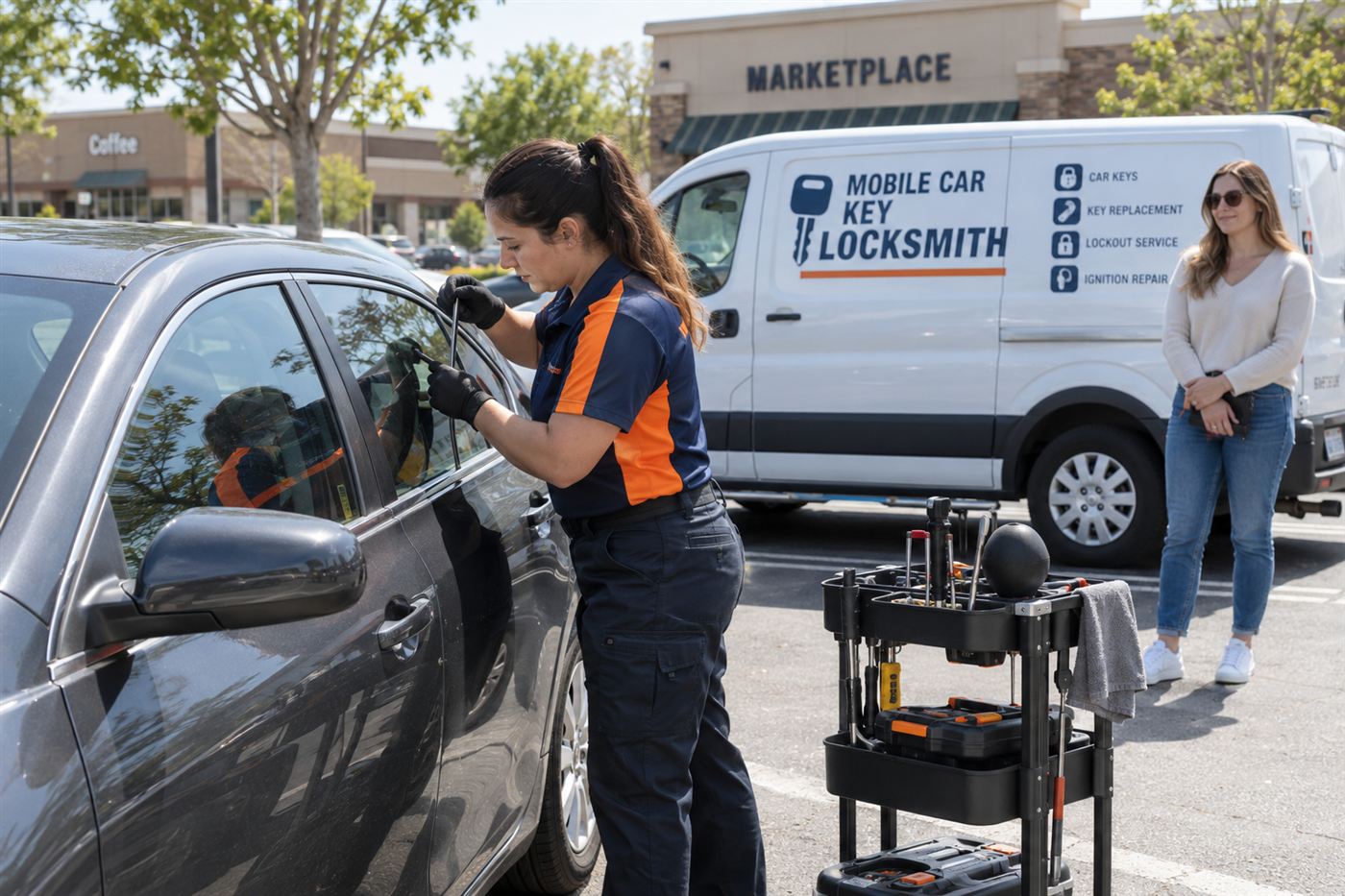
A mobile automotive locksmith comes to the vehicle, which matters after a flood when the car may not be drivable and towing is complicated. You begin with a call or callback request. The service asks for year, make and model, location, and a clear description of the water exposure.
Availability, coverage and terms are confirmed before a technician is dispatched. This page is educational and creates no service agreement. In flood-affected areas, conditions may change, so be patient and realistic. On site, ownership or authorization is checked.
The technician can test the key, assess whether the lock cylinders were affected, cut and program a new key if needed and advise you if the vehicle itself needs a mechanic first. Limits depend on the vehicle, and newer vehicles from some makes may need dealer-level tools or manufacturer access.
Ownership proof and insurance paperwork
A replacement key is access to a valuable vehicle, so a reputable service asks for proof that you own it or are authorized to use it. After a flood, documents may be wet or lost. Photos of your registration on a phone, a digital copy of your title or an insurer's paperwork can help.
Our ownership proof guide lists documents commonly accepted. If the vehicle is leased or financed, a document from the lender may help. If it is a company car, bring a letter from the company.
If your insurer is involved in the claim, ask what documentation they need for key replacement. Keep receipts and notes. This page does not give insurance advice, but organized records make any process easier.
Patience is part of this process after a regional disaster. Services, lenders and agencies may be busy, and documents can take time to retrieve. Reaching out early, explaining your situation plainly and keeping your records in one folder usually helps everything move more smoothly.
What to tell the service
Clear details save time. Describe exactly what happened to the key and vehicle: fresh water or salt water, how long the exposure lasted, whether the vehicle itself was flooded, and whether you have dried the fob.
Year, make and model of the vehicle.
Where the vehicle is and whether the area is accessible.
Whether the key was dropped in a pool, a lake, floodwater or the wash.
What the key does now: nothing, sometimes, or partly.
Whether you have a spare key that stayed dry.
Whether the doors and ignition still respond.
Protecting keys in wet seasons and trips
A little planning prevents most water trouble. If you spend time at a beach, a lake or a pool, leave the fob in a sealed waterproof pouch or a locked bag, not in a pocket. A simple pouch is worth it compared with the cost of a replacement.
Check pockets before laundry. Washing machines are a leading cause of fob failure. Keep a spare key in a dry, secure spot indoors, away from areas that can flood, such as a basement. For the broader plan, see the spare key guide.
If you live where storms or floods are common, keep your documents, spare key and a charged phone together in a place you can reach easily if you need to leave. Prepare before the weather arrives.
Consider adding a tether or a zippered pocket for water activities. Kayaks, paddleboards, boats and beach days are the classic ways keys vanish or soak. If you must bring the fob along, a floating key ring with a sealed compartment keeps it visible on the surface and out of the water. Leaving the fob in a locked box at the shore, with a spare physical key hidden securely, is another option.
Related reading
If the key fob loses power often even without water, read key fob battery keeps dying. If the key turns but the engine stays silent, read key turns but the car will not start. All the situations are listed in the situations hub.
If a child or pet is locked in a hot car, call 911 first.
Common questions
Can a car key survive being dropped in water?
Often yes, if it is dried promptly and the battery is removed. Fresh water is less damaging than salt water or floodwater. Even when the key seems fine, corrosion can appear later, so test it carefully and consider a spare.
Should I put a wet fob in rice?
Rice does little. Open the case if it is designed to open, remove the battery and let the parts air dry in a dry room for a day or more. Silica gel in a closed container can help a little. Avoid heat.
Can I start my car if it was in a flood?
No. Do not turn the key or press start. Water in the engine or electronics can cause serious damage when power is applied. Have the vehicle inspected by a professional first.
Will a locksmith replace a water-damaged key?
Often, yes, depending on the vehicle. A technician can cut and program a new key after checking ownership. Limits depend on the vehicle, and some newer models need dealer-level tools or manufacturer access.
My fob works sometimes after getting wet. Is that normal?
Yes, and it is a warning. Corrosion can grow, and a fob that works inconsistently may fail without notice. Plan for a replacement and keep any working key protected.
What if my documents were lost in the flood?
Gather what you can: photos of your registration, digital copies of the title, insurer paperwork or lender documents. A service needs reasonable proof of ownership or authorization, and will tell you what they accept before work begins.