
A car-first city and what that means for lost keys
In many cities a lost key is an annoyance, because a train or a bus can fill the gap. In Los Angeles it can stop your day entirely. Distances are long, destinations are spread across a huge basin, and public transportation does not cover every corner. For a large share of residents, the car is the only practical way to get to work, a hospital or a child's school.
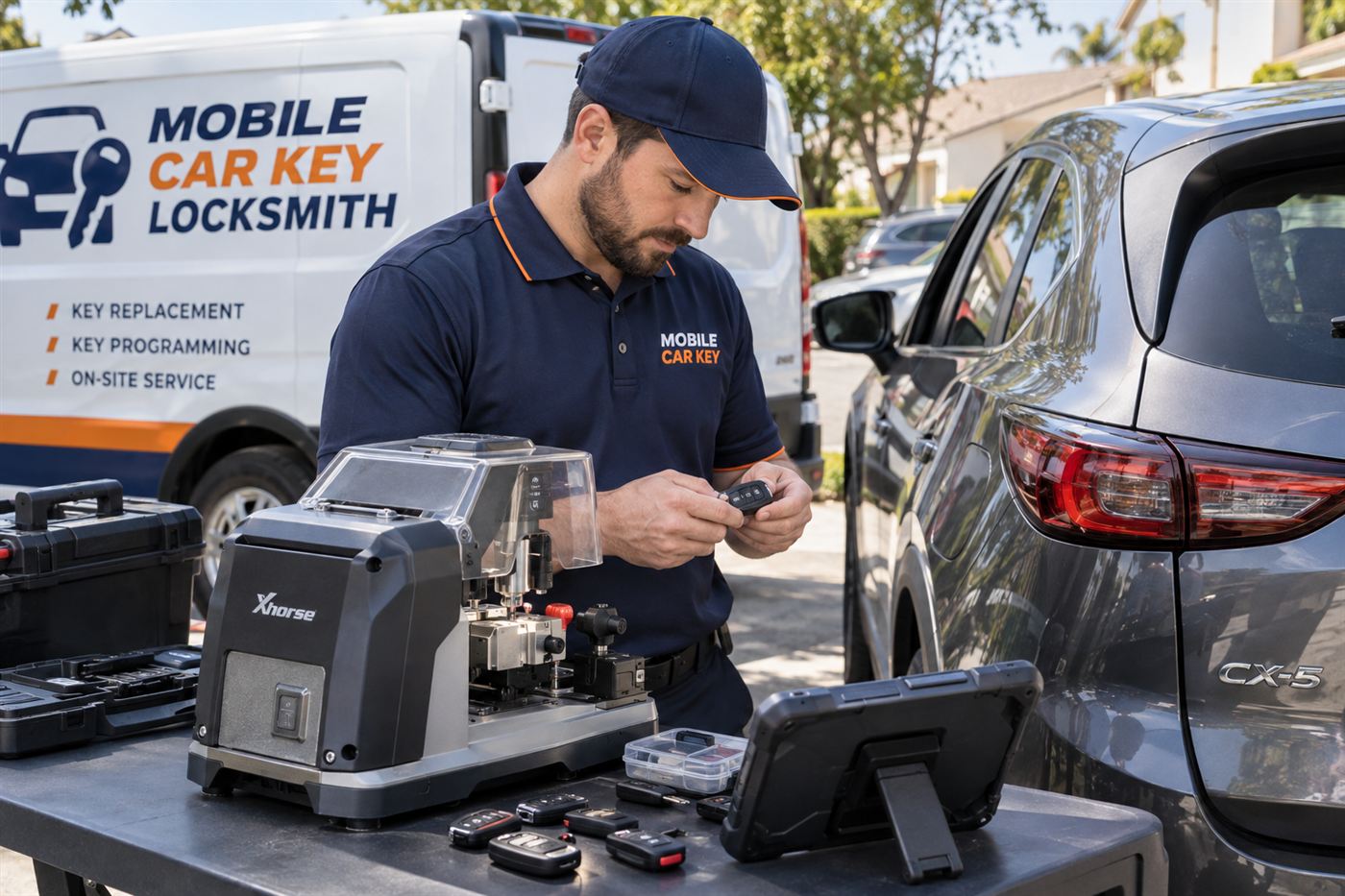
That is why mobile key service matters here. A technician who travels to the vehicle saves you from arranging a tow, finding a ride across town and waiting at a shop. Whether a given job can be done at your exact spot depends on the vehicle, the location and current availability, all of which are confirmed with you before anyone is sent.
The sections below cover the settings that come up most often in the region, from freeway shoulders to hillside trailheads, and how each one shapes the way a key problem is handled.
Freeway shoulders and the first rule of staying alive
Few drivers expect to deal with a key problem on a freeway, but it happens. A fob dies, a key snaps in the ignition, or a driver steps out to check a tire and shuts the door on the keys. The shoulder of a busy highway is not a place to wait casually. Traffic moves at speed, shoulders are narrow, and the wisest choice is to get yourself and any passengers away from the lane.
If you can move the vehicle to an exit, a surface street or a parking lot, do it. If you cannot, stay behind a barrier or well off the pavement and call for help. When someone is in danger, call 911 first. A key service is for the car, not for emergencies involving injury or fire.
Once you are somewhere calm, a technician can help with the vehicle itself. Describe the nearest cross street or exit so that the service understands where the car is and what access looks like.
Beach lots, trailheads and keys that vanish into sand
Coastal Southern California invites a very particular kind of key problem. People surf, swim, hike and bike, and they often carry a key fob in a pocket that gets wet or sandy. A fob that took a plunge in salt water may still work, may work poorly or may stop working days later as corrosion sets in. Sand can also lodge in the key slot or button gaps.
Trailheads and canyon lots add another variable. Some are far from a main road, with limited cell coverage and unpaved access. If you lose a key on a hike, retrace your route with care, because a fob can slip out of a pocket on a steep path. If you discover the loss at the trailhead after a long day, tell the service about the terrain and how the vehicle can be reached.
The page on a key fob that got wet explains what to do and what not to do with a soaked fob. Short version: do not bake it, do not press buttons repeatedly, and let a professional assess it.
Parking structures, malls and the stacked-level problem
Shopping centers, hospital complexes and entertainment districts rely on multi-level parking structures. A driver who locks keys in the car on level five of a garage has a problem with several layers. The structure may restrict vehicle entry, the stairs may be far away, and the car may sit in a low-clearance bay. Talk to the management office if one exists. They can sometimes confirm the car's location or arrange access for a technician.
Pay attention to details when you give your location. A structure name, level number and nearest elevator or stairwell can save confusion later. Some garages have two entrances on different streets, and the technician needs to know which to use.
For a deeper look at this setting, see the page on being locked out in a parking garage. It covers what to tell attendants and what to expect from the work itself.
Night out in the entertainment districts
Hollywood, downtown and the beach towns light up after dark, and many visitors arrive by car even when they plan to drink or take rideshares back later. That leads to a pattern worth understanding. Someone parks in a pay lot, goes out for dinner, and realizes at closing time that the fob is missing. Valet stands add another wrinkle, since a key handed over at the curb may end up in a lockbox you cannot reach.
If you lose a key at night, the first step is practical: do not drive after drinking, and do not accept a stranger's offer to help break into your car. Move to a lit, staffed place, and get a ride if you need one. The car can wait for a technician when you are rested and your documents are in order.
Nighttime service raises questions about visibility and access. A lot may be dark, and a technician needs light and room to work. Say whether the lot has lighting, whether it is staffed and whether the exit gate locks after a certain hour. Those facts change what is feasible, and they are part of the conversation before dispatch.
If you are in this kind of position, the page about being locked out at night adds more practical detail about waiting, staying visible and choosing a place that makes sense.
Studio lots, gated communities and access hurdles
The region is full of places where entry is controlled: studio gates, gated neighborhoods, office parks and secured campuses. These add a step to any mobile service call because a technician needs permission to enter. If you live or work behind a gate, give the service the gate details and tell the guard or manager that someone is coming.
Rental cars and work vehicles raise another point. If the car belongs to a production company, a rental agency or an employer, you may need the owner to confirm that you are authorized. That is normal, and it protects everyone involved. A responsible service will ask for proof of ownership or authorization on site.
If your problem involves a vehicle that is part of a larger group, such as a delivery or service fleet, the fleet key guide talks about how to organize spare keys and permissions in advance.
Airports and the long drive back to a dead fob
Los Angeles International and the regional airports around the basin see travelers who park for days or weeks. A fob battery can drain, a car battery can weaken, and a spare key left at the departure point is no help when you land in the rain at midnight. Airport garages are busy, with strict rules about where vehicles can stop and who may work on them.
If you return and your fob will not respond, try the physical key hidden inside many fobs to open the door. Then try holding the fob against the start button or the spot your owner's manual describes. Many vehicles have a backup way to start with a weak fob. If none of that works, a technician may be able to help once you identify your exact parking level and lot.
For drivers returning from a trip, the locked out at the airport page is a useful companion to this one.
Heat, inland valleys and the fob left in the sun
Summer temperatures in the valleys and inland areas can be intense. A car parked in direct sun heats rapidly, and plastic parts of a key fob can warp or fail if left on a dashboard. Batteries do not like extreme heat either. A fob that has been baked for months can lose range or stop responding.
Heat also raises the stakes of a lockout. If a child or pet is inside a closed car, it is an emergency, and 911 is the right call, not a locksmith. Even for an adult, waiting for help in direct sun can be miserable and risky. Find shade, drink water, and call for help from somewhere cooler than the pavement.
If your fob has become unreliable, treat it as a warning. Replace the battery, consider having a spare made while the original still works, and avoid leaving keys in a hot car.
Campuses, commuters and everyday errands
Universities, medical centers and corporate campuses create their own patterns. Students may share a car and lose track of which fob is where. Commuters often leave a vehicle for twelve hours in a lot, which is long enough for a battery to die or a door to lock with a bag inside. Visitors to hospitals may be rattled and leave keys in a seat.
When you call from a campus lot, give the lot name or number and the nearest building. Security offices can often tell you where a technician may park and whether a permit is needed. If you are a student with a parent who owns the car, arrange for the owner to confirm authorization.
The page on a teenager who lost the car key describes this kind of shared-vehicle situation from a family point of view.
What kind of key is in your hand
Cars in the region range from older models with simple cut keys to newer ones with a proximity fob and push button start. A transponder key has a chip that must be recognized by the vehicle before the engine will run. A proximity fob lets the car detect the key nearby. Each type is handled differently, and some newer vehicles from certain makes need dealer-level tools.
If you have a spare, look at it. A visible blade, a plastic head with a logo and buttons, or a flat card-like shape each says something about the system. If you have no key at all, the service will ask about how your car starts and what you remember about the original keys.
For plain explanations of the technology, visit car key replacement. Remember that nothing on this site promises support for every vehicle. Limits depend on the make, model and year, and the service will tell you what it can and cannot do.
Proof of ownership without the stress
A reputable automotive locksmith will not open a car or program a key for just anyone who asks. Expect a request for a photo ID and a document linking you to the car, such as a registration, a title or a rental agreement. That is a safeguard for you, not a hurdle.
It is easy to lock the registration inside the car you cannot enter. A simple habit helps: take a photo of the registration and insurance card and store it on your phone. If your name is not on the paperwork, ask the registered owner to be reachable by phone so they can confirm that you may use the vehicle.
If proof is missing, tell the service. They may suggest alternatives, such as getting a copy of the registration online or from the issuing office, before work begins.
Talking to the service in a way that gets results
A call goes smoothly when you lead with facts: the problem, the vehicle, the location and any access limits. Then listen to the questions. The service may ask whether the engine is on, whether any key is available, whether the alarm is sounding and whether the car has been serviced recently.
Do not guess at what you need. You might think you want a new key when a locked door could be opened and your original found. Or you might ask for an opening when the fob is truly gone and a replacement is the real task. The service can sort that out with you.
The how it works page lays out the general sequence: you call or request a callback, the service gathers details, confirms availability, coverage and terms before dispatch, sends a technician, checks ownership on site, does the work and tests it.
Building a spare key habit in a spread-out city
Life in the region involves a lot of driving between far-apart places, so a single key is a fragile arrangement. A second key sitting in a drawer at your residence does little good when you lose the first one forty miles away. Think about where a spare can actually help you: with a trusted family member, a partner who lives nearby, or in a secure spot you can reach from your workplace.
Do not hide a key in a magnetic box under the bumper. It can fall off on a freeway, and anyone who knows the trick can find it. Treat a spare as a valuable item. For smart keys, a spare is worth even more, because a replacement from scratch is a bigger job than a duplicate made while an original is still available.
Also keep fob batteries fresh. Many fobs show a warning light or behave erratically before they die. Replace the battery at the first sign and keep a note of the type so you can buy a fresh one in advance. These small habits save a stressful scene later.
A duplicate made from an existing working key is typically a simpler task than starting over, which is one reason the replacement overview encourages people to act before the last key disappears.
Neighboring cities and where else to look
Greater Los Angeles runs into Orange County, the Inland Empire, Ventura County and the coast. Drivers cross these boundaries all the time, so your situation may begin in one jurisdiction and end in another. If you are comparing how this works in another large coastal city, the San Diego page gives a different flavor of the same California driving life, while the San Jose page covers a tech-centered commuter region.
You can see all pages for metropolitan areas on the city pages hub. Each is written for its own region, so the examples are not interchangeable.
If you need the full explanation of how a key is made when none survive, read about all keys lost.
A short plan for when it happens to you
Stay calm and move to a secure place if you are not already in one. Check pockets, bags and the car's immediate surroundings. Call someone who might have a spare. Write down your exact location, including the lot name, level or cross streets. Photograph your ID and registration if you have them.
Decide what you need: the car opened, a key made, a fob reprogrammed or a broken key removed. If unsure, say so. Then contact the service, describe the situation honestly and confirm the terms before agreeing to dispatch.
This page is educational. It is not a service agreement, and it does not promise that help is available at a given place or time. Availability, coverage and terms are always confirmed with you before a technician is sent.
Common questions
Does mobile key service work in all parts of Los Angeles?
Mobile service aims to reach drivers across the region, but reach depends on the location, access and availability at the time. Give the service your cross streets, lot name or exit. Whether it can help at your specific place is confirmed with you before any technician is dispatched.
What if my car is on a freeway shoulder?
Your priority is staying away from traffic. If you can move to an exit or a parking lot, do so. If you are in danger or injured, call 911 first. Once you are somewhere calmer, describe the location and the vehicle problem to the key service.
My fob went into the ocean. Can it be saved?
Sometimes. Salt water causes corrosion that may show up later, so a fob that works today could fail soon. Do not heat it or press the buttons repeatedly. Have it assessed, and consider having a spare made while the original still responds.
Do I need proof of ownership for a rental or work vehicle?
You need to show you are authorized. For a rental, the agreement usually works. For a work vehicle, the registered owner or employer may need to confirm. The service verifies this on site before opening the car or making a key.
Can a technician work inside a parking structure?
Often yes, but the structure's rules apply. Management may need to approve entry, and low clearance can affect the work. Tell the service the structure name, level and nearest stairwell so they can plan and confirm what is possible beforehand.
Will every kind of key be supported?
No service can honestly promise that. Many keys and fobs can be handled, but limits depend on the make, model and year, and some newer vehicles need dealer-level tools or manufacturer access. The service will say what it can do for your car early in the call.