
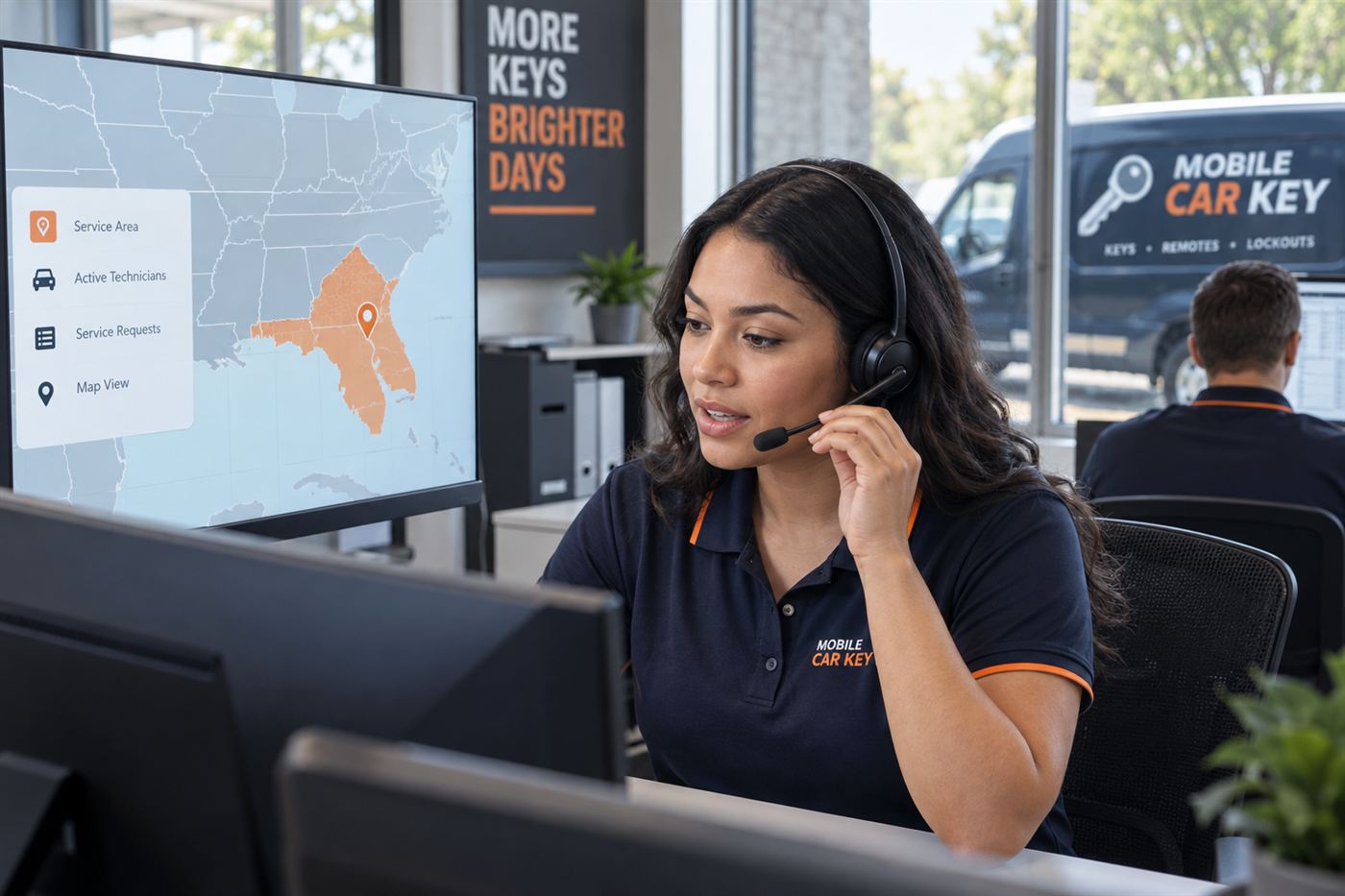
Why distance defines the Houston key problem
Few big American cities cover as much ground as Houston. The metropolitan area sprawls in every direction, linked by freeways, feeder roads and toll lanes, and most daily trips happen by car. That reality shapes what a lost key means. Without a vehicle, a trip to work, a medical visit or a school pickup can become a major logistical puzzle, and a rideshare across town is not a small expense of time.
Mobile automotive key service is designed for this kind of landscape. Instead of towing a car across the region to a shop, a technician travels to where the vehicle sits. Whether that can be done at your exact spot depends on the vehicle, the location, access and current availability, and those points are confirmed with you before anyone is dispatched.
The sections that follow look at the settings and conditions most typical of the region, from medical center garages to flooded driveways, and what each one means for a driver who cannot find a key or cannot get into a car.
Heat, humidity and the fob that gave up
Houston summers are long, hot and sticky. Cars left outdoors soak up heat, and the inside of a vehicle can climb to temperatures that damage electronics. Key fobs left on a dashboard or in a cupholder can warp, lose adhesive on their buttons or drain their batteries early. Humidity adds another layer by encouraging corrosion on tiny contacts inside the fob.
If your fob has become unreliable, treat it as a warning. Replace the battery before it dies, avoid leaving it in direct sun, and consider making a spare while the original still works. A duplicate made from a working key is usually a simpler task than starting from nothing.
Think about where your keys live during a Houston summer. A pocket near your body stays cooler than a cupholder in a parked car, and a bag in the shade does better than a bag on a back seat. Small choices like these extend the life of a fob and reduce the odds of a heat-related failure.
If a fob battery is more than a couple of years old, replacing it is a small act of insurance that costs only a minute of effort. It takes a minute and a small tool, and it can save you from a stressful morning when the fob refuses to respond in the heat.
Heat also raises the stakes of a lockout. If a child or pet is inside a closed car, that is an emergency, and 911 is the correct first call. For adults, find shade and water while you wait. The page about being locked out in hot weather goes through the precautions in more detail.
Storm season, flooding and keys that got soaked
The Gulf Coast climate brings heavy rain, tropical storms and, at times, serious flooding. A car that sat in water may have electrical problems, and a key fob that got wet can behave unpredictably. Do not assume that a fob that dried out is fine. Corrosion can develop slowly, and a key that works today may fail next week.
If your vehicle was in floodwater, avoid trying to start it repeatedly, because that can worsen damage. Water can reach modules that control locks, immobilizers and ignition systems, and a technician or mechanic should look at the car before it is used. The car key after a flood page explains what typically happens to keys and fobs in those conditions.
After a storm, roads may be closed and neighborhoods may be hard to reach. Tell the service about any barriers, standing water or blocked streets near your car. Safety comes first, and a responsible technician will not drive through hazards to reach you.
Keep a record of your vehicle's key situation before storm season arrives. Know where your spare is, make sure it works, and store a photo of your registration and insurance in your phone. If you ever have to evacuate, a working key and a copy of your documents travel easily with you, and they make any later service call easier.
If you evacuate by car and later return to find the vehicle damaged or the key lost in the confusion, tell the service the full story. Those details help a technician choose tools and avoid actions that could harm sensitive electronics.
The Texas Medical Center and other large campuses
The region includes one of the largest concentrations of hospitals and medical facilities in the country, and the parking structures around them are enormous. Visitors arrive stressed, leave in a hurry and sometimes lock keys in the car. Staff members work long, irregular shifts, which means dead batteries and lost fobs are common after midnight.
If you are locked out at a medical campus, tell security or the parking office. Some structures have procedures for working with outside service providers, and some require advance approval. Give the building name, the level and the nearest stairwell so a technician can find you without wandering through a maze of ramps.
Universities add their own patterns. Students share cars, borrow keys and park in lots that look alike. If you are trying to help a student from far away, remember that the service will want to confirm that the person at the car is authorized to be there.
Airports, the port and long-term parking
Houston has two major airports, and travelers leave cars in garages and remote lots for days or weeks. When they come back, fob batteries can be tired, car batteries can be weak and keys may be somewhere in a bag at the bottom of a suitcase. Airport lots are large, and rules about where a vehicle can be worked on vary.
The region also has a major port and industrial areas where workers park for long shifts, sometimes behind security gates. If your car is inside a controlled area, arrange access in advance with the site manager or security, because a technician cannot enter without permission.
Whatever your setting, give a clear description: lot name, row, level, nearest landmark. That prevents the confusion that eats up time and patience.
Commuting on the loops and the long drive back
Freeways and loops carry thousands of commuters each day, and many people drive long distances between where they live and where they work. A key problem in the middle of that routine can be disruptive. You might discover the problem at a gas station on the way to work, in a lot behind an office tower or at a shopping center on the way back.
If you are broken down on a freeway, your first job is to get yourself out of traffic. A shoulder is not a secure place to stand around waiting. Move to an exit, a parking lot or a service road, then call for help. If anyone is hurt or in danger, call 911 first.
Feeder roads and parking lots near freeways are full of busy places: fuel stations, drive-through restaurants, big retail centers. In those spots, a driver may step out for a moment, close the door out of habit and realize that the key is inside. The habit of checking pockets before shutting the door prevents most of these lockouts.
If you ride with a coworker or carpool, agree on who carries which key. A shared car with one fob is a recipe for confusion, and a second key kept by a family member or friend is worth the small effort of getting it made.
For situations at fuel stations, the page on keys locked in the car at a gas station explains how to wait sensibly and what to tell the service.
Neighborhood streets, apartment lots and driveways
Many residents park in driveways, apartment lots or along neighborhood streets. That makes access relatively easy for a technician, but it also leads to casual habits: leaving a spare in a hidden box, trusting a roommate to bring a fob, letting a battery die because the key still starts the car by luck.
In apartment complexes, gates and parking rules can complicate a visit. Let the front office know a technician is coming and provide the gate code if needed. If your lot has assigned spaces or visitor limits, mention them. The goal is to make it easy for a technician to reach your vehicle without delays.
If the car is on a street, mention the cross streets and any no-parking signs. In some neighborhoods, flooding or drainage ditches make certain spots tricky to reach in wet weather.
Understanding the key you are holding
Vehicle keys have changed over the years. A basic metal key opens doors and turns the ignition. A transponder key has a chip that the car must recognize before the engine will start. A remote key head adds buttons for lock and unlock functions. A proximity fob lets the car sense the key and start with a button.
Each type uses different tools and steps. Many keys and fobs can be handled by a mobile technician, but limits depend on the make, model and year. Some newer vehicles from certain makes need dealer-level tools or manufacturer access. A reputable service will say so early instead of letting you wait.
The page on key fob programming explains what the process involves in plain language. If you have no key at all, the service will ask a series of questions about your vehicle to identify the likely type.
Pickup trucks, work vans and fleet vehicles
Trucks are everywhere in the region, from personal pickups to work vans used by contractors and service companies. These vehicles may have keys that are shared among crews, left in job sites or lost in the rush of a workday. A single lost key can hold up an entire crew.
If the vehicle belongs to an employer, the service will ask for proof that you are authorized to use it. A manager or fleet coordinator may need to confirm by phone. It helps if a business keeps a list of vehicles, plates and authorized drivers so that a call for help can be answered without delay.
Trucks and vans sometimes carry equipment inside, such as tools or materials, which makes a lockout costlier in lost working time. If your crew keeps tools in a locked cab, think about where a spare could be kept so a missing key does not stop the whole job.
Be careful about leaving a work vehicle running while you step away. Idling vehicles invite trouble, and a locked running truck with the key inside is a particularly stressful situation to solve.
Smaller businesses can reduce risk by making duplicate keys in advance and storing them securely. A spare held by a manager is worth far more than a hidden magnetic box on a bumper.
Proving the vehicle is yours
A responsible locksmith will not open a car or create a key for a stranger. Expect to show photo identification and a document linking you to the vehicle, such as a registration, title or rental agreement. This protects you from someone else getting into your car.
The usual problem is that the registration is in the glove box of the car you cannot open. Take a photo of the registration and insurance card and keep it on your phone. If your name is not on the paperwork, arrange for the registered owner to be reachable for confirmation.
If documents are missing, tell the service. They may suggest ways to obtain a copy before work starts.
Little habits that prevent big key problems
Most key emergencies start with a small slip. A key left on a counter, a fob dropped into a bag that gets checked at the airport, a door that locks automatically when you close it. Building a few habits can prevent the majority of these stories. Always touch your pocket before you shut the door. Pause at the trunk and check that the key is in your hand, not in the cargo area.
Give your spare a deliberate hiding place. A hook by the door of your residence is fine for a spare you rarely need, but keep another with someone you trust who lives or works near the places you often drive. Test each key after it is made, including the remote functions, so you know it works before you need it.
Finally, note the warning signs. A fob that needs several presses, a key that sticks in the ignition or a door lock that feels gritty are early signals. Dealing with them early often costs less time and effort than waiting for a failure on a hot afternoon in a parking lot far from anywhere.
How to describe your situation
Lead with the problem: lost key, broken key, locked out, dead fob or stuck ignition. Then give the year, make and model, the location and anything about access. If a key is visible inside the car, say so. If the engine is running, say so, because it affects the risk and the plan.
Be honest about earlier attempts and any unusual features such as aftermarket alarms. Those facts help the technician bring the right tools and avoid damage.
After the call, the service confirms availability, coverage and terms before dispatch, sends a technician, checks ownership on site, does the work and tests it. The how it works page spells out that sequence.
Other Texas cities and beyond
Houston is one of several large Texas cities, and each has its own driving habits. The San Antonio page covers a region with military bases and tourism, and the Dallas page covers a major business and airport hub with its own weather quirks. For a state-level view, read the Texas page, and for all the metropolitan pages, visit the city hub.
Drivers who travel between cities should remember that availability depends on where the vehicle actually is. A technician in one area is not the same as one in another, so be clear about your location.
Texas distances are large. If you break down on a road between cities, the nearest town may be far away. Give the highway and mile marker, and note the direction you were traveling.
A short plan for the next few minutes
Move to a secure place, preferably shaded and out of traffic. Check pockets and bags. Call someone who may hold a spare. Write down your location, including the lot, level or cross streets. Photograph your ID and registration if you have them nearby.
Decide what you need: an opened door, a replacement key, a reprogrammed fob or a broken key removed. If unsure, say so. Be skeptical of anyone who offers to fix the problem on the spot without checking ownership.
This page is educational. It is not a service agreement and does not promise help at a specific place or time. Availability, coverage and terms are confirmed with you before dispatch. If anyone is in danger, call 911 first.
Common questions
Can a technician reach me if my street is flooded?
Safety comes first. A responsible technician will not drive through standing water or closed roads. Tell the service what you see near the car, and they can say whether the location is reachable. Availability and terms are confirmed before dispatch, and waiting until water recedes may be the sensible choice.
My key fob got wet in the rain. Is it ruined?
Not necessarily, but moisture can cause slow corrosion. Do not heat it or press buttons repeatedly. Let it dry, replace the battery and test it. If it behaves strangely, have it checked, and consider a spare while the original still works.
What if I am locked out in a hospital garage?
Tell security or the parking office, then give the service the building, level and nearest stairwell. Some garages need advance approval for outside providers. Staff may also help move the car to a spot that is easier to work around.
Is the heat bad for car keys?
Yes. Extended heat can warp plastic, weaken batteries and stress electronics inside a fob. Avoid leaving keys on a dashboard or in direct sun. If your fob has become unreliable, replace the battery early and have a spare made.
Do I need proof of ownership for a work truck?
You need to show you are authorized. The employer or registered owner may need to confirm by phone, and the service checks documents on site. Businesses that keep a list of vehicles and authorized drivers can resolve this much more smoothly.
Will every vehicle be supported?
No service can truthfully promise that. Many vehicles are workable, but limits depend on make, model and year, and some newer vehicles need dealer-level tools or manufacturer access. The service tells you early what it can do for your specific car.