
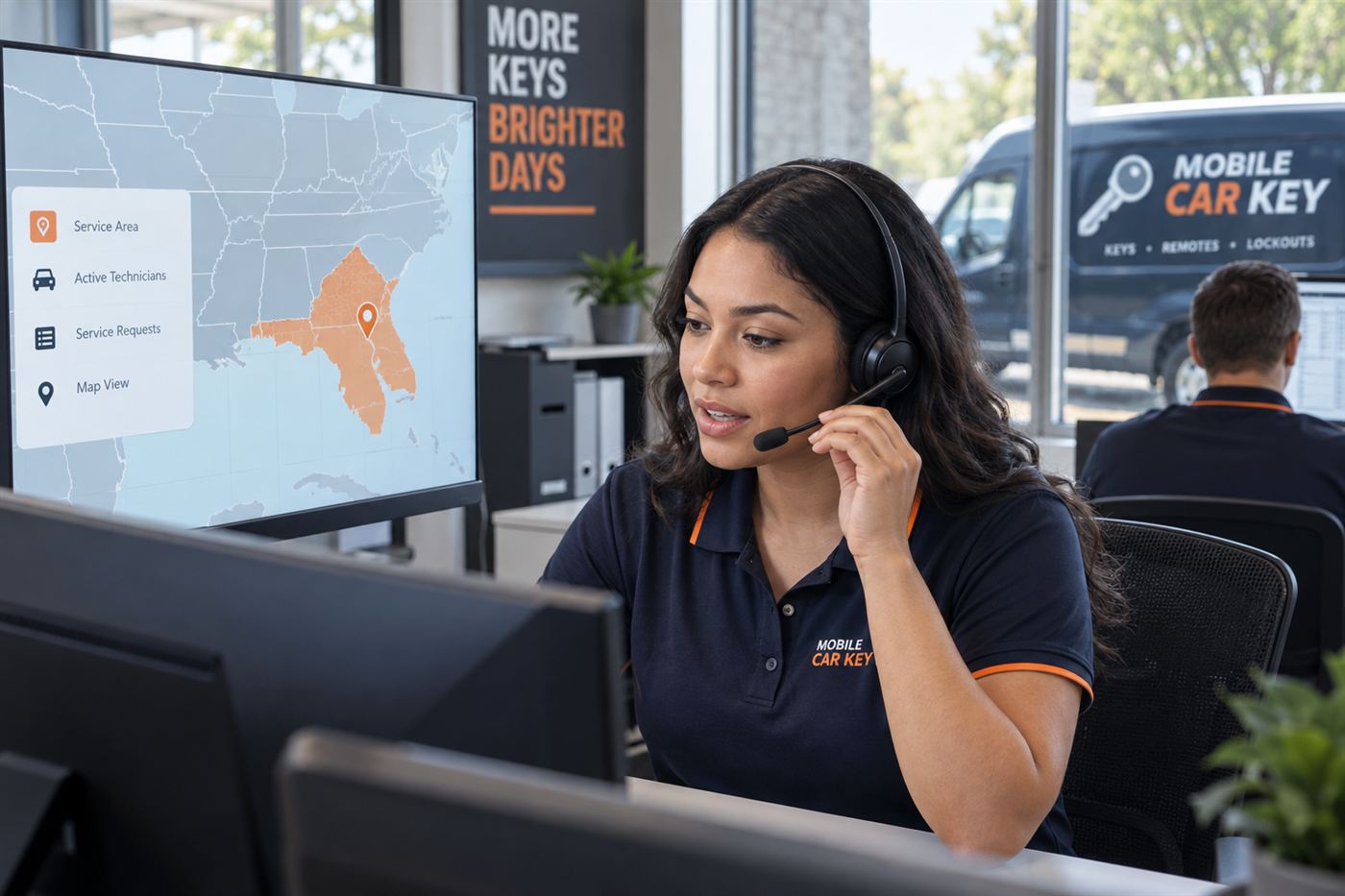
Why work is a common place to lose access to your car
Workdays follow routines, and routines breed autopilot. You park, grab a bag, a badge and a coffee, shut the door, and walk to the entrance. Somewhere in that sequence the fob ends up on the seat or in a locker you cannot reach.
Picture a nurse who finishes a long shift, collects a bag from a locker and walks to the lot with the fob still in a scrub pocket that she left in the locker room. Or a delivery worker who steps out of a personal car at the loading dock with a coffee in one hand and a clipboard in the other, and pushes the door shut with a hip. These scenes repeat across every kind of job.
Shift changes make it worse. Arriving late and rushing leads to mistakes. Leaving at night, tired and distracted, does too. Uniforms with no pockets, lockers that hold the fob until the end of the shift and tool belts that carry everything but the keys are all part of the pattern.
None of this is a failing. It is a very ordinary event, and employers see it often enough that many have a procedure for it.
First, find out whether your key is in reach
Think through where the key is. Is it visible through the glass, in your locker, in a coat on a hook inside, or with a coworker who borrowed the car? A key you can reach changes the whole plan.
Ask whether a family member, a roommate or a coworker with a spare can bring it. If you share the vehicle, the other driver may be able to come by. If your employer has a locker room or a front desk where personal items are kept, check there too.
If the key is locked in the car and you cannot reach any spare, a mobile automotive technician is the next option. First, though, tell your supervisor, since the lockout may affect your shift.
Check roadside coverage before paying
Insurance, memberships, credit card benefits and manufacturer programs often include lockout help. A short look at your app or card benefits can save money, and a call to the provider is worth making while you wait for a response. If the provider cannot reach you in a reasonable window or excludes the situation, a mobile service is another route.
Talk to your supervisor the right way
Be matter of fact. Say that you are locked out of your vehicle, that you are arranging help and that you will keep them informed. Ask whether you may step out to meet the technician and how long a break you can take. Most supervisors respond sensibly, and a clear message earns goodwill.
If your absence affects a schedule, offer to coordinate coverage. Employers value a worker who anticipates the impact, and many have policies on personal emergencies that you can ask about.
Keep the conversation short and keep your employer's name out of any disputes. A lockout is not a workplace issue unless the lot or its rules are involved.
If your workplace has a policy about personal time, ask politely how it applies. Some employers allow a short absence for a vehicle emergency, others ask you to make up the time, and some require a note afterward. Knowing the rule beforehand prevents a second problem on top of the first.
It can also help to mention the situation to a coworker you trust. They can cover a small task, relay messages and keep an eye on the lot while you meet the technician.
Security desks and parking office
If your employer has a security desk or a parking office, tell them. They may know the lot, may be able to approve an outside service vehicle, and can note that your car is being worked on. Some campuses and industrial sites require that visitors, including service providers, check in at a gate or a front desk.
Ask what the technician needs in order to enter. A plant, a hospital campus or a government site may require advance notice, a name, a vehicle description or an escort. Provide what the security team asks so the visit proceeds without a hold up at the gate.
Do not ask security staff to open the car. Most are not trained or equipped for it, and improvised tools can damage the paint, seals and wiring.
Employee lots, gates and permits
Many employee lots are controlled by gates, badge readers or permit tags. If your permit or gate card is locked in the car, you may need the lot attendant to help you in and out. Explain the situation and keep your employee identification with you.
Large employers sometimes run shuttles between remote lots and the building. If your car is in a remote lot, plan how the technician will reach it and whether you will need to ride the shuttle back to meet them.
Parking structures and multi level employee decks bring the same issues as any structure, such as height limits and weak signal. The page on a lockout in a parking garage covers those details.
When the vehicle belongs to your employer
A company vehicle is a different matter. The employer owns it, so authorization comes from the employer, not from you. Before anyone opens the vehicle, contact your supervisor or the fleet manager. Many companies have a roadside program or a preferred provider and want it used.
If the company allows an outside service, expect the service to ask for proof of authorization, such as a message from the fleet contact, the vehicle registration or the lease details. A photo ID alone, without an owner's approval, is not enough.
The page on the fleet key guide explains how companies tend to manage keys and authorization, and the page on work vans and fleet vehicles covers the vehicle side.
Telematics and tracked vehicles
Some company vehicles are monitored by a tracking system. Opening a door, starting the engine or making a new key may trigger a notice to the fleet office. Tell the fleet contact beforehand so nobody is surprised by an alert.
Different workplaces, different logistics
An office tower with an underground deck is nothing like a warehouse yard or a hospital campus, and each shapes the lockout differently. In a downtown office deck, the issues are clearance heights, weak signal and a garage operator that may not be your employer. A suburban office park usually has an open lot and few barriers.
Schools and universities add crowds, permits and enforcement staff who patrol the lot. If your car is on a campus, mention the building or lot name that appears on your permit. Medical campuses are busy at all hours and have tight rules about vehicles near entrances, so plan to meet the technician at a designated spot.
Industrial sites, warehouses and construction yards may require safety gear, an escort and a sign in. Ask your site contact what the technician must wear or bring. Retail workers face lots shared with customers, where the car may sit in the employee corner and be reached freely. Restaurants and hotels often have small lots or street parking, where a technician can work beside the car in a few spots.
Remote worksites, such as a plant at the edge of town or a field operation, bring distance. Give clear directions, mention any unpaved road, and say whether a gate code is required. The service confirms coverage for your location before sending anyone.
What a mobile technician does at your workplace
A mobile automotive technician comes to the car, so the work happens in the lot or the deck. The technician confirms the vehicle, checks your ownership or authorization, and opens a door using tools made to avoid harming the car. Keys are retrieved or the car is unlocked, and the locks are tested.
If your key is lost, broken or otherwise unavailable, the next steps are explained. These might include cutting and programming a new key at the vehicle. The pages on vehicle lockouts and car key replacement describe the general process.
Availability, coverage and terms are confirmed before dispatch, and nothing here is a service agreement. Your employer's access rules may affect the arrangements, which is why you should confirm them early.
A good visit leaves your car as it was. The technician protects the paint with covers or wedges, works with attention to the door seals and tests every lock afterward. If a neighbor's vehicle sits too close, you may be asked to move it, or the technician will work carefully around it.
After the door is open, you can take the key, sign off on the work in whatever way the service uses, and return to your shift. If your employer asked to be informed, a short message that it is resolved closes the loop.
Proving that the car is yours
Before opening a car, a reputable service asks for proof of ownership or authorization. For your personal car, a photo ID and the registration or title is the usual combination. Workers often leave the registration in the glove box, so say so on the call.
Other helpful items include a registration photo on your phone, an insurance card app, or the vehicle identification number visible at the windshield. The service explains what it accepts so you can gather it during the wait.
More about acceptable documents is in the ownership proof guide. For a company vehicle, the authorization comes from the employer, as described above.
What to share when you call
State the facts calmly and in order. Help the service understand the location, the vehicle and the access rules at your site.
Add any detail about your workplace that affects the visit, such as a gate that closes at a given hour or a restricted area.
- Year, make and model of the vehicle, and whether it is personal or a company vehicle.
- The employer's name or address, the lot or deck, and the nearest entrance.
- Whether a gate, badge or escort is needed for the technician to enter.
- Whether the keys are visible inside the car or somewhere else.
- Whether a spare key or roadside program is available.
- Whether anyone or any animal is inside the car.
Working around your shift and break
Breaks are short and shifts do not pause. If you cannot leave your post, ask a trusted coworker to wait with the car and meet the technician, if the employer agrees. Give that person the details and your phone number.
If you can leave, tell your supervisor when you expect to be back, but avoid promising a specific time, since arrival and work time depend on conditions. A lockout can take longer than expected, and an honest update is better than a promise that fails.
If the lockout falls at the end of a long shift, rest if you can. Sit inside the building with a drink and let the call come to you.
Safety at the end of a late shift
Workers who finish late often face an empty lot and dim lighting. If you are locked out in such a spot, return to the building and wait where staff or cameras can see you. Ask a coworker or a security guard to walk out with you when the technician arrives.
If you feel threatened, call 911. If a child or a pet is in the locked car, which sometimes happens when parents pick up or drop off during a shift change, call 911 first because cabins heat rapidly. The page on a child or pet locked in the car explains the steps.
Keep your phone charged, and let a family member know where you are and what is happening. If you rely on rides, a bus or a shared car to get to work, tell whoever is waiting for you that you will be delayed, so nobody worries.
If the lot is poorly lit, ask the technician to meet you at a better lit spot if the car can be reached from there, or ask security to bring a light. Small requests like this are reasonable, and they are part of making the visit comfortable for everyone involved.
Habits that help workers avoid lockouts
Pick one place for the fob and use it every day. A zipped pocket, a lanyard clip or a dedicated pouch works. Avoid leaving the fob in a locker if you will need the car at lunch.
Check pockets before you close the car door. A two second pat down costs far less than a long wait. Many cars chirp or warn if the fob is left inside, so learn what yours does.
Keep a spare with someone near work or at your address, and test it. The spare key guide has ideas, and a spare that works is worth far more than one that sits in a drawer with a dead battery.
Uniforms, lockers and tool belts
If your job restricts what you can carry, plan for it. A key clip inside a pocket, a small pouch on a belt or a locker that you can reach during breaks keeps the fob close. Some workers keep a spare in a small lockbox on a bike or in a family member's car.
Related situations at other workplaces and public places
Other pages address similar situations in different settings. A lockout at a store is covered in a lockout at a grocery store, and one after dark in a lockout at night. If you drive for work, the vehicles hub gathers pages on vans, trucks and fleet cars.
For a full list of situations, see the situations hub, and for the sequence from first call to finished work, see how it works.
This information is educational only and does not create a service agreement.
Common questions
Do I need my employer's permission to have my own car opened at work?
For your personal car, the car is yours and the decision is yours, but the employer controls the property. Tell your supervisor and security so the technician can enter the lot, and follow any site rules about gates or escorts. For a company vehicle, the employer owns it and must authorize the work.
What if my company vehicle is locked with the keys inside?
Contact your supervisor or fleet manager first. Many companies have a roadside program or preferred provider. If an outside service is allowed, it will ask for proof of authorization from the employer, such as a message from the fleet contact or the registration. A photo ID alone is not enough for a vehicle you do not own.
Can security staff at my workplace open the car for me?
Most cannot and should not. They are rarely trained or equipped for it, and improvised tools can damage paint, seals and wiring. Security can help by approving access for a service vehicle, noting your situation, or escorting a technician. For the lock itself, use a spare key, a roadside program or a mobile technician.
Will a gate or badge reader stop a technician from reaching my car?
It can, which is why you should ask security what a visitor needs before the technician arrives. Some sites need a name, a vehicle description, or an escort. Others let a service vehicle in with a brief check at the gate. Tell the service about any access rule when you call so the visit goes smoothly.
What if I cannot leave my post to meet the technician?
Ask whether a coworker can wait with the car, if your employer agrees. Give that person the vehicle details and your phone number so they can guide the technician. The technician still needs ownership or authorization, so be reachable by phone, and tell the service about the arrangement when you call.
Can I prevent this from happening again at work?
Yes, with small habits. Keep the fob in one zipped pocket or on a lanyard, check your pockets before you close the car door, and keep a tested spare with someone nearby. If your job limits what you can carry, plan a spot you can reach on breaks, such as a locker you can open during the shift.