
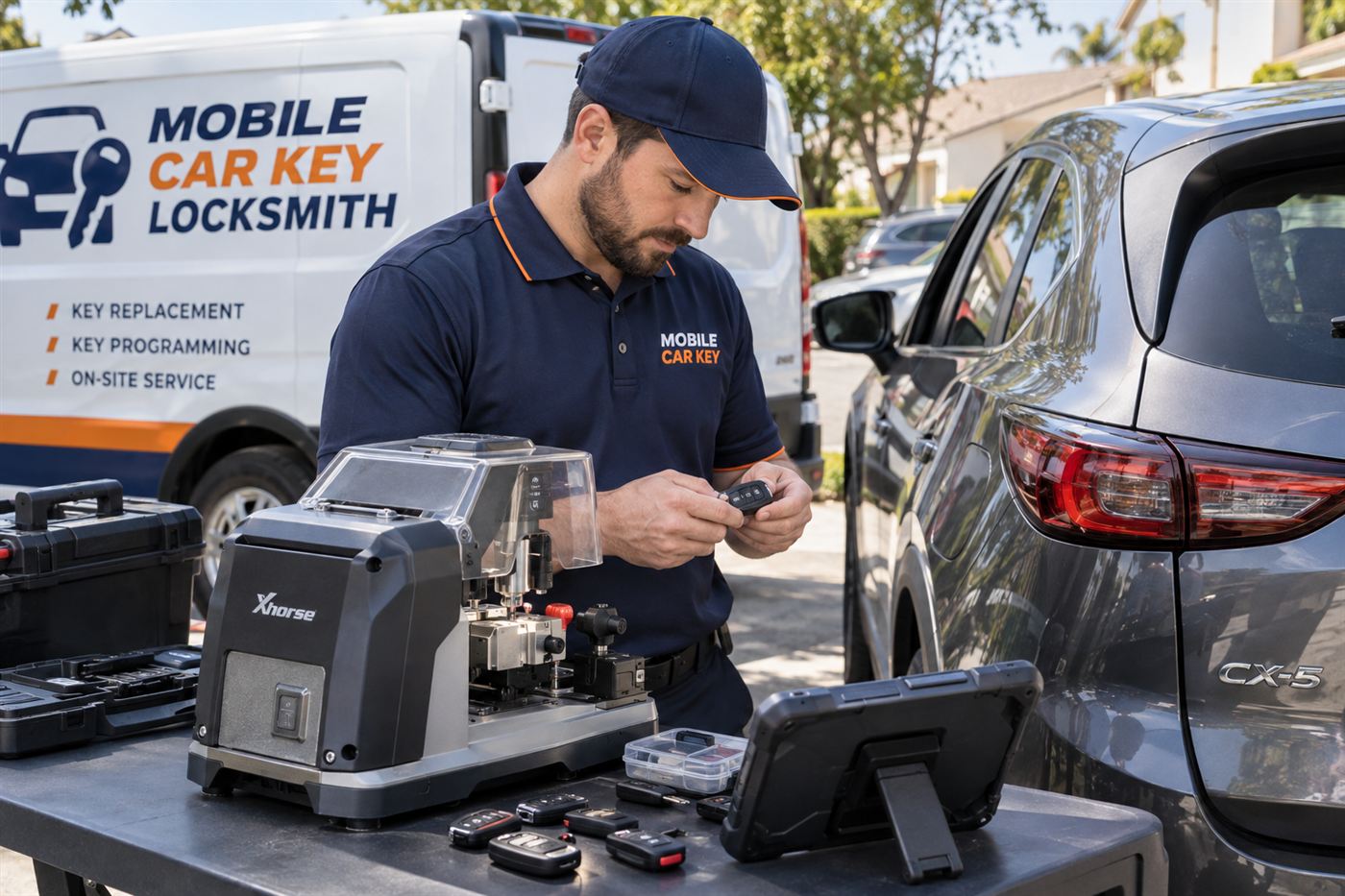
What makes fleet keys different from personal keys
A personal vehicle has an owner who is also the driver. A work van often has an owner who is a company, a driver who is an employee and a manager who decides what happens when a key goes missing. That split of roles is what makes fleet keys different. The key itself may be the same type as a personal vehicle uses, but the questions around it multiply.
Who has the authority to order a new key? Who holds the spares? What happens when a driver leaves? Does the van carry tools or materials that make losing access more costly than usual? These are business questions, and they are worth answering before a key problem forces the issue.
This page is educational and general. It does not create a service agreement, and what can be done for any particular van depends on make, model, year and equipment. A mobile automotive locksmith confirms the details with you before dispatch.
The key types vans commonly use
Work vans cover a range of ages and technologies. Some older cargo vans still use a plain metal key. Many others use a transponder key with a chip in the head, and newer models may offer a remote head key or a proximity fob with push-button start. Because fleets often keep vehicles for many years, a single business can have several different key types across its vans.
This variety affects planning. A plain key can be duplicated with relatively little fuss, while a transponder key needs the chip to be recognized by the van. A proximity fob needs to be registered with the vehicle. The technician needs to know which type each van uses before arriving.
If you manage several vans, a simple list pays off: year, make, model, key type and how many keys exist for each. Put it in a file the whole management team can find. When something goes wrong, the list saves the first ten minutes of every phone call.
Cab keys and cargo area access
Some vans have a single key for the cab and the cargo area, while others have separate locks. Tell the service which lock you need help with, because the approach to a cab lockout differs from the approach to a locked cargo compartment that is part of the vehicle.
Lost driver key, stopped schedule
The most common fleet key problem is simple: a driver loses a key mid-route. The van is parked somewhere, the schedule is slipping and the driver is calling the office. The first thing to establish is whether the van is locked with the key inside, or whether the key is truly gone.
If the key is inside, the job is a lockout, and a technician can usually help the driver regain entry. If the key is gone, the job is a replacement, which may involve making a new key that the van accepts. The all car keys lost page explains the general approach.
The driver should stay with the van if possible and keep the company informed. The office can then gather authorization documents while the service arranges a technician. A few minutes of preparation on the business side often speeds up the work on the vehicle side. Offices that keep a vehicle list with key types and a folder of authorization letters can answer the technician's questions in seconds. Offices that do not may spend half an hour searching for registration papers while the driver waits in the sun.
Authorization paperwork a service may ask for
A reputable automotive locksmith asks for proof that the person requesting a key owns the vehicle or is authorized to use it. For a company vehicle, the person standing next to the van may not be the owner, so the documentation matters.
Useful items include the vehicle registration, a company letter naming the driver, a fleet manager's confirmation, a lease or financing record, and identification for the person present. The exact requirements depend on the service, and they explain what they need on the call.
Prepare a standard authorization letter that fleet managers can send without delay. A short template that names the company, the vehicle, the driver and the manager's contact details can save a long conversation. The fleet key guide goes deeper into how businesses organize this.
Key control: knowing who holds what
Key control is the habit of tracking every key to every vehicle. Even a small business with three vans benefits from it. At a minimum, record which keys exist, who holds them and when they were last checked.
A simple log works: a spreadsheet, a binder or a lockable key cabinet with a sign-out sheet. The method matters less than the consistency. When keys are signed out and back in, a missing key is noticed within a day rather than a month.
Avoid leaving keys in vehicles overnight or hiding them in obvious places like the sun visor or a magnetic box under the bumper. These habits make theft easier and make it harder to tell later who last handled a key.
When a driver leaves the company
Driver turnover creates a quiet risk: keys that walk out the door. A former employee who keeps a van key still has access to the vehicle and anything inside it. Collecting keys at offboarding is the simplest control.
If a key was not returned, the business can consider whether to replace it. For some vans, a technician can program the van so that a lost key no longer works, though the options depend on the make and model. Ask about this when you call, because the answer shapes what you choose.
Add a line to your offboarding checklist for keys, fobs and any spare. Record the date the keys were returned, and who accepted them. That record is useful if questions come up later.
Several vans, one visit
Fleet owners often need more than one key at a time. A new van arrives with only one key, a seasonal hire needs access, or a manager wants a spare for every vehicle. Doing several jobs in a single visit is generally more efficient than calling for each van separately.
When you describe the job, list every van: year, make, model and key type, along with how many keys you want for each. The service can then judge whether it can handle all of them in one trip, or whether some vans, such as newer ones needing dealer-level tools, require a different path.
Park the vans together if you can, and have the paperwork ready for each. A technician working through a lineup moves smoothly when the vans are accessible and the documents are organized.
Job-site lockouts and the cost of waiting
A van locked on a job site stops more than the driver. It may block crews who need tools, deliveries waiting on materials or a customer expecting service. The pressure to act in a hurry is real, but forcing a door or breaking a window causes damage that costs more than the lockout itself.
A mobile technician can usually open the van without damage and without waiting for the van to be towed to a shop. Describe the site, the van and who can meet the technician. If the van is blocking an entrance, say so.
For general lockout information, the vehicle lockouts page explains how the process works. Keep identification and the authorization paperwork close at hand while you wait. If the van is on a customer's property, let the customer know what is happening, because a short explanation prevents worry and keeps the relationship intact. A calm, professional approach to a small setback often leaves a better impression than the setback does damage.
Think also about the cargo. If the van holds materials that are sensitive to heat or cold, tell the service, since it may affect how urgent the visit feels. Do not leave a person or animal in a closed van while you wait. Ask a colleague to stay nearby, or arrange shade and ventilation, and remember that a trapped person or pet is an emergency requiring 911.
Dealer-level work and older vans
Not every van can be handled on site. Some newer models need dealer-level tools or manufacturer access to create a key. A reputable service tells you that during the first call, so you can decide whether to arrange transport to a dealer instead.
Older vans can be easier in some ways and trickier in others. A simple key may be easy to cut, but if the lock is worn, the key may not turn well, and if the van uses an early transponder system, programming may still be required.
Fleet managers who keep older vans in service should ask about the condition of the ignition and door locks when planning for spares. A worn lock can make even a perfect key feel unreliable. Our page on older and classic vehicle keys covers related points.
Planning spares across the fleet
A spare for every van is a sensible goal for most businesses. The spare should live in a controlled location, not in the van itself. A locked cabinet at the office, a secure spot at the manager's desk or a documented spot with a trusted employee all work.
Test spares periodically. A spare that sits for years may have a dead battery or may have lost its connection with the van. Add a spare check to your routine maintenance schedule so it happens without anyone needing to remember.
Consider standardizing where you buy keys. When the same service handles all keys, the records stay in one place and the process is familiar. The spare key guide has general tips on tracking spares.
Single-van owners and the self-employed
Not every business with a work van has a fleet. A plumber, an electrician, a courier or a delivery driver may own one van and depend on it completely. For them, the van is both vehicle and workshop, and a lost key is a lost day.
The advice for a single van is similar to the advice for many, scaled down. Keep a spare in a secure place away from the van. Keep paperwork that shows you own the van. Store the phone number of a mobile automotive locksmith where you can find it.
Self-employed drivers should also consider where they park overnight. Vans left on the street with tools inside attract unwanted attention, and a lost or stolen key adds to the risk. The pickup truck keys page covers similar work-vehicle habits, and the car key replacement page explains the main replacement paths.
Heavy key rings and worn ignitions
Work van drivers often carry a key ring loaded with a dozen other keys, a bottle opener, a tag from the supplier and a flashlight. That weight hangs from the ignition every time the engine runs, and over months it wears the ignition cylinder and the key itself. A key that once slid in smoothly begins to stick, and a worn cylinder may eventually fail to turn at all.
The simplest remedy is to separate the van key from the rest of the ring when driving, or to use a short lightweight fob. This costs nothing and reduces wear on both the key and the lock. Some fleets include this habit in driver onboarding.
If a van key already feels rough, treat that as an early warning. A technician can look at whether the key is worn, the cylinder is worn or both. Replacing a key is usually simpler than repairing a cylinder, so catching the problem early keeps options open. Never force a key that resists, since a broken key in the ignition adds a larger problem.
Leased, financed and rented vans
Many businesses do not own their vans outright. A leased or financed van technically belongs to a leasing company or lender, and a rented van belongs to the rental firm. That affects who can authorize a new key and what paperwork a locksmith will want to see.
Before ordering a key for a leased van, check the lease terms. Some leases require that replacement keys come from the lessor, and others allow the business to arrange them. A short call to the lessor can prevent a dispute later, and it ensures that any replacement key does not breach the agreement.
For rented vans, contact the rental company first. They own the vehicle and typically have their own process. A locksmith will still ask for proof of authorization, and a rental agreement along with a call to the company often serves that purpose.
Shelving, alarms and other add-ons
Work vans are often modified. Shelving, partitions, aftermarket alarms, tracking devices and remote starters are common, and each one can interact with the key system. An aftermarket alarm may have its own remote, and a remote starter may need to be considered when programming a new key.
Tell the service about any add-ons you know of. If a previous owner or an outside shop installed them, mention that too. A technician who knows about an alarm can plan around it, and avoids setting it off during the work.
Keep records of who installed each modification. If something goes wrong with the key or the alarm later, those records point you to the right person to call.
What to tell the service when you call
A clear description helps the service plan. You do not need technical terms, and the person calling does not have to be the manager.
Here are the details that help most:
- Year, make, model and body style of the van.
- Whether it uses a plain key, a transponder key, a remote head key or a push-button fob.
- What happened: lost key, broken key, lockout, no-start or spare request.
- Where the van is parked and whether it is blocking anything.
- How many keys exist and whether any working key remains.
- Who is authorizing the work and how they can be reached.
- Whether you have several vans needing attention.
Safety and next steps
If anyone is in danger, call 911 first. A person or animal locked inside a vehicle, especially in warm weather, is an emergency and takes priority over any key work.
Otherwise, move the driver to a secure spot away from traffic and keep the office informed. Gather the registration and authorization letter while you wait.
For a wider look at vehicle categories, visit car keys by vehicle type. A conversation covering coverage, availability and terms is the right way to begin, and nothing here creates an agreement until those are confirmed.
Common questions
Can a company employee request a key for a company van?
A reputable service asks for proof that the requester owns the vehicle or is authorized to use it. For a company van, that often means registration plus a letter or confirmation from a manager. Prepare the paperwork before the technician arrives. The service explains its requirements when you describe the situation. Mention the company name on the registration and the manager who can confirm the request, so the service can match the paperwork to the person present.
What if a former employee kept a van key?
You can consider replacing the key. For some vans, a technician can program the van so that an older key no longer works, though options depend on the make and model. Ask about this when you call, and update your key log so you know which keys remain valid. Also collect any spare fobs from that employee's desk, locker or vehicle, and note the date you checked.
Can several vans be handled in one visit?
Often yes, depending on the vehicles and the work. Provide the year, make, model and key type for each van, how many keys you need and where the vans are parked. Some vans may need dealer-level tools, and the service tells you which ones in advance. Grouping jobs is usually more efficient. A list of vehicles with their key types, written before you call, helps the service decide how many trips the work may require.
How should we store spare keys for a fleet?
Keep spares in a controlled place away from the vehicles, such as a locked cabinet at the office. Record who can access them and check them periodically. Avoid hiding keys on vans, which makes theft easier. A written log of every key and who holds it keeps the system honest. Review the log whenever drivers change, and make a point of spot-checking that each recorded key is where the log says it is.
Will a locksmith damage the van during a lockout?
A trained technician aims to open the van without damage. Forcing a door or breaking glass is rarely necessary. Describe the van and the situation, including any alarm, and the service explains the approach. If you have concerns, ask before the work begins and confirm terms in advance. If a vehicle has glass or trim that is already damaged, mention that before the work begins so the condition is recorded.
Is a plain key van easier to handle?
Sometimes, but not always. A plain key is simpler to duplicate if the lock and key are in good shape. If the lock is worn or the van uses an early transponder system, extra steps may be needed. Describe the key and the van's age so the service can plan. Photographs of both sides of the key and of the ignition are helpful when the van is older or has been repaired.