
Take a breath and start with a plan
Dealing with an estate while grieving is exhausting, and a vehicle with no keys can feel like a puzzle with no starting point. It helps to break it into small, ordinary steps. First look for the keys. Then gather the paperwork. Then decide what you want to do with the vehicle. Only after that does the question of making a new key become simple.
There is no need to rush every decision. A parked vehicle that is not moving causes little harm, provided it is in a place where it can stay. Some owners keep the car for years, others sell it. The right choice depends on your situation, and the key decision follows from it.
Keep this page as a reference, and return to it as you work through the list. It is general information. For legal questions about the estate or the title, speak with the appropriate professional in your area.
If a relative lives nearby, ask whether they can be present when the work happens. Having a familiar face at the vehicle can ease the day, and it also gives a second set of eyes on the paperwork and the car. If nobody can be there, the technician can still do the job as long as the documents and identification are in order.
Look for the keys before assuming they are gone
Keys hide in ordinary places. Search the places where the person kept their daily items: a bowl by the entry, a kitchen drawer, a coat pocket, a bedroom dresser, a desk. Check the vehicle itself, including the glove box, console, door pockets, sun visors and under the seats, if you have access.
Look for spare keys in less obvious places. Some owners keep a spare in a magnetic box under a bumper, with a trusted neighbor or relative, in a bank deposit box, in a filing cabinet with the vehicle paperwork, or in a labeled envelope with the title. A small key on an old ring may belong to this vehicle even if it looks different from the main key.
Also ask people who may have had access, such as family members, caregivers, a mechanic or a dealer. A previous mechanic might have a key left for service. Do not assume that a missing key is lost until you have asked.
- Entry bowls, kitchen drawers, coat pockets and desks.
- The glove box, console and door pockets of the vehicle.
- Under the bumper or wheel wells for magnetic boxes.
- Paperwork folders, envelopes and filing cabinets.
- Relatives, neighbors, caregivers and the usual service shop.
Paperwork that usually matters
A new key is access to a valuable asset, so the person making it needs reasonable proof that you have a right to the vehicle. The exact documents depend on your situation and your area, and they can change over time, so treat this list as a general guide only.
The most useful single document is the title or registration showing the vehicle, though it may still be in the previous owner's name. Alongside it, you may have an estate document, a letter from the person handling the estate, a death certificate copy, or a transfer or retitling document if one has been completed.
If the title has already been transferred
Then you are the owner on paper, and the process is simple. Bring the new title or registration and your identification. The name on your identification should match the name on the paperwork.
If the title is still in the previous owner's name
Bring the title, your identification, and whatever document shows your connection and authority, such as an estate paper naming you as the person handling the affairs. Ask the service what they accept before they travel, so you are not caught short on arrival.
If several relatives share the decision
A short written note from the others, agreeing that you may arrange a key, can help. It does not replace legal paperwork, but it shows that the request is not a surprise to anyone.
Why a reputable service asks so many questions
Questions can feel like obstacles when you are tired. They are actually a good sign. A key to a vehicle, particularly one that starts the engine, is something a responsible technician does not hand out lightly. The same checks that protect you from a stranger also protect the vehicle from misuse.
Expect to be asked for identification, for the vehicle details, and for the documents above. Expect that the check happens on site, before the work starts. If you cannot provide proof, a good service may decline, which can be disappointing but is the right behavior.
If a service never asks, that is a warning. Our ownership proof guide explains the common documents in more detail.
What a technician needs to know about the vehicle
When you call, have the year, make and model, and the vehicle identification number if you can read it from the dash or door frame or from the paperwork. The vehicle's location and condition matter too. A car that has sat for months may have a dead battery, stale fuel and flat tires, which affect how the work is done.
Mention whether the car has any keys at all, such as an old key that opens doors but will not start the engine. A partial key can still help, and it tells the technician what kind of system the car uses.
Mention also whether the car has an alarm, a push-button start or a physical keyway. These details help the service decide what equipment to bring and whether a mobile visit is likely to work.
A car that has been sitting unused
Vehicles that sit for long periods develop problems that have nothing to do with keys. The battery may be flat, which affects remote locking, the alarm and the electronics that talk to the key. Tires may lose air, brakes may seize, and fuel can go stale.
A dead battery can make a perfectly good key look broken, and it can interfere with programming. A technician may ask whether the vehicle has power, and may need a jump or a charge before key work starts. If you can have the battery checked or replaced, that helps.
If the car has not run for a long time, it may be wise to have a mechanic inspect it before driving. The key is only one piece of making the vehicle usable again.
How a new key is made when no key exists
When no working key is available, the situation is called all keys lost. That is a standard job for an automotive locksmith, though the details depend on the vehicle. The technician gets the key cut pattern from the lock or from vehicle information, cuts a blade where there is one, and programs the key to the car's security system.
On many vehicles a technician can do this at the vehicle, using tools that connect to the diagnostic port and add a new key to the car. Some newer vehicles from some makes need dealer-level tools or manufacturer access, and the technician will say plainly when that is the case.
Our pages on all keys lost and car key replacement explain the stages. The first key is usually the most involved, and extra keys are simpler once one working key exists.
Smart keys, old keys and what the car may be hiding
Vehicles come in very different generations, and the age of the inherited car shapes the work. An older vehicle with a plain metal key and no security chip is usually the simplest case, and a new key may only need to be cut. A vehicle from a later period often has a transponder chip, which means programming as well as cutting.
The newest vehicles use push-button start with a proximity fob, and some use additional layers of security. For those, the number of options narrows, and some makes need dealer-level tools or manufacturer access. A technician will tell you honestly where your car falls.
Do not worry if you do not know the details. The year, make and model are enough to start, and the technician will work out the rest. Our pages on transponder keys and remote and proximity fobs describe the main types if you want background.
Keeping the process calm and organized
An inherited vehicle often arrives with other responsibilities, so a simple system helps. Use one folder, paper or digital, for everything related to the car. Put in it the title or registration, insurance papers, the estate documents that mention the vehicle, receipts, notes of calls and the name of any technician you speak with.
Write down the vehicle identification number and take a clear photo of the dashboard plate and the door label. These small steps make every later call easier, whether it is to a locksmith, an insurer, a registry or a buyer.
If several people are involved, choose one person to be the contact for the vehicle. Having one point of contact avoids duplicate calls, mixed messages and arguments about who authorized what.
- Title or registration, and any transfer paperwork.
- Your identification and a note of the vehicle identification number.
- Estate or authority documents, if the title is not yet in your name.
- Photos of the vehicle, its location and its condition.
- A written record of calls, dates and quotes you were given.
A typical scene from start to finish
Picture an adult child who has just inherited a ten year old sedan from a parent. It sits in a driveway across town, with a flat battery and no key anywhere. After a thorough search of drawers and coat pockets, the family gives up and decides to arrange a new key.
They gather the title, the estate letter naming the child as the person handling the affairs, and their identification. They call, describe the car and its situation, and are told what the service will need. A day later, a technician arrives, checks the papers, gets the car powered, and makes a working key.
The family then plans what to do next: sell, keep or donate. Because they now have a working key and a spare, each option is easier. This scene is only an example, but it shows the usual order of events: search, paperwork, call, check, work, decision.
The most common mistake is rushing to hire anyone who answers a call, without asking what they require. A service that will make a key without checking anything is not a service to trust with a family vehicle.
Another mistake is breaking into the car to look for a key. A broken window or a damaged door lock turns a simple job into a repair bill. A third is leaving the battery to deteriorate so long that the electronics fail, which adds cost later.
A further mistake is assuming that a second hand key found online will work. Keys from unknown sources may not be programmed to the car and may be the wrong type entirely. Work from the vehicle's details and from documents, and ask questions until you understand the plan.
What mobile service looks like in practice
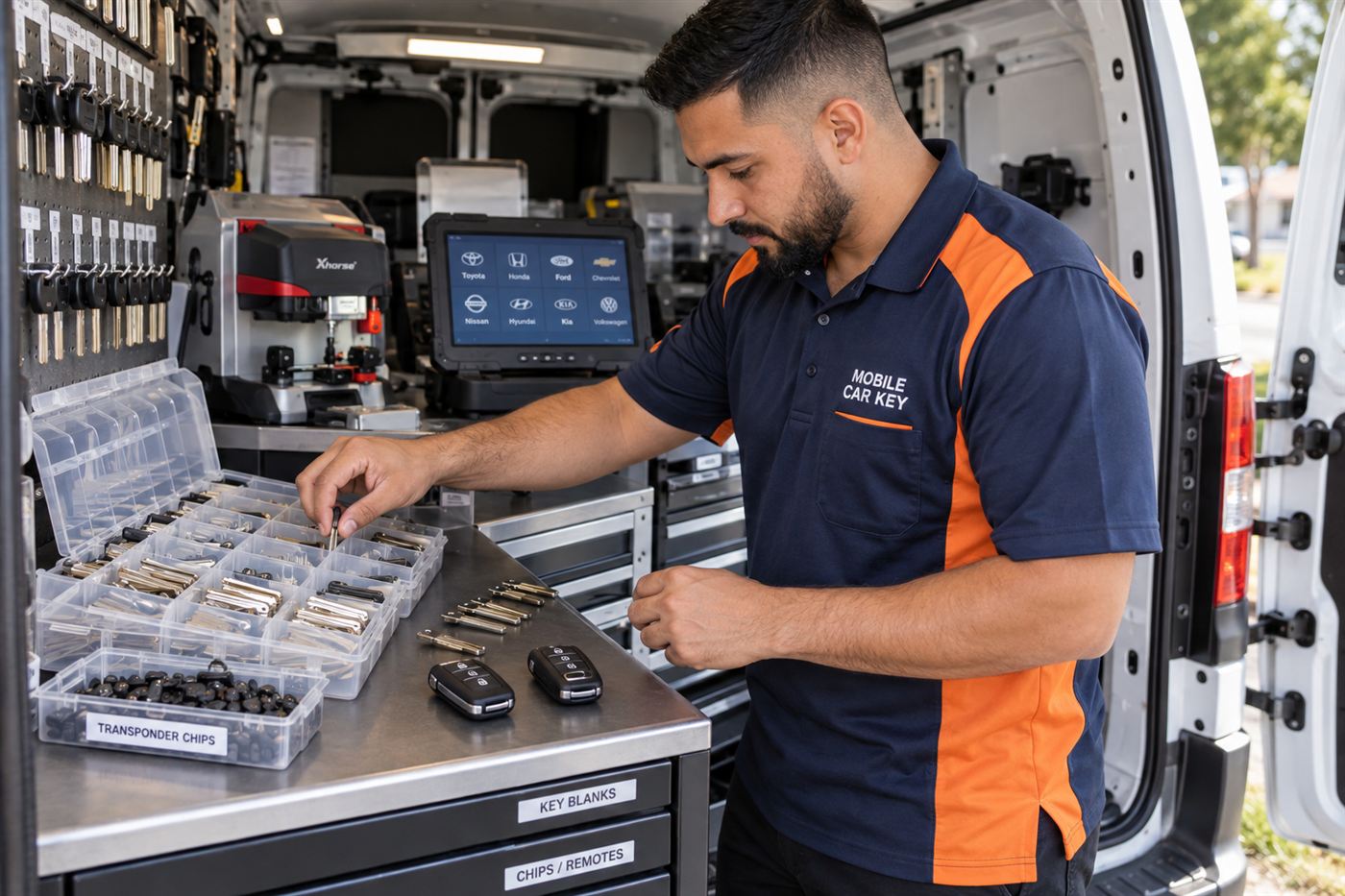
A mobile automotive locksmith comes to the vehicle. You begin with a call or callback request. The service asks about the vehicle, its location and its condition, and about your situation. Be open about the fact that it is an inherited car, because the service will want to explain the paperwork it needs.
Availability, coverage and terms are confirmed before a technician is dispatched. This page is educational and creates no service agreement. On site, ownership or authorization is checked, and the work begins only after that step.
The technician then opens the vehicle if needed, reads the security system, cuts and programs a new key, and tests it in the doors and ignition. If the vehicle cannot be worked on in place, the technician will tell you and suggest alternatives, such as towing to a shop.
If the doors are locked and the alarm may sound
A vehicle that has been parked a long time may be locked with an alarm armed. Opening it may set the alarm off, which can be startling. A technician who opens vehicles is used to this and can often manage it.
If you have the vehicle in a place where a sudden alarm might upset neighbors, mention that when you call. The service can plan accordingly. Our page on vehicle lockout service explains how entry works without damage.
Do not try to break a window or pry a door to get in. That damages seals and wiring and creates a larger repair bill than a controlled entry would.
Deciding what to do with the vehicle
Some people keep an inherited car, some sell it, some donate it. The key question looks different in each case. If you plan to keep it, a full set of working keys is a good investment, and a spare is wise. If you plan to sell, a buyer will expect keys, and a car with no keys usually sells for less.
If the vehicle is not worth much, you may decide a single key is enough. If it holds sentimental value, take your time and consider having the spare made as well. The page on spare keys helps you think about how many to make.
Whatever you decide, hold on to the paperwork and any receipts. They help later, if you sell or retitle the car.
Vehicles can carry emotions. A car may remind you of road trips or errands. Talk with relatives early about who will use it, who will keep the keys, and whether the vehicle will be sold. Settling those questions reduces friction.
It is also sensible to decide where the new keys will be stored. A single labeled envelope in a secure place is better than keys scattered through several homes. Make a note of who has copies, and keep the information with the vehicle papers.
If you are the one handling the details, ask for help. Many service providers are used to working with people in this situation and will be patient.
If you are selling, a clean set of working keys is part of what buyers expect, and having them can simplify the sale. If you are donating, check whether the receiving organization wants keys delivered with the vehicle. In either case, confirm those expectations before you spend on keys, so the work matches the plan.
Related situations
If you are buying a vehicle without keys rather than inheriting one, read buying a car with no keys. If the keys were lost on the way, see lost your only car key. All scenarios are listed in the situations hub.
If a child or pet is locked in a hot car, call 911 first.
Common questions
Can I get a key made for a car that is not yet in my name?
Sometimes, if you can show reasonable proof of your right to the vehicle, such as an estate document naming you along with the title and your identification. A service decides what it accepts, and will tell you before work begins.
What if I cannot find the title?
Look through the person's papers, and ask the relevant motor vehicle agency in your area about replacement titles. Registration or insurance papers can help show the vehicle's details, but a service may still need more to proceed.
Does a car with no keys need to be towed?
Not always. Many vehicles can be worked on where they are parked. Some situations, such as a dead battery or limited access, may require a jump, a tow or a shop visit. The technician will advise.
Can a technician make a key if the car has been sitting for years?
Often, yes, though the battery and general condition matter. A dead battery may need charging or replacing before key work. Limits depend on the vehicle, and some newer models need dealer-level tools.
How many keys should I make?
At least two is a sensible goal, one to use and one stored securely. If the vehicle will be shared, plan for each regular driver. Programming extra keys at the same visit is usually simpler than doing it later.
Is this page legal advice?
No. It is general information about practical steps. For questions about the estate, the title or taxes, talk to a qualified professional in your area.