
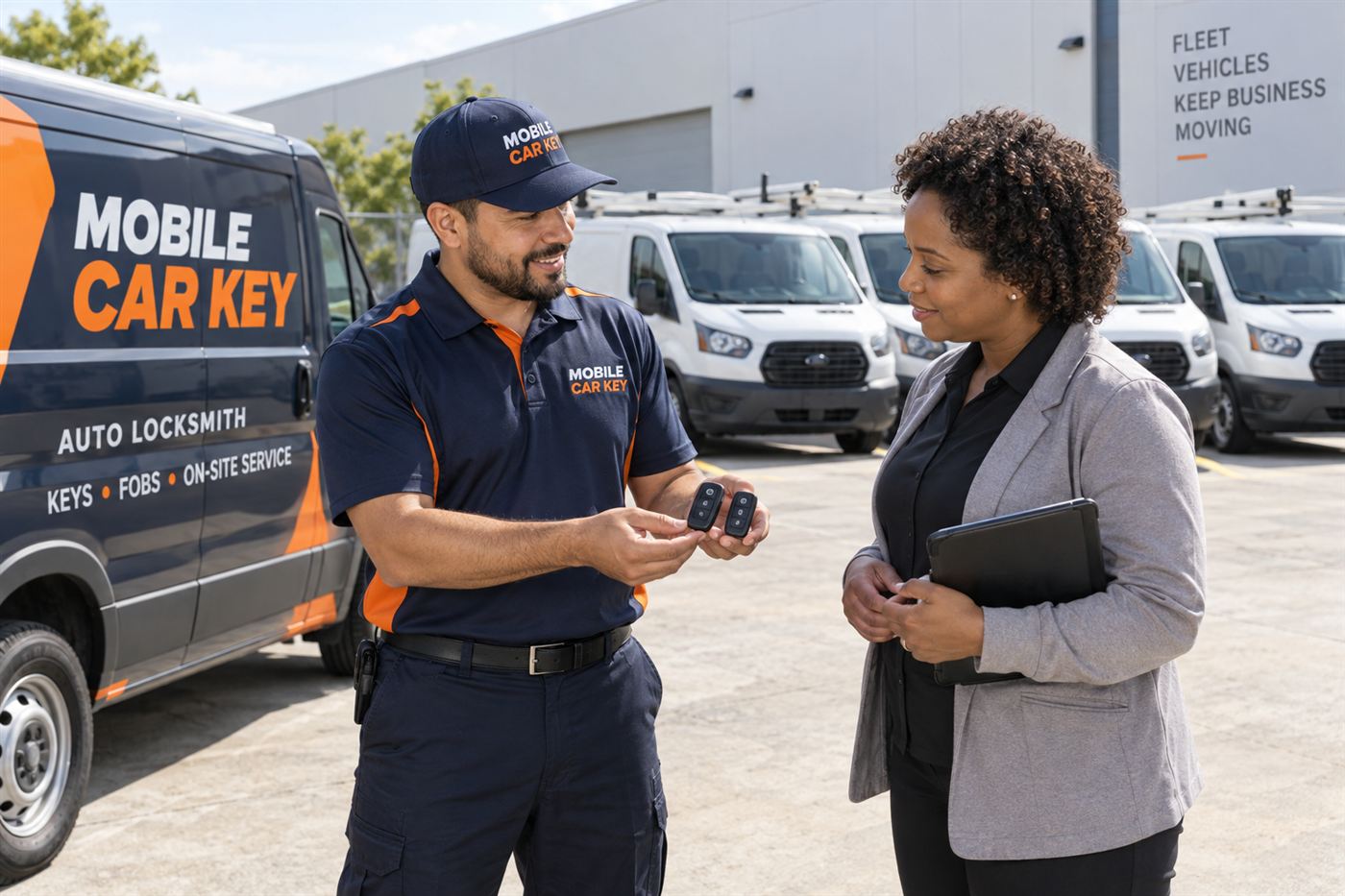
Five places a Charlotte driver can lose a key
Charlotte does not have one typical driving day. A banker may park in a tower garage Monday to Friday, a family may head to a lake every weekend, a fan may travel to a speedway for a race and a traveler may leave a car at the airport for a week. The right way to think about a key emergency depends on which of those you are living through.
This page follows five settings in turn: the Uptown core, the rail corridors, the lakes, the motorsport weekends and the airport. After that, it covers weather, newcomers, proof of ownership and what to expect from a technician. You can read it straight through or jump to the section that matches your situation.
This page is general education. It does not create a service agreement, and availability, coverage and terms are confirmed with you before a technician is sent to your vehicle.
Setting one: the Uptown core
Uptown is the business center, with tall office buildings, hotels, arenas and a dense grid of streets. Most cars parked here are in multilevel garages, many of them attached to towers and shared by workers and visitors. Garages have ticket gates, cameras, narrow ramps and low ceilings.
A key problem in a garage has two parts. First, the technician must be able to enter. Second, the work must be allowed on the property. Many garages let a technician work beside a car, but some require approval from management. Give the service the garage name, the level and the nearest pillar or color code.
Event nights add traffic. When an arena fills, streets close, rideshare cars crowd the curbs and garages fill up. A driver who locks a key inside after a game may find that the usual entrance is blocked. Describe the closest open street and any barriers you see.
The all-day parker
A commuter who parks in the same garage every day tends to keep the fob in the same pocket, and a small change in routine breaks the habit. A different coat, a new bag or a gym session can leave the fob somewhere unusual. Before calling anyone, check the coat you wore yesterday and the bag you carried.
Valet and hotel guests
If a valet parked your car, the key may still be with the valet stand. Ask there first. If the key is lost, the hotel or garage can confirm that you parked there, which helps when proving a legitimate reason to be at the vehicle.
Setting two: park and ride lots and rail corridors
Charlotte's light rail and bus network encourages commuters to park at stations and ride into the center. Park and ride lots are large and open, and cars sit all day. At the end of a long shift, tired commuters return to find a locked door, a dead battery or a missing key.
Station lots have a particular risk. A person who rides to work may carry the fob in a work bag that goes through security, lockers or gym stops. By evening, the key is not where they expected. If you commute this way, keep a habit: before leaving the train, touch your pocket and check that the key is where it should be.
Lots may also have cameras and signs that restrict how long a vehicle can stay. If your car will remain overnight because you are waiting for a replacement key, tell the service and consider notifying the station operator.
- Photograph the lot name and the pole number when you park.
- Keep the fob in a zipped pocket, not a loose bag.
- Check the pocket before stepping off the platform.
- Keep a spare battery in your work bag.
Setting three: the lakes and weekend water
Residents and visitors spend weekends on lakes north and west of the city. Boat ramps, marinas and lakeside parking areas fill early and fill with trucks, trailers and sport utility vehicles. A key problem there is about water: a fob dropped off a dock, a key lost in a life jacket or a car locked while the family is on the water.
Water and electronics do not mix. A fob that has been submerged may seem fine for a day and then fail as corrosion spreads. If it falls into a lake, retrieve it if you can, dry it gently and replace the battery. Do not use heat. If it stops working later, a replacement fob may need to be programmed, and our page on remote and proximity fobs explains how the process generally works.
Ramps are often crowded, and drivers are impatient. If a key is lost near a ramp, move your car or ask someone to help you out of the way if you can, since a stationary vehicle blocks others. Then describe the exact ramp or lot to the service.
Packing for the water
Use a floating key ring or a sealed pouch. Leave the main fob in the vehicle only if you have a secure way to lock it, and keep the spare with a companion. Many people keep a second key in a waterproof case on the boat, away from the first.
Setting four: race weekends and big crowds
The Charlotte area is a center of motorsport. On race weekends, huge crowds drive into campgrounds, fields and temporary lots. Cars sit for days, packed with coolers, chairs and gear. Keys get tossed into bags and tents, and when it is time to leave, the fob is nowhere.
Tailgate lots have few landmarks. If you are in a large field, note the section, row or flag color the lot uses, and take a photo. Traffic leaving a large event may be slow, and a stranded driver can become a hazard. Staying with the vehicle in a secure area, rather than walking along a busy road, is usually the better choice.
A race weekend can also mean a long distance from where you live. Guests may travel from other states. Coverage is confirmed before dispatch, so be clear about where you are and what the access is like. Some event lots restrict outside vehicles, so ask whether a technician can enter.
Setting five: the airport and the connecting traveler
Charlotte Douglas is a major hub where many passengers change planes. Local residents leave cars in economy lots or garages for days. Visitors arrive in rental cars and leave them at return lots. The airport corridor is therefore a mix of owners, renters and people running late.
A returning traveler who finds a dead fob battery after a week in a lot is a common case. The lot may be large with shuttle buses, so noting the row and section before leaving is essential. A rental car follows different rules: the company owns the key, and its approval matters. Our page on push-to-start vehicles explains why many rentals use smart fobs and what happens when one fails.
Travelers in a hurry sometimes lock a key in the trunk with their luggage. If that happens, remain calm. A technician can often open the vehicle without damage, but the service will ask for proof of authority first.
Weather: humidity, thunderstorms and pollen season
The Carolinas have humid summers and sudden thunderstorms. Humidity can corrode battery contacts in a fob over time, and a heavy downpour can send drivers sprinting to the car with a key in a wet hand. A fob dropped in a puddle may work for a day and then fail.
Spring brings heavy pollen, a thick yellow layer on parked cars. It can clog small openings, coat buttons and make a door handle sticky. If a fob button feels gritty, wipe it gently with a dry cloth. Do not use strong solvents.
Occasional winter ice can also cause trouble, though less often than in northern cities. A frozen lock can refuse a blade, and a driver who forces the key may snap it. If that happens, do not try to extract the piece with a tool.
Newcomers, relocations and out of state plates
Charlotte has grown rapidly, drawing workers from many places. Many drivers arrive with cars registered in other states, with titles held by a lender and with keys purchased from a previous owner. This creates a special paperwork picture when a key is lost.
A lender may hold the title, so you may not have it. A registration from another state may still show your name. A bill of sale may be your strongest document. Our page on all keys lost explains the usual steps and how a service verifies ownership, and the page about not having the title lists alternatives.
If you have just moved, make a spare key one of the first errands. It is much easier to do while the original works.
What a call sounds like
The service asks about the vehicle first: year, make and model. Next it asks what happened. Then it asks for the exact location and whether you have any working key. Finally it explains whether it can cover the location and what the terms are. You can say no at that stage without any obligation.
A good caller gives short, accurate answers. Read the identification number from the dashboard if you can. Mention garage levels, gate numbers or lot names. If you are unsure of a detail, say so; a guess may send the wrong equipment.
Ownership checks and why they matter
A reputable technician checks that you own or may use the vehicle before making a key. It is the same principle that stops a stranger from getting a replacement debit card in your name. Typical proof includes a government photo identification plus registration, title, bill of sale or a rental agreement.
If the car belongs to an employer or relative, the owner should confirm permission. Keep their number handy.
When dealer access is needed
Some newer vehicles from certain makes need manufacturer-level tools or codes. A mobile technician can handle many jobs but not all. A good service tells you at the start. If the dealer is involved, you may still need transport or a lockout solution first.
Rideshare, delivery stops and the borrowed car
Charlotte's growth has brought a lot of rideshare and delivery driving, and with it a lot of short stops at curbs, apartment entrances and office lobbies. A driver who gets in and out of a car forty times in a shift handles the key constantly. Lockouts happen when a door closes on a running engine, when a passenger pulls the door shut or when the key is set on a seat during a pickup.
People who drive for a living should treat the key as a tool. Clip it to a place that cannot be left behind. Know which pocket it lives in. Keep a spare with a family member or at a depot. If you rent or borrow a car for this work, ask the owner who holds the other key, because a lockout in the middle of a shift is costly in time.
Borrowed cars are the other half of this picture. A friend lends a car for the weekend, the key is returned to the wrong person and nobody can find it. In that case, the owner is the one who must confirm authority. Call the owner while you stand at the car, so the service can speak with them.
Dropping off a key
When you hand a key to someone, hand it to them, not to a table. Keys left on counters, in coat pockets or under mats are the ones that vanish. A short habit, such as saying "you have the key now," prevents a long search.
The pocket check
Before closing any door, pat your pockets. It takes two seconds and is the most reliable lockout prevention anyone has found. Pair it with a rule that the key never goes in the bag you will leave in the trunk.
Smart fobs, apps and what to carry in a growing city
Newer vehicles often pair a smart fob with a phone app that can lock, unlock or locate the car. If your vehicle has such a feature and you have set it up, it can rescue you from a lockout. If you have not set it up, do it today, while you have a working key in hand.
Some drivers rely on a phone as a digital key. That works until the phone battery dies, the screen cracks or the phone is lost. Carry the physical fob as a backup, and keep a charging cable in the car. A digital key does not remove the need for a physical one.
Consider what a sensible set of items looks like for a driver in a busy city:
If you carry these, most key problems become small ones. You may still need a service for a total loss, but the call will be short and calm. Our guide on spare keys explains how many keys are sensible and where to keep them.
- One working fob in a pocket that zips.
- One spare fob stored away from the vehicle, not in it.
- A spare battery for each fob, in a place you can reach.
- A photo of the registration and identification number on your phone.
- The owner's phone number, if the car is not yours.
Beyond Charlotte
Drivers here often travel to the Carolinas' other cities, to the mountains and to neighboring states. The overview of car key service across North Carolina and the page for South Carolina cover the wider region. Road trips toward Atlanta or Nashville bring similar key patterns, and the full list of city pages shows others.
Trips west to the foothills and mountains
Many Charlotte residents drive west on weekends to hike, visit small towns or see fall color. Trailheads and scenic pull-offs are often far from cell towers, with gravel lots and no landmarks beyond a trail sign. A key problem there combines two difficulties: poor signal and distance. Before you leave the car, tell someone where you are going, and keep a spare key with a person who is not on the trail.
If you do lose a key in an area with weak coverage, walk to a spot with signal only if it is secure to do so, and tell the service the road name, the trailhead name and the nearest town. Our page on remote areas explains what to expect. Distance affects whether a visit is possible, which is why the service confirms coverage and terms first.
Trips toward the coast
Drivers who head east to the coast face salt air, sand and heat. These are hard on fobs and key blades alike. Rinse sand from a key blade with a dry brush, not water, and store the fob in a pouch. If you plan to be on a beach, leave the main fob locked in a secure place and carry a basic spare.
After the key works
Test everything before the technician leaves. Start the engine, press every fob button and lock and unlock from a few steps away. Check the trunk release and any remote start. Mention any fault right away.
Then plan a spare. A second key made now is simpler than starting over after a loss. Store it away from the main key.
Common questions
Can a technician reach a car in an Uptown garage?
Often yes, if the technician can enter and the property allows the work. Tell the service the garage name, level and nearest pillar. Some garages need management approval or have height limits. Coverage and terms are confirmed before dispatch, so you know the plan before anyone travels.
My fob fell in a lake. Is it ruined?
Not always. Retrieve it, dry it gently without heat and replace the battery. Many fobs recover, but corrosion can cause failures later. If it stops working, a technician can test it and, if needed, replace or reprogram a fob for your vehicle.
What if my car is in a race weekend field lot?
Describe the lot section, row or flag color and any gate nearby. Some event lots restrict outside vehicles, so ask whether a technician can enter. Coverage and terms are confirmed before dispatch, and the service tells you if the location cannot be reached.
My car is registered in another state. Is that a problem?
Not necessarily. The service needs proof you own or may use the vehicle. An out of state registration with your name, plus photo identification, often helps. If a lender holds the title, a bill of sale or loan document may also work.
I left my key in a rental car trunk at the airport. What now?
Contact the rental company first, since the key belongs to them and they may need to approve the work. A mobile service can also help once authorization is clear. If there is any danger to a person or animal inside, call 911 first.
Is pollen a problem for my key fob?
It can be. A thick layer can make buttons gritty and clog small openings. Wipe the fob gently with a dry cloth and avoid strong solvents. If the buttons still stick, the rubber pad or battery may need replacement.