
Tucson in Plain Terms
Tucson sits in the Sonoran Desert in southern Arizona, ringed by mountain ranges and known for saguaro cactus, a large university, winter visitors and a long, hot summer. The city is spread out, with wide roads and shopping centers surrounded by big surface lots, so most daily life happens in a car.
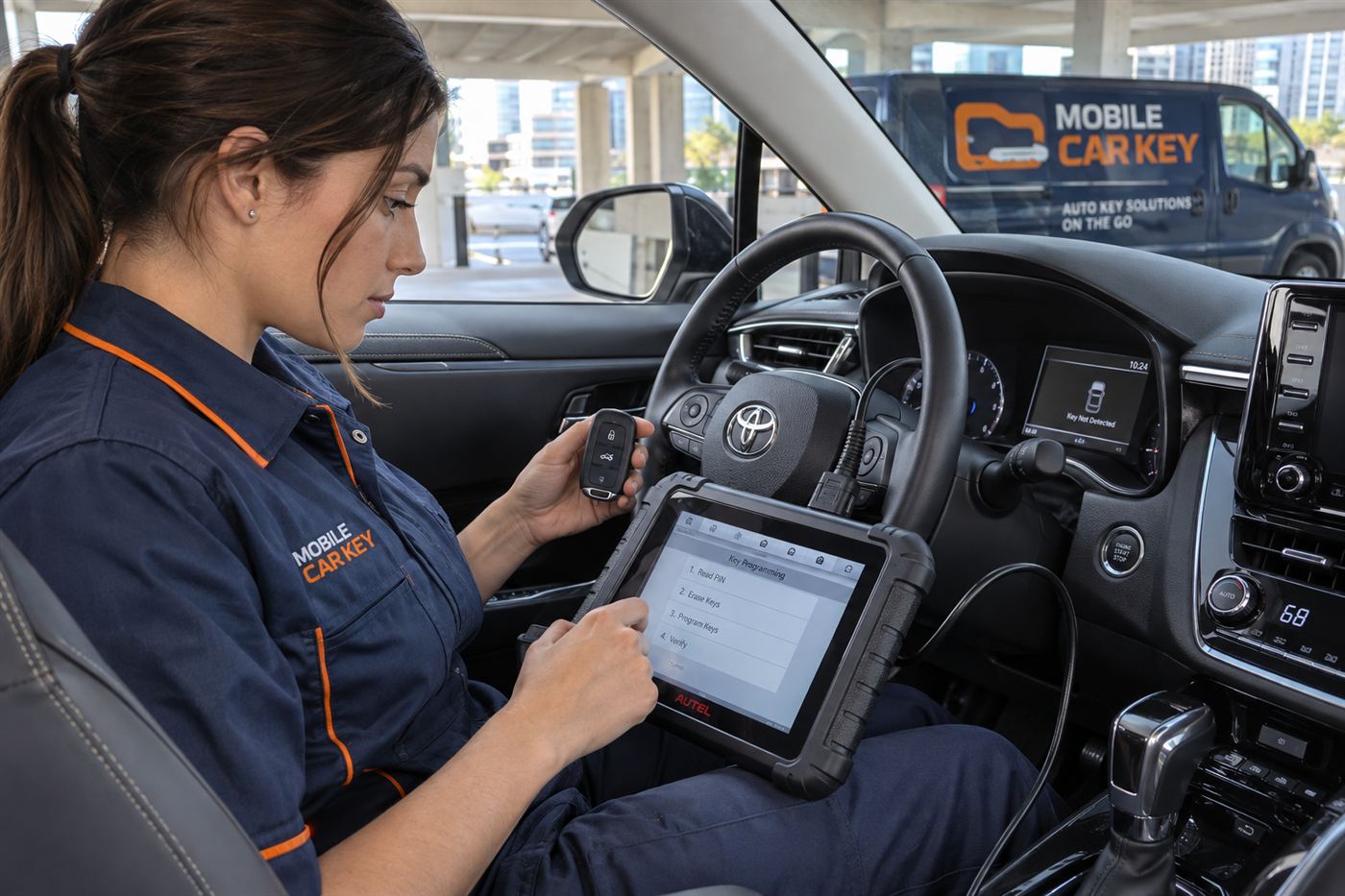
Mobile Car Key Locksmith is an automotive service that covers the entire United States, and Tucson is one of the cities this site describes. The service sends a technician to the vehicle, which is a natural fit for a city where cars are parked everywhere from campus lots to trailhead pullouts.
The material on this page is educational. It explains common situations, what you can try yourself and how the process works in general. Availability, coverage and terms are always confirmed before dispatch, and none of this text is a service agreement.
The short list of Tucson key problems
Fobs that give up after months in the heat, keys locked inside a car at a shopping center, lost keys after a hike, spare keys left behind by visitors, and keys that fail after a long drive. The sections below take these one at a time.
Summer Heat and the Locked Car Emergency
Summer temperatures in Tucson climb well above comfortable levels, and the inside of a parked car gets much hotter than the air outside. This changes how a lockout is judged. A lockout in January is an annoyance. A lockout in July with a child or pet inside is an emergency.
If anyone is inside a locked car in the heat, call 911 right away. Do not wait for a locksmith, and do not worry about the window. Emergency responders handle these calls and will do what is needed. Once the person or animal is out and secure, you can deal with the key.
If the cabin is empty and you are simply locked out, you still need to think about your own comfort. Find shade, drink water, and wait inside a business if possible rather than standing on hot asphalt.
Why people leave things in hot cars
It usually happens in a rush: a short errand, a distracted morning, a sleeping child who was not noticed. Placing a bag or a phone in the back seat as a reminder is a common habit that helps.
Our safety guide
The locked out safety guide sets out the steps in order and explains when to call emergency services first.
How Desert Heat Wears Out Electronic Keys
Heat is slow and steady. A fob that lives in a hot car cycles through extreme temperatures every day, and the plastic, solder and battery inside are not built for that. The battery weakens early, the case becomes brittle, and the buttons may start to stick.
The first sign is usually reduced range: you have to be close to the car for the doors to respond. The second sign is inconsistent behavior, such as a button that works one day and not the next. By the time the fob stops entirely, the problem may be the circuit rather than the battery.
Push-button start vehicles add another layer. The car must detect a proximity fob in the cabin, and a damaged fob may cause an error message or a refusal to start even though the fob looks fine. Our push-to-start guide explains what is happening inside the system.
What you can try first
Replace the coin battery, clean the contacts gently, and try the backup method for your vehicle, which is often a marked spot on the steering column or console where the fob can be held. Use the manual key hidden in the fob for the door.
When to stop trying
If the fob still fails after a new battery, avoid opening it repeatedly or prying at the circuit board. A technician can test the key and the car with the right equipment and tell you whether repair, reprogramming or replacement makes sense.
Winter Visitors and Seasonal Residents
Tucson fills up in the cooler months with seasonal residents and tourists who come for the sunshine. Many arrive by plane and rent a car, and others drive in from the Midwest or Canada with fully loaded vehicles. Both groups face key situations that locals often do not.
A visiting driver may not know the area, may not have a spare key within a thousand miles, and may be dealing with an unfamiliar rental. If you are a visitor, the most useful step is to gather paperwork: the rental agreement or registration, a photo ID and the vehicle details. Then describe your location with a landmark, a street name and the name of the business whose lot you are in.
Rental cars
With a rental, the company owns the vehicle, so contact them first. They may have their own roadside program. Our rental car key guide explains who authorizes what.
Drivers from out of state
Out-of-state plates and registration are fine. The service covers the entire country, and ownership is checked on site using whatever documents you carry.
University of Arizona and Campus Parking
The University of Arizona sits near the center of the city and brings thousands of students, staff and visitors every day. Parking garages and surface lots surround the campus, and bike lanes, bus stops and crowded sidewalks make for a dense environment.
Student drivers carry keys in backpacks that also hold laptops, water bottles and sunscreen. Keys get left in lecture halls, labs and gym lockers. In a garage, a student who locks the car and realizes the key is on the seat has to deal with the structure's rules and the heat that collects on upper levels.
For students, the strongest prevention is boring but effective: give one trusted person a spare, keep a photo of the registration on your phone, and learn which key your vehicle uses.
If the car belongs to a parent
The owner may need to take part in the conversation. Ownership or authorization is checked on site, so bring the registration or a signed note if possible. The ownership proof guide lists common documents.
Military Families and Frequent Moves
Tucson also hosts Davis-Monthan Air Force Base, and military families often relocate, deploy and travel for work. Moving creates its own key risks. Boxes are packed, spare keys disappear into storage, and a vehicle may sit parked for weeks.
Families with more than one vehicle should keep a record of every key, including who holds which one. A deployed spouse may have the only spare in a duffel bag thousands of miles away. In that case, the question becomes whether a new key can be made for the car without the old ones. For many vehicles the answer is yes, though the process depends on the make, model and year.
Keeping a key log
A small note with the vehicle, the number of keys, who has each one and the date the battery was last changed takes five minutes to write and can save an afternoon of confusion.
Long-term parking
A car left parked for weeks can develop a dead battery. A dead car battery can look like a dead fob, so check the vehicle battery too before assuming the key has failed.
Hiking Trailheads, Mount Lemmon and Saguaro Country
Outdoor life in Tucson means trailheads. People park near Sabino Canyon, in the foothills, in the Saguaro National Park areas and along the road up Mount Lemmon. These places are beautiful, and they are also remote enough that a key problem takes some planning.
A common scene is a hiker who locks the car before setting out, then finds the key missing after the trail. Another is a driver who drops a fob in sand or gravel. Cell signal can be patchy in canyons, so send a text rather than waiting for a call to connect. Tell someone where you are and bring water.
Mountain driving changes the weather. Mount Lemmon can be cool or even snowy while the valley is hot, and a fob that sat in a warm pocket in the valley may behave differently in cold air on top.
- Keep the key in a zipped pocket, never loose in a pack side pocket
- Leave a spare with a friend who is not hiking
- Check the fob battery before a long trip into the foothills
- Carry water and a charged phone
Describing a remote spot
Give the road name, any nearby marker, the trailhead name and the direction you drove from. Photographs of the parking area, if you have signal to send them, remove a lot of guesswork.
Monsoon Weather and Wet Fobs
Summer monsoon storms bring sudden heavy rain, lightning and strong wind. Drivers dash from stores to cars and arrive with wet hands and pockets. A soaked fob may glitch, and a key left in a wet jacket can corrode over time.
After a soaking, remove the battery if the case allows, dry everything in open air and wait before testing. Heat from a hair dryer or an oven is a bad idea because it can warp the case. Read our page on a key fob that got wet for a fuller list of dos and don'ts.
Dust storms, which can arrive ahead of monsoon rain, also fill locks and ignition slots with fine grit. A key that suddenly catches or sticks should be looked at before it snaps.
Shopping Centers, Big Lots and the Everyday Lockout
Most lockouts do not happen on dramatic trips. They happen at the grocery store, the pharmacy and the gym, when a driver sets the key down while loading bags and closes the door. Arizona drivers who run short errands in the heat sometimes leave the engine running to keep the air conditioner on, and a closed door can lock the car with the key inside.
Lot size matters for the technician. A large shopping center may have several entrances, so tell the dispatcher which one you are near, the color of the vehicle, and the nearest store sign. The vehicle lockouts page explains what a technician typically does and what is checked before the work begins.
Do not break a window
The urge is strong in hot weather, but a broken window leaves glass in the seat, opens the cabin to dust and theft, and costs more than most lockout visits. If no one is in danger, wait for help.
Spare key apps and cases
Some people keep a spare in a magnetic box under the bumper. These are easy for thieves to find. A spare with a trusted person is safer.
Drives to Phoenix, Nogales and Beyond
Interstate 10 connects Tucson to Phoenix and on to Los Angeles in one direction and El Paso in the other, and Interstate 19 runs south toward Nogales and the Mexican border. Many drivers make regular runs on these roads for work, shopping and family visits.
Long drives raise the odds of a key problem at a roadside stop. If you are headed north, see our page for Phoenix. If your trip goes east, Albuquerque is another major stop. All covered cities are gathered on the major cities hub.
Desert stretches are long, and services can be far apart. Before leaving, check the fob battery, carry the spare in a different bag, and save your vehicle details on your phone.
Border-area travel
Drivers who cross the border for a day trip should keep key and registration documents in order. Service within the United States is covered. For anything else, check the rules that apply where you are going.
Transponder Chips and Why a Plain Copy Does Not Work
Most vehicles from the last couple of decades use a transponder system. A tiny chip in the key sends a code that the car's immobilizer must recognize before the engine will run. A key cut to the right shape without the right code will turn in the ignition but will not start the car.
This is why a hardware counter copy of a modern key often fails, and why professional key programming exists. A mobile technician carries cutting and programming equipment suited to many vehicles. Some makes, especially newer ones, require manufacturer access or dealer-level tools, and the dispatcher will tell you if yours does.
Our immobilizer guide explains the technology in simple language.
Cloning, copying and programming
These words are used loosely. Cloning duplicates the chip's code, copying creates a key that looks the same, and programming teaches the car to accept a new key. Which method applies depends on the vehicle and the key type.
A Spare Key Plan That Fits Desert Life
The most useful thing a Tucson driver can do before summer is decide where the spare key lives. A spare does not help if it sits in the same bag as the primary, in the same hot car, or in a drawer that nobody can reach from across town.
Think about who could bring a spare to you. A relative, a roommate, a coworker with a car, or a neighbor you trust. Give that person the spare, tell them which vehicle it fits, and make sure they know it is only to be used at your request. A spare with a trusted person solves the lockout problem outright, because the work is simply delivering the key.
If you only have one key, consider making a second one while everything still works. Duplicating a key you hold is generally simpler than creating one when none are left. Our car key replacement page explains the options in plain language.
Test the spare, do not just own it
A spare that has never been tried may have a dead battery, a missing transponder code or a blade cut slightly off. Try it in the door and the ignition once a year, and replace its battery when you replace the primary's.
Where not to keep it
Avoid magnetic boxes under the bumper or wheel well. Heat and dust degrade them, and they are the first places thieves look. Also avoid leaving a spare in the glove box, since a lockout with the primary inside would lock the spare in as well.
What to Have Ready Before You Call
Preparation makes any visit smoother. Collect proof of ownership or authorization, photo identification, and the year, make and model of the vehicle. If you can read the VIN through the windshield, write it down. Keep any damaged keys or shells, since they help identify the key type.
Think about the location too. Note the address or intersection, the lot or structure, and any gate codes or access rules. In the heat, wait in shade and keep water nearby. The how it works page explains the steps from first call to finished work.
- Registration, title or lease paperwork
- Photo ID
- VIN and vehicle details
- Old keys, fobs or shells
- A precise description of where the car is parked
Honest Limits
No service can handle every vehicle in every situation. Many vehicles can be served by a mobile technician, and limits depend on the make, model and year. Some newer vehicles need dealer-level tools. A good dispatcher will say so early.
Everything here is general information. Terms, availability and coverage for your specific request are confirmed with you before a technician is dispatched.
Common questions
My child is locked in my car in the heat. Should I call a locksmith?
No, call 911 first. A child or pet locked in a hot car is an emergency, and emergency responders are the right people to act. Do not wait for anyone else. Once everyone is out and secure, you can deal with the key and the lockout afterward.
Why does my fob work only when I am right next to the car?
Reduced range usually means a weak battery, and desert heat shortens battery life. Replace the coin battery first. If range stays short, the fob circuit or case may be damaged. A technician can test the fob and the car's receiver and explain whether repair or replacement makes sense.
I am a winter visitor with a rental and lost the key. Who do I call?
Call the rental company first, since they own the car and may have their own roadside program. Have your rental agreement and photo ID ready. If they direct you to arrange your own service, a mobile technician can help once ownership or authorization is confirmed and availability is checked.
Can a key be made if I lost every key and have no spare?
For many vehicles, yes. A technician can often cut and code a new key at the vehicle. The process depends on the make, model and year, and some newer vehicles need dealer-level tools or manufacturer access. Bring the VIN, registration and photo ID, and the dispatcher will explain the options.
Can a hardware store copy of my key start the car?
Often not. Many vehicles use a transponder chip, and a plain copy without the right code may open the door and turn in the ignition without starting the engine. A mobile technician can cut and program a key that the car accepts, subject to the limits of your vehicle.
What should I do if my key is stuck or broken in the ignition?
Stop pulling on it. Forcing a stuck key can snap it and make the problem harder. Check that the gear selector is in park and the steering wheel is not locked against the key. If it still will not move, describe the situation to the dispatcher so a technician can bring suitable extraction tools.