
The Central Valley Shapes How Fresno Drives
Fresno is the largest city in California's Central Valley, a flat agricultural region between the coastal ranges and the Sierra Nevada. Orchards, vineyards and fields reach almost to the edge of town. People here commute between the city and smaller valley communities, work early shifts and spend a lot of time on highways such as State Route 99 and State Route 41.
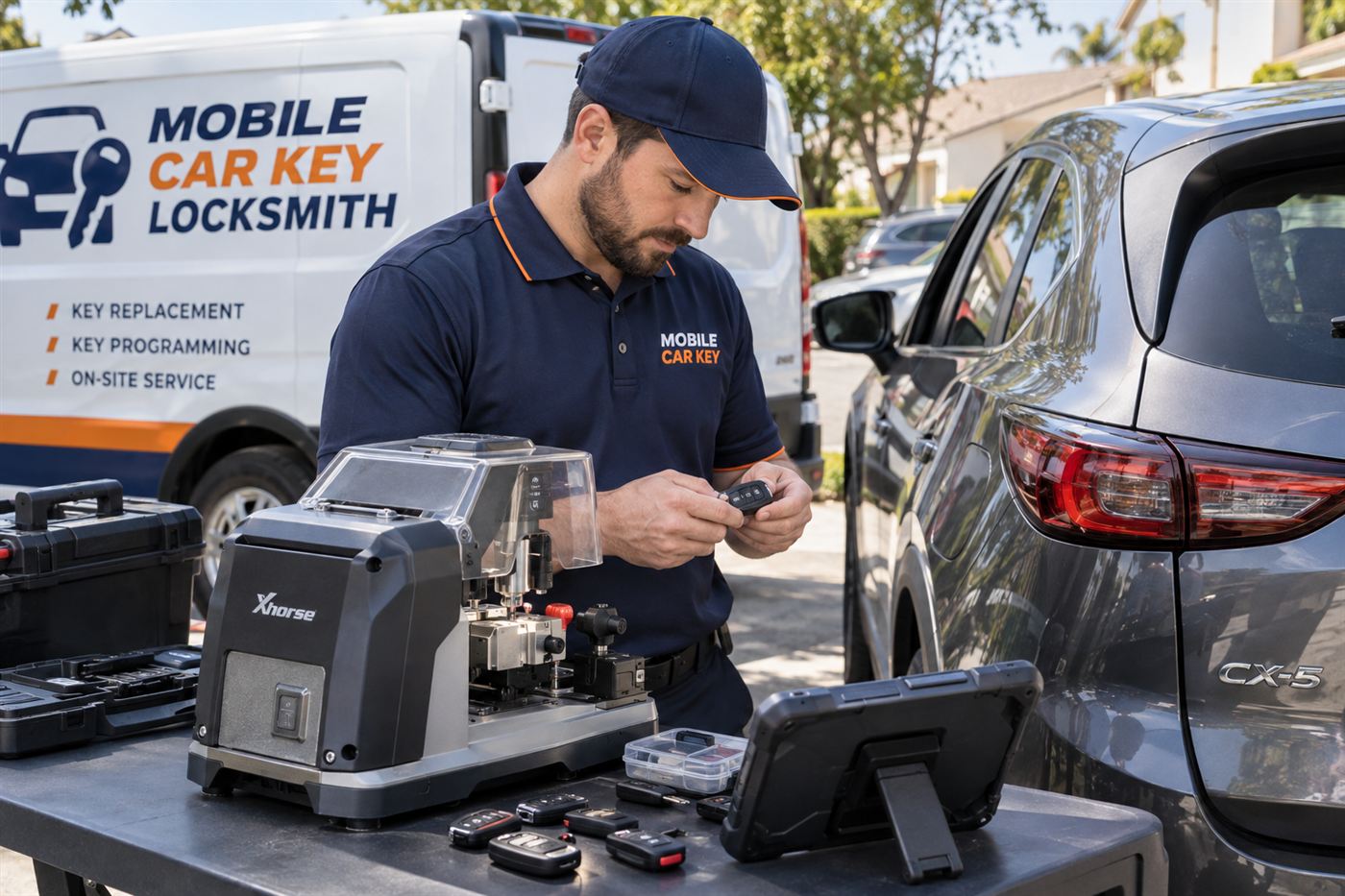
Mobile Car Key Locksmith is an automotive service that covers the entire United States, and Fresno is one of the cities this site describes. A technician comes to the vehicle, which matters in a region where a stranded driver might be in a medical center lot, a farm access road or a roadside turnout.
This page is educational. It describes what is common, what you can try before calling and how the process works in general terms. Availability, coverage and terms are always confirmed before anyone is dispatched, and nothing here is a service agreement.
A valley-specific list of key troubles
Dust and pollen in locks, heat damage to fobs, keys lost in orchards or fields, lockouts at gas stations along the highway, fog-related lockouts, and keys that fail on road trips to the mountains.
Farm Dust, Pollen and Gritty Locks
Agriculture puts fine particles in the air for much of the year. Dust from tilled fields, pollen from blooming orchards and exhaust from trucks all settle on vehicles. Over months, that grit works its way into door locks, trunk locks and ignition cylinders.
A key that once slid in smoothly may begin to catch. The blade has tiny grooves, and gritty residue in the cylinder turns those grooves into friction points. Forcing the key makes things worse. A gentle wipe of the blade, a puff of graphite lubricant, or a professional cleaning is better than muscle.
Dust is also hard on electronics. Fob buttons collect grime under their rubber pads, and a dirty button may need extra pressure or fail to register at all.
Why spray lubricants are a gamble
Oily sprays can attract more dust and gum up the tiny pins inside a lock. Dry graphite or a lubricant made for locks is usually the better choice, and a technician can advise on what suits your vehicle.
Cleaning a fob safely
Use a dry cloth or a soft brush. Avoid soaking the fob, avoid solvents, and open the case only if you know how it is meant to come apart.
Summer Heat Over the Valley
Fresno summers are long, hot and dry. The inside of a closed car in the afternoon gets far hotter than the air outside, and the heat stresses everything left in it. A fob on a dashboard can warp, a battery can run down early, and adhesive in the case can loosen.
The same heat makes lockouts more urgent. If you are locked out in the afternoon, find shade and water at once, and think about whether anyone or anything is still inside the car. If there is a child or pet in the vehicle, call 911 right away. That is an emergency, and responders can act in ways a locksmith cannot.
For an empty car, the usual steps apply: stay calm, gather your documents, and describe your location clearly. The locked out safety guide sets out the order of steps.
Heat and the car battery
A weak car battery can look like a key failure. Dim dash lights, slow cranking or clicking sounds often point to the vehicle battery, not the key. Tell the dispatcher what you observe.
Tule Fog Mornings and Winter Driving
In winter, the valley is known for dense ground fog that can make visibility very poor for hours. Drivers pull over onto shoulders, into parking lots or onto side streets, and a hurried stop can lead to a hurried exit from the car. Keys get left on seats, in cup holders or in the ignition.
Cold mornings also test fobs. A coin battery that was fine in summer may be marginal after a chilly night. If a fob stops working on a damp morning, replace the battery, dry the fob and try the manual key blade. Our page on a key fob that stopped working explains more steps.
Fog can also delay everything on the road, including a service visit. A dispatcher can tell you whether conditions affect availability, and terms are confirmed before dispatch. If you are waiting in fog, stay out of traffic lanes and use hazard lights.
Waiting beside a highway
If your car is on a shoulder in poor visibility, exit on the side away from traffic, stand well back from the road and keep your phone ready. Call 911 if you feel unsafe.
Shift Workers, Hospitals and Night Parking
Fresno has major medical centers, and nurses, technicians and other staff often work long shifts that start or end in the dark. Parking structures and lots near hospitals are busy at all hours. A tired worker at the end of a twelve-hour shift is more likely to lock keys in a car or misplace a fob.
The same is true for people who work warehouse, packing and delivery shifts. Night work means low light, which makes a dropped key harder to find on the ground. A small flashlight on a keychain costs little and helps a lot.
If you are locked out at night, tell the dispatcher where you are and whether the lot has security staff or lighting. Wait in a lit, staffed area when you can.
Keys left at work
If you suspect the key is still in a locker or break room, check there before assuming it is lost. A call to a supervisor can save a lot of effort.
Visitors to hospitals
Family members of patients arrive stressed and may leave keys in a waiting room or a vending area. Retrace your steps through the building before deciding the key is missing.
Fresno State, Clovis and Student Drivers
California State University, Fresno, brings a large student community to the north side of the city, and the neighboring city of Clovis adds more commuters. Campus parking is busy, and students share cars, borrow keys and carry them in loaded backpacks.
The typical student key story is a spare left with a roommate, a fob dropped at a gym, or a car bought used with a single key. Our all keys lost service page explains what happens when the only key is gone, and why a duplicate made early is much simpler.
For students buying a used car, ask how many keys come with it. A used vehicle with one worn key is a problem waiting to happen.
Ownership paperwork
The person requesting service must show ownership or authorization. A student driving a parent's car should arrange for the parent to confirm or provide a document.
Trucks, Fleets and Working Vehicles
The valley moves goods, and many drivers use pickups, vans and service vehicles for work. These vehicles are often shared among several drivers, which makes key tracking difficult. A key can leave in the wrong pocket, drop into a field, or be left in a rented unit.
Fleet vehicles introduce a question: who is allowed to request service? A reputable service checks authority on site. If a business owns the vehicle, bring a note or document from the owner, and expect to be asked for it.
Our fleet key guide explains how businesses can manage keys, spares and authorization so that one lost key does not stop a day's work.
Key control habits
A simple sign-out sheet, labeled spares and a regular check on batteries prevent most fleet key emergencies. Assign one person to keep the log.
Fresno Yosemite International Airport and Rental Cars
The airport serves business travelers, visitors headed to the national parks and people connecting with family across the valley. Many arrive and pick up rental cars. Rental keys are easy to misplace because drivers are unfamiliar with them, and a smart key in a bag may not be detected when the driver tries to start the car.
If your rental will not start, check the dashboard message, try the backup position for the fob and call the rental company first, since they own the car. If you are in a position where you must arrange your own service, a mobile technician can help once authorization is confirmed.
Note the lot, row and any marker so the dispatcher can find the right car.
Returning rentals
Never leave a rental key in the car at drop-off unless the agent tells you to. Mixed-up keys at the return counter lead to a surprising number of problems.
Road Trips to Yosemite, Sequoia and Kings Canyon
Fresno is a gateway to some of the most famous national parks in California. Drivers head up mountain roads with trunks full of gear, and parking at trailheads, lodges and viewpoints is often crowded. Cell signal fades in the mountains, and a key problem far from services takes patience.
Before a mountain trip, check the fob battery, bring a spare and store it in a different bag, and photograph your parking spot. Keep the vehicle details on your phone, and tell someone your plan. If a lockout happens, send a text, which can go through when a call cannot.
Cold mountain mornings can make fobs sluggish, and snow covering a car can hide the door handle or lock. Clear the snow gently to avoid damaging the lock area.
- Check the fob battery before the drive
- Store the spare in a different bag
- Note your parking location and trailhead name
- Keep the VIN and registration photographed on your phone
Keys in the backcountry
Never carry the only key on a trail in a loose pocket. A zipped pocket or a lanyard inside a pack is a better choice.
Other Valley and Coastal Destinations
Fresno drivers also head north toward Sacramento and the state capital, west toward the coast and south toward Bakersfield and Los Angeles. If your trip takes you north, see our page for Sacramento. Bay Area drivers can find San Jose, and you can see every covered city on the major cities hub.
The service covers the entire United States, so a key problem does not become a bigger one just because you are away from your usual area. Availability and coverage are confirmed before dispatch.
Highway fuel stops
Long valley highways have long gaps between exits. Drivers who stop for fuel and lock keys in the car are common. Build a habit of touching your pocket before closing the door.
Keys, Chips and What a Technician Can Do
Most modern keys carry a transponder chip, and some vehicles use proximity fobs. A mobile technician can often cut and program a new key at the vehicle, repair a damaged fob or replace a worn one. Some newer vehicles require dealer-level tools or manufacturer access, and the dispatcher will tell you honestly if yours does.
Work is tested before the technician leaves, which means the new key opens the door, starts the car and operates the remote functions as expected. For details on programming, visit our key fob programming page. How the whole process runs from first call to finished work is covered on the how it works page.
What to tell the dispatcher
Year, make and model, the number of working keys you still have, whether the vehicle uses a push button or a key slot, and any warning lights on the dashboard.
A Walkthrough: One Afternoon on Highway 99
Picture a general scenario, not a real customer. A driver is returning from a long day of appointments up the valley. They pull off the highway at a fuel station, step out to pay inside, and close the door by habit. The keys are on the passenger seat, the doors are locked, and the temperature outside is high.
The first step is to check the cabin. No one is inside, so there is no emergency. The driver moves into the shade of the station canopy, drinks water and takes a photo of the registration, which happens to be on the phone from a recent insurance email. They also note the station name, the exit and the pump number.
Next comes the request. The driver gives the year, make and model, explains that the keys are visible on the seat, and describes the station. The service confirms availability and terms before sending anyone. A technician is then dispatched to the vehicle, checks ownership using the registration and photo identification, opens the car and tests that the door and ignition work normally.
Nothing in this story is dramatic, which is the point. Most key problems are solved in a calm sequence of ordinary steps.
What made it go well
Staying out of the sun, having documents available, naming the exact location and avoiding any attempt to force the door. Those four habits are within every driver's control.
What can go wrong
A driver who breaks a window, pries the door frame or hires an unverified stranger can end up with a much bigger bill and a damaged vehicle. When in doubt, ask what will be confirmed before dispatch.
Preparing Before You Call From a Fresno Parking Spot
Collect proof of ownership or authorization, photo identification and your vehicle details. Keep old keys. Describe the exact location, including the lot name, nearest cross streets and any gate or access notes. If you are on a rural road, give the road name and the nearest mile marker or landmark.
Charge your phone, find shade and water, and stay away from traffic. If you cannot talk, send a callback request and describe the situation in writing. Then wait for confirmation of availability and terms before any technician is sent.
- Registration, title or lease paperwork
- Photo identification
- VIN and vehicle details
- Old keys, fobs or broken pieces
- Location details, including landmarks
Limits to Keep in Mind
Not every vehicle can be handled in the field, and not every situation can be solved on the first visit. Limits depend on the vehicle. Some newer models need manufacturer access, and some situations call for a tow or a dealer visit. A good dispatcher tells you early.
This page does not create a service agreement. It is meant to help you understand your situation and prepare. Terms are confirmed with you before dispatch.
When a dealer visit makes sense
Some late-model vehicles protect their security systems so tightly that only the manufacturer can authorize new keys. In that case the dispatcher will say so, and you can plan a dealer visit instead of waiting for a technician who cannot complete the job.
When a tow is the practical answer
If a car has a mechanical fault beyond the key, such as a dead battery or a failed starter, a tow may be needed. A technician can test whether the key is the real cause, which saves you from paying for a key you did not need.
Honest expectations
The aim is a clear explanation before work starts: what is wrong, what can be done, and what the limits are. If an answer sounds too perfect, ask again.
Common questions
Can dust really make my key stick in the lock?
Yes. Fine dust and pollen build up in locks and ignition cylinders over time, especially in farm country. A key that catches or needs extra force is a warning sign. Do not force it. Wipe the blade, try a dry graphite lubricant made for locks, and have a technician look at it if it keeps sticking.
I locked my key in the car in the afternoon heat. What should I do first?
Check that no child or pet is inside. If there is, call 911 immediately. If the car is empty, move to shade, drink water and gather registration and photo identification. Then describe your exact location to the dispatcher. Availability and terms are confirmed before dispatch, so having details ready helps.
Does fog affect whether a technician can reach me?
It may. Dense fog slows traffic and reduces visibility, and the dispatcher takes road conditions into account when confirming availability. No arrival time is promised on this site. If you are waiting beside a road, stay well away from traffic and use hazard lights, and call 911 if you feel unsafe.
My company truck key is lost. Can I request service?
Possibly, but authority matters. A reputable service checks that you own the vehicle or are authorized to use it. For a company vehicle, bring a note or document from the owner or manager and photo identification. The dispatcher will explain what is needed and whether the vehicle can be handled in the field.
Can a technician make a key if I have no spare and no old key?
For many vehicles, yes. A technician can often cut and code a new key at the vehicle using the VIN and ownership proof. Some newer vehicles require dealer-level tools or manufacturer access. The dispatcher will tell you honestly whether your vehicle is one of them before sending anyone.
What should I check before a mountain trip to Yosemite or Sequoia?
Replace a tired fob battery, bring a spare and keep it in a different bag, and save your vehicle details on your phone. Photograph where you park, and tell someone your plan. Cell signal can be weak in the mountains, so a text may succeed when a call does not.