
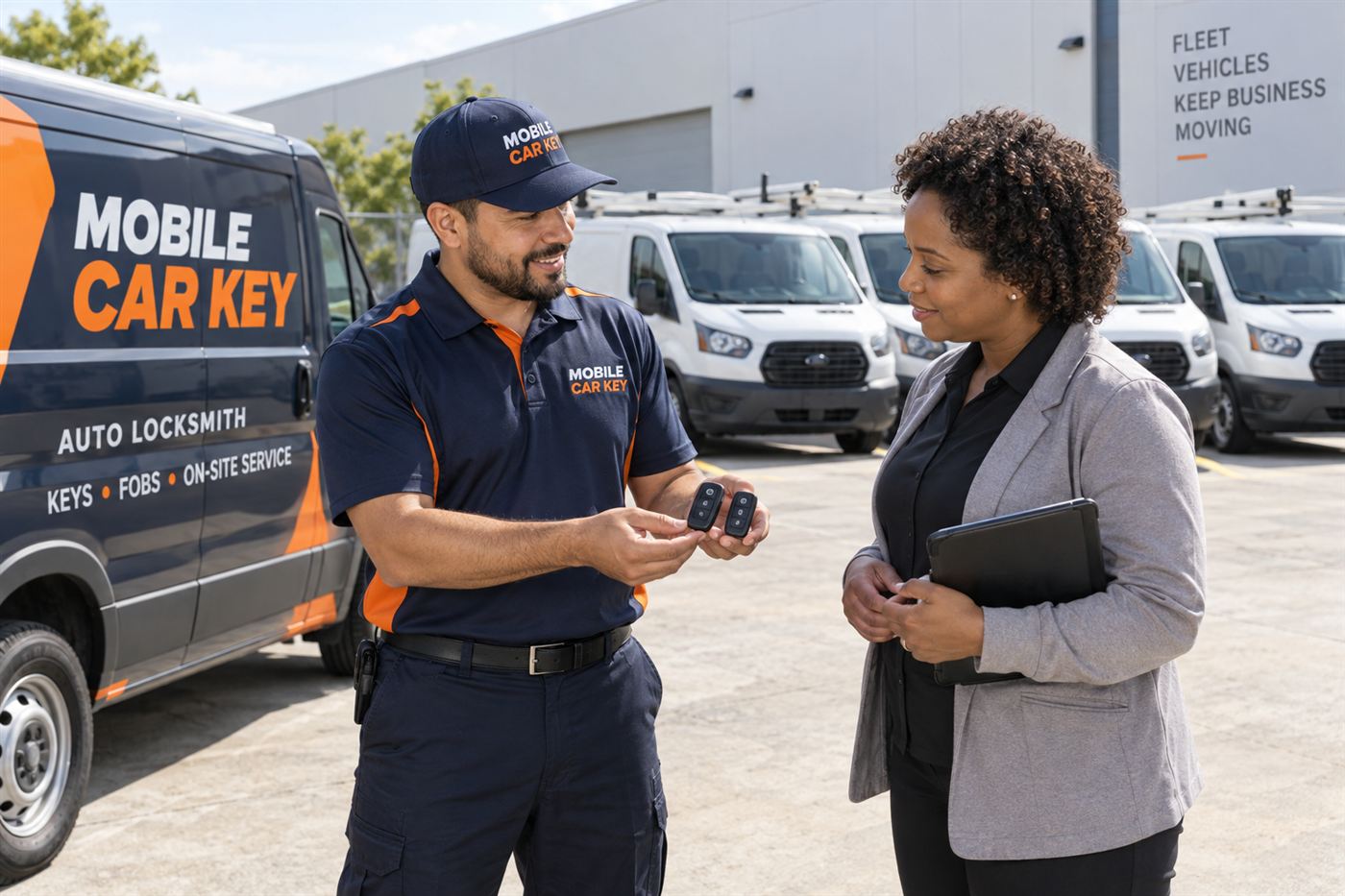
Why the first call matters so much
The first call decides whether the service can help, whether the right tools are brought and whether the visit will be productive. A vague call leads to guesses, and guesses lead to wasted trips. A clear call turns a stressful situation into a manageable plan.
The person who answers is trying to match three things: your vehicle, your location and your problem. Each answer narrows the options. A key for a sedan from one maker is not the same job as a key for a van from another, and a lockout in a parking structure is not the same as a lost key on a rural road.
Think of the call as a short interview that you lead, not an interrogation you endure. If you can speak in a calm order, the service can respond in kind. The rest of this page shows the order that tends to work.
There is also a practical benefit for you. Every question answered on the phone is a question the technician does not have to ask at the curb, which means the visit can move straight to the work once ownership is checked. A prepared caller usually has a smoother experience from start to finish.
Step one: stay calm and check safety
Before anything else, check whether anyone is at risk. If a child or a pet is locked inside, or if you feel unsafe where you are, call 911 first. Emergency responders can act immediately, and a key service cannot replace them.
If nobody is at risk, take a breath and move to a spot where you can talk. Make sure your phone has enough charge for a call and, if possible, a callback. Stand near the vehicle if you can, because several details are printed on or near the car.
A few seconds of preparation pays off. If you can walk around the car and read details aloud, the call will go smoothly. If you cannot reach the car, do not worry, and simply tell the service what you know.
Step two: describe the vehicle
Begin with year, make and model. If you know the trim level or the engine, mention it, but those are extras. The year is especially important, because key systems often change from one model year to the next.
If you are not sure about the year, look at the registration, the insurance card or the sticker on the driver door jamb. That sticker often lists the manufacture date. You can also check the vehicle identification number, which is a seventeen character code usually visible through the windshield on the driver side of the dashboard.
Describe the key you used to have. Say whether it was a plain metal key, a key with a plastic head, a flip key, a key with buttons or a push button fob. If you are not sure, say what it looked like and how you used it. A description like it had a lock button and a trunk button is useful.
- Year, make and model.
- Trim or version, if you know it.
- Vehicle identification number, if you can read it.
- Type of key: metal blade, plastic head, flip, buttons or push button.
- Whether the car has a start button or an ignition slot.
Step three: say where the vehicle is
The service needs a clear location. A street address, a cross street or the name of a parking facility works well. If the vehicle is in a large structure, say which level and section. If it is in a rural area, describe nearby landmarks and mile markers.
Tell the service whether the vehicle is easy to reach. A car in an open lot is straightforward. A car inside a gated area, on private property or in a locked structure may need an access plan. A car on a road shoulder may raise safety questions for the technician and for you.
If you are not at the vehicle, say so. A technician needs to know whether you will be there, because ownership or authorization is checked on site. If someone else will meet the technician, mention who and how they can show their connection to the car.
Finally, mention anything that affects access, such as a height limit in a structure, a gate code, a security desk or a time when the area closes. These details help the service judge whether a mobile visit is realistic before a technician is committed.
If you are in a place with no address
Trailheads, campgrounds, rest stops and farm roads often lack street numbers. A map pin shared by text, or a clear description with mile markers or nearby landmarks, helps the service decide whether it can reach you.
Step four: explain what happened
Tell the story in two or three sentences. Did you lose the only key, break a key in the lock, lock the key inside, or notice that the fob stopped working? Each of these is a different job, and each starts with a slightly different set of questions.
If you lost a key, say when you last had it and whether you have searched thoroughly. If you have one working key and want a spare, say so. If the key is stuck or broken, mention where the broken part is. If the car will not start with the key in hand, say what the dashboard shows.
Be honest about what you tried. If you pried at the lock or tried to force the ignition, say so. A technician prefers to know about damage before arrival. Hiding a failed attempt only makes the work harder.
Do not worry if your situation fits more than one description. A driver may have lost a key and also worn out a spare, or may have a broken key and a dead fob in the same pocket. Say all of it. The service can sort the pieces into the order that makes sense.
- The key is lost and no other key exists.
- The key broke in a lock or in the ignition.
- The key is locked inside the car.
- The fob stopped responding to the car.
- The key turns but the engine will not start.
Step five: say how many keys exist
The number of working keys changes the job. With one working key, adding another is usually simpler. With none, the vehicle must be handled as an all keys lost case, which involves more steps. The service will ask, so have an answer ready.
Think about every key that has ever existed for the car. Did the dealer give you two? Did the previous owner keep one? Is there a valet key, a door-only key or a key in a drawer? Counting them gives an accurate picture and may turn up one you forgot.
If a key is simply missing, say whether it might be recovered. A key lost in a familiar place may turn up in a day, while a key lost on a trip may be gone for good. The answer affects whether the technician should also remove the missing key's access from the car, which is covered in what happens to your lost key afterward.
Step six: mention proof of ownership
Say early that you have paperwork or identification, or say what you do not have. This allows the service to explain what it needs. A reputable service checks ownership or authorization, and a short mention saves a wasted conversation later.
If the car is registered to someone else, say who and how you are connected. If the car is a rental, a lease or a company vehicle, say so. These details change who needs to be involved, and the service can tell you how to proceed.
The documents themselves are covered in how do I prove I own the car, and the special case of a missing title is in what if I do not have the title with me. It helps to read both before you dial.
A simple script you can follow
If you freeze on phone calls, use a script. Write the opening line on a piece of paper or in a note on your phone. It does not have to be elegant. It just has to carry the facts in the right order.
A sample opening might run like this: I have a car key problem. It is a vehicle of a given year, make and model. I am at a given place. I lost the only key. I have registration and identification. Can you help, and what else do you need to know?
- State the problem in one sentence.
- Give year, make and model.
- Give the location and how to reach it.
- Say how many keys exist and what happened to them.
- Say what proof you have.
- Ask what the service needs next.
What the service will tell you in return
A good call goes both ways. The service should explain what it can do, what it cannot promise and what happens next. Availability, coverage and terms are confirmed before a technician is sent. You should not be asked to agree to anything you do not understand.
Listen for signs of a careful service. It asks about the vehicle before talking about outcomes. It explains the ownership check. It admits limits for vehicles that need dealer-level tools. It does not pressure you to decide in a hurry.
If the answers sound vague or the person avoids questions, you can say you need to think and call back. Nothing about a key problem requires a snap commitment. The overview on how the service works shows the normal sequence.
What to do if you do not know an answer
Many callers do not know the year, the trim or the key type. That is fine. Say so, and offer another route. For example, offer to read the vehicle identification number, to send a photo of the dashboard, or to describe the key you used.
If you cannot find the vehicle identification number, a plate number may help the service work out other details, depending on what it can look up. If you are away from the car, describe the car's color, body style and any unusual features. The more you offer, the easier the match.
Sometimes an unanswered question is itself useful. A driver who does not know whether there is a spare may need to ask a family member. A driver who is not sure whether a key has a chip may simply say the head is plastic. Honest uncertainty is better than a wrong guess.
Three common gaps and how to fill them
If you do not know the year, the registration and insurance card almost always list it. If you do not know whether the key has a chip, mention the plastic head, the buttons or the blinking dashboard light. If you do not know how many keys exist, think back to the purchase and ask anyone who has driven the car.
Filling gaps before the call is helpful, but do not delay a call in an emergency just to fill a gap. The service can work with partial information, and a technician will confirm the rest at the vehicle.
Photos and messages that can help
If the service accepts photos, a few clear pictures can answer many questions. A photo of the dashboard shows warning lights and the start button. A photo of the door jamb sticker shows manufacture details. A photo of the broken key or the fob shows its style.
Take photos before the call if you can. Make them sharp and well lit. Avoid including personal information that is unnecessary, such as full financial documents. A registration photo should show the vehicle identification number and the name, and nothing more is needed.
Not every service takes photos, and some prefer to describe things over the phone. Ask what works for them, and be ready to speak even if pictures are accepted.
One more tip is to keep the phone camera ready at the car. If a technician asks what a certain light looks like, you can show it rather than describe it. That small step often removes a long back and forth.
Callback requests and written messages
If you cannot talk, such as in a library, a meeting or a noisy place, a written callback request can start the process. Write the same details in order: vehicle, location, problem, number of keys and proof available. Include a phone number where you can be reached.
A written message has an advantage. It lets you gather details calmly and check them for accuracy before sending. It also leaves a record you can refer to. The downside is that it may take longer to get a reply than a call, so choose the route that matches your situation.
When the service replies, expect the same sequence: vehicle questions, location questions, ownership questions and confirmation of availability and terms. The page on contact and callback request explains how to reach the team.
Questions to ask the service
The call is also your chance to learn what you need. Ask whether the service handles your vehicle, what the technician will do on arrival, what the ownership check involves and what might prevent the job from being completed.
Ask what happens if the technician arrives and discovers that the vehicle needs dealer-level tools. Ask whether the service can still help with a lockout or a broken key in that case. Ask whether the technician can make a spare at the same visit.
- Do you handle my exact year, make and model?
- What proof of ownership do you need?
- What happens if my vehicle needs dealer-level tools?
- Can a spare be made during the same visit?
- Are availability and terms confirmed before anyone is sent?
A closing checklist and a reminder
Before you dial, run through the list: vehicle details, location, what happened, number of keys, proof of ownership and a working phone number. If you have them all, you are in good shape. If you are missing a few, go ahead anyway and explain.
This page is educational. It does not form a service agreement, and it does not promise any result. If anyone is in danger, call 911 first. A child or a pet locked in a hot vehicle is an emergency.
For more answers to common questions, see questions drivers ask, and for the main service, see car key replacement.
Common questions
What is the most important detail to give?
The year, make and model of the vehicle come first, because key systems vary so much between them. Close behind are your exact location and a clear statement of what happened to the key. With those three, a service can usually tell you whether it can help and what else it needs from you. Limits depend on the vehicle, and availability is confirmed first.
Do I need to know the VIN when I call?
It is not required to begin, but it is very helpful. The vehicle identification number identifies the exact car and can help a technician choose the right key and tools. It is usually visible through the windshield on the driver side of the dashboard and on the door jamb sticker. Details vary by vehicle, so ask before work begins.
What if I am not at my car?
Tell the service. It can still discuss the vehicle and explain what it needs, but ownership or authorization is checked on site, so the owner or an authorized person generally needs to be at the car. Explain who will meet the technician and what documents that person can show. The technician confirms what applies to your vehicle on site.
Should I mention that I tried to fix it myself?
Yes. If you pried at a lock, forced a key or tried a reset, say so. Damage can change the tools and time a technician needs, and surprises on arrival make the work harder for everyone. Honesty at the start saves effort and helps the service prepare. Availability and terms are confirmed before anyone is dispatched.
Can I send details by message instead of calling?
Yes, a callback request lets you write the details when you cannot talk. Include the vehicle, location, problem, number of keys, proof you have and a number to reach you. Expect the same follow-up questions, and remember that availability and terms are confirmed before any dispatch. Limits depend on the vehicle, and availability is confirmed first.
What if the service asks for something I do not have?
Say what you do have and ask what could stand in its place. Many documents can show the same link to the vehicle, and services differ in what they accept. If nothing can be arranged right now, it is normal to pause, gather paperwork and call again. Details vary by vehicle, so ask before work begins.