
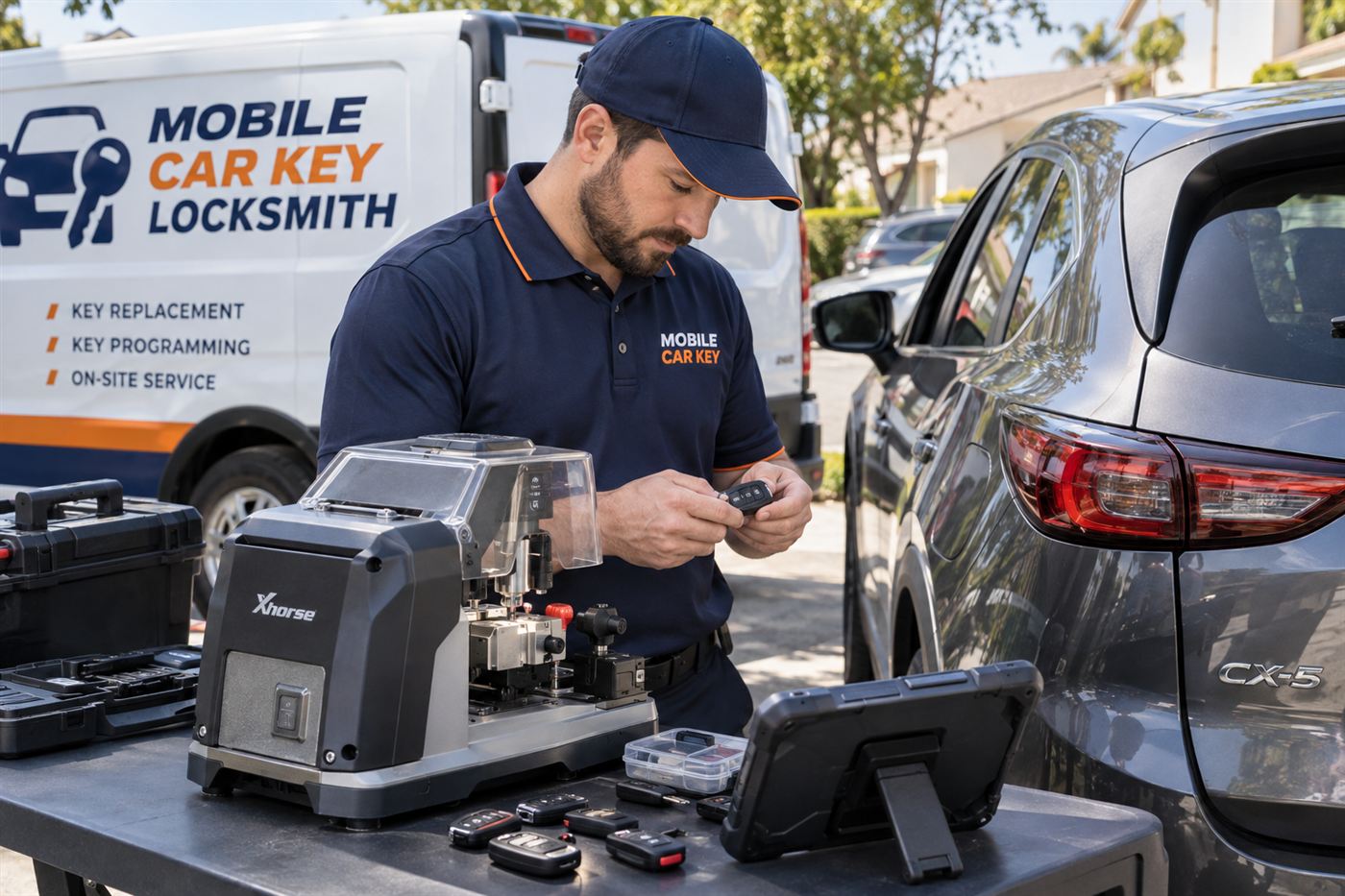
Why a locksmith asks you to prove anything
It can feel awkward to be asked for paperwork when you are the one locked out in the cold. Yet the question is a sign of a responsible service. A technician who can open any car and cut any key for anyone who asks is also a technician who could help someone steal your vehicle.
The check works like a bank asking for identification before releasing funds. It is not an accusation. It is the ordinary step that lets the work be done with a clear conscience on both sides, and it protects you on the day someone else is the one standing at your car.
A good service explains the reason in a sentence and moves on. If a company opens a vehicle or makes a key without asking a single question about ownership, that is more a warning than a convenience.
The documents that usually carry weight
No single document is universal. Different services accept different combinations, and the details can depend on the vehicle and the situation. What follows are the kinds of paperwork that most commonly help, described in general terms.
The strongest proof ties your name to the exact vehicle. That means a document that shows the vehicle identification number or the plate together with your name, supported by a government photo identification that shows the same name.
- Vehicle registration: a common choice, since it lists the owner and the vehicle.
- Certificate of title: strong evidence of ownership, though many drivers keep it in a file cabinet or with a lender rather than in the glove box.
- Bill of sale: helpful for a recent private purchase when the title has not arrived yet.
- Lease agreement: useful when the vehicle belongs to a leasing company but you are the authorized driver.
- Rental or car share agreement: relevant for authorized use of a rented vehicle, though extra steps usually apply.
- Insurance card: supporting evidence that connects you to the vehicle, though not usually enough alone.
- Government photo identification: needed to show that you are the person named on the paperwork.
Name, vehicle and face: the three things that must match
Most checks come down to three matches. First, the vehicle in front of the technician must match the vehicle on the document, which is why the vehicle identification number is so useful. Second, the name on the document must match the identification you show. Third, the person standing there must match the identification photo.
If any of those three fails, the technician will pause. A common example is a document with a former spouse's name, a business name or a previous owner's name. In such cases, additional paperwork may help, such as a name change document, a business authorization letter or a transfer record.
Understanding the three matches helps you prepare. Before the technician arrives, you can check whether your documents tell a consistent story and note any gaps that you should mention on the first call.
Where to find the paperwork you need
Many people discover that the documents they need are not in the car, which is the very place they cannot get into. Think about where else ownership paperwork tends to live. A filing folder, a document box, an email inbox or a phone photo can all hold what you need.
If you bought the vehicle from a dealer, the purchase packet often includes copies of registration and sale documents. If you financed the vehicle, a lender may hold the title. In that case, a loan statement or an online account page can sometimes serve as supporting evidence, depending on what the service accepts.
Digital copies are increasingly useful. A photo of a registration on your phone, an electronic insurance card or a scanned bill of sale may be acceptable, though policies differ. Ask during the first call rather than assuming.
Check your phone before you panic
Look through photos, email attachments and cloud folders. People often photograph a title or registration at the time of purchase and forget about it. A clear picture of a document can save a lot of time.
What the on-site check looks like
The ownership check happens at the vehicle, usually before any key is cut or any lock is opened. The technician will ask to see your documents, compare the vehicle identification number with the one on the car, and look at your identification. It is brief and professional.
The process may include a few questions. The technician might ask how long you have owned the vehicle, where you bought it, or what the plate number is. These are not tricks. They simply help confirm that your story and your paperwork agree.
Once the check is complete, the work begins. If something does not match, a reputable technician will explain what is missing and what could resolve it, rather than proceeding anyway. That outcome can be frustrating, but it exists to protect the registered owner.
When you are not the registered owner
Plenty of legitimate drivers are not named on the title. A family member drives a parent's car. A spouse uses a vehicle registered to the other. An employee drives a company van. In these cases, the question becomes authorization rather than ownership.
Authorization is shown in different ways. A signed note from the owner, a copy of the owner's identification, a fleet manager's confirmation or a lease document that names you as a driver can all play a role. Services have their own rules, so it is wise to describe your situation at the very start of the call.
The page on proving you own the car for a replacement key gives a longer walkthrough of these cases, including how to prepare when the registered owner is not at the vehicle.
- Family member using a relative's car: bring the owner's details and ask the service what authorization it accepts.
- Employee using a work vehicle: have the employer contact the service or provide written authorization.
- Driver with a lease: show the lease agreement and your identification.
- Authorized driver on a rental: contact the rental company first, since the company owns the vehicle.
A recently purchased vehicle
A newly bought car is a common source of trouble. The title may be in the mail, the registration may be pending and the previous owner may have kept the only key. The buyer is the real owner, but the paperwork may not yet say so.
In this situation, a bill of sale, a purchase contract and identification that matches the buyer's name can be central. A dealer purchase packet often helps too. Temporary registration or a temporary tag may also be relevant evidence, depending on what the service will accept.
Buyers of private sales should keep in mind that the person who sold the car may be able to supply a copy of a document or confirm the sale. If you are in this position, the guide on buying a used car with one key or none covers the broader picture.
What if you lost the documents too
Sometimes the same bag or wallet that held the key also held the registration. It is a miserable stack of problems, but it is solvable. Many motor vehicle agencies allow owners to request replacement registration or title records, and some offer online access to these records.
Insurance companies can often send a proof of insurance card by email. A lender can usually confirm account details. The point is to rebuild enough of a paper trail that the technician can see a consistent link between you and the vehicle.
If you cannot reconstruct everything at once, tell the service what you do have. Some situations may allow a partial approach, such as meeting at a time when the documents have arrived. The related question of missing title paperwork has its own page: what if I do not have the title with me.
Warning signs of a service that skips the check
Be wary of a provider that never asks about ownership, that offers to cut a key to anyone who sounds confident on the phone, or that tells you paperwork does not matter. Skipping the check may feel convenient, but it indicates a business that does not take security seriously.
A second warning sign is pressure to share sensitive information in advance. A service may reasonably ask for a vehicle identification number or a plate number, but it should not need your bank details, a social security number or login credentials to evaluate a key request.
Finally, be cautious about unsolicited contact. If you did not call or send a callback request and someone shows up offering key work, do not hand over documents. You are entitled to ask who sent them and to decline.
- No questions about ownership at all.
- Requests for unrelated sensitive personal information.
- Unsolicited arrivals or calls you did not ask for.
- Refusal to explain what the technician needs to see.
Privacy and what happens to your documents
Showing a document is not the same as handing it over. The check typically involves the technician looking at the paperwork and your identification, and noting that the check took place. You can reasonably ask how the service treats the information.
Protect yourself by showing what is needed and nothing more. If a registration lists your address and you would prefer not to read it aloud, you do not have to. Holding the document up for inspection is generally enough.
Keep your own copies. After the work, put your registration and title back in a secure place, and consider storing digital copies so the next time is easier.
A short conversation about privacy at the start of a visit is normal, and a calm, direct answer from the technician is exactly what you should expect. If an answer feels evasive, you may pause the visit and call the service back before showing anything.
Preparing before you ever need it
The ideal time to solve the ownership question is before a crisis. Keep a photo of your registration and the front of your title on your phone. Store a copy of your insurance card in your email or a cloud folder. Write your vehicle identification number somewhere that is not the glove box.
If you own several vehicles, such as a family set or a small fleet, a simple list helps. Record each vehicle's year, make, model, plate and identification number, and note where the title is stored. A fleet manager can add the names of authorized drivers.
Preparation also makes the first phone call shorter. When a service asks about your car, you can answer clearly and calmly. The page on what details to give when you call lists the other facts worth having ready.
How the check connects to the rest of the service
The ownership check is one step in a simple sequence: you call or send a callback request, the service asks about the vehicle and the location, availability and terms are confirmed before dispatch, a technician comes to the vehicle, ownership or authorization is checked on site, and the work is done and tested.
Knowing the order removes some of the surprise. The check is not a barrier invented to slow you down. It is a standard stage between arrival and work. The overview on how the service works shows the entire sequence in one place.
If your problem is a lockout rather than a key, the same approach applies. Opening a car is also a sensitive act, so the check applies there too. See vehicle lockouts for more on that service.
Three drivers, three different paper trails
Consider a driver who has owned the same sedan for years, keeps the registration in the glove box and lost the key at a trailhead parking area. The registration is locked inside the car, but a photo of it sits in the phone, and the driver's identification is in a wallet. The paper trail is easy to rebuild, and the check is short.
Now consider a college student driving a car that belongs to a parent in another state. The student is not on the title, and the parent is hours away. Here the check depends on authorization: a message or call from the parent, a photo of the registration the parent can send, and the student's own identification. Some services will accept this combination and some will want more, so the student should ask before assuming.
Finally, consider someone who inherited a vehicle from a relative. The title may still show the relative's name, the estate paperwork may be incomplete and no key was ever handed over. This is a harder case because ownership itself is in transition. Documents such as a death certificate copy, estate letters or a signed transfer may become part of the discussion, and the service may need to hear the whole story before saying what it can do.
Questions to ask the service before you commit
You are allowed to ask questions too. A reputable service expects them, and the answers tell you a lot about how it works. The goal is to know what to gather before a technician is on the way, so that nobody wastes time at the curb.
Ask which documents it accepts and whether digital copies are fine. Ask whether it handles vehicles that are not registered in your name. Ask what happens if a document is missing when the technician arrives, and whether the visit can be rescheduled without trouble. A clear answer to each of these is a good sign.
- Which documents do you accept as proof of ownership or authorization?
- Are phone photos or electronic copies acceptable?
- What do you need if the vehicle is registered to someone else?
- What happens if my paperwork is incomplete when the technician arrives?
- Is there a way to start the conversation now and finish the check later?
A note on emergencies and educational use
If anyone is in danger, call 911 first. A child or a pet locked in a hot car is an emergency, and emergency responders do not need proof of ownership to act. Nothing about paperwork should delay a call for help.
This page is educational. It does not form a service agreement, and it does not promise that any specific document will be accepted by any specific service. Availability, coverage and terms are confirmed before dispatch.
For more questions that drivers commonly raise, see the questions drivers ask section.
Common questions
Is a driver license enough to prove ownership?
A driver license proves who you are, not that you own the car. Services generally want a document that connects your name to the vehicle, such as a registration or title, together with matching identification. If your license address differs from the registration, mention it so the technician can explain what else may help. Limits depend on the vehicle, and availability is confirmed first.
Can I send the documents ahead of time?
Some services accept a photo or scan before dispatch, while others prefer to see documents at the vehicle. Policies differ, so ask during your first conversation. Even if you send copies ahead, expect the technician to check ownership or authorization again on site before any work begins. Details vary by vehicle, so ask before work begins.
What if the car is registered to my business?
A business vehicle usually needs paperwork that shows the company as owner and something that shows you are authorized to act for it. That might be an authorization letter, a company identification or confirmation from a manager. Describe the arrangement on the call so the service can say what it needs. The technician confirms what applies to your vehicle on site.
Will the technician keep copies of my paperwork?
Practices vary by service. Some technicians only look at documents and note that the check took place, while others record limited details for their files. You are entitled to ask how your information is handled before you show it, and a reputable service will answer plainly. Availability and terms are confirmed before anyone is dispatched.
What if the name on my title is different from mine?
Name differences are common after marriage, divorce or a family transfer. Supporting paperwork can bridge the gap, such as a name change record, a transfer document or a signed authorization from the titled owner. Explain the difference up front, since the service may need extra time to confirm details. Limits depend on the vehicle, and availability is confirmed first.
Does ownership proof apply to lockouts too?
Yes. Opening a vehicle is also sensitive, so a reputable technician checks that you own the car or are authorized to use it. The check is usually shorter than for key creation, but identification and some link to the vehicle are still expected. In an emergency involving a child or pet, call 911 first. Details vary by vehicle, so ask before work begins.