
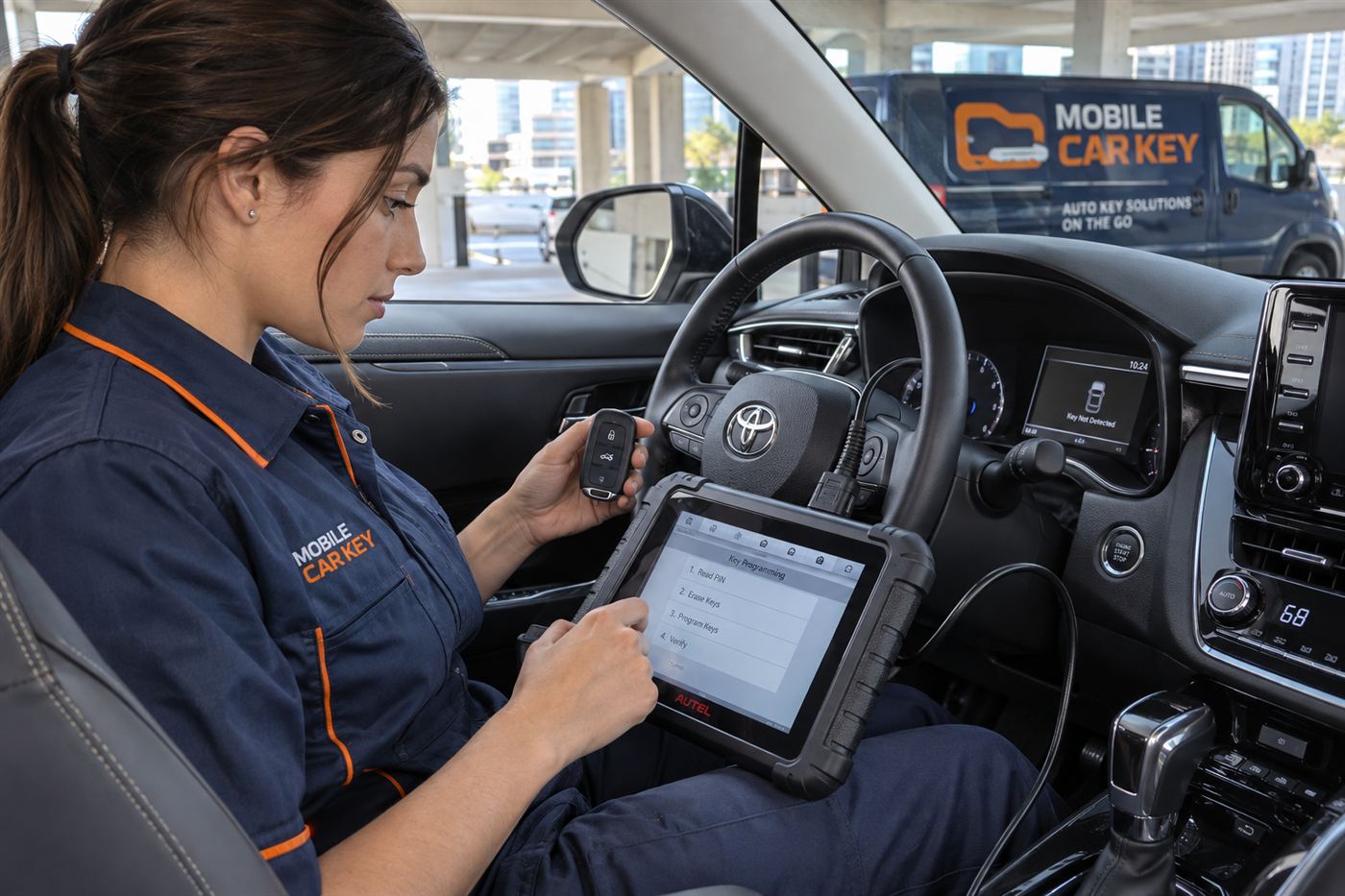
The key is part of the car you are buying
When you buy a used car privately, you are buying a vehicle, a set of papers and a set of keys. Most buyers focus on the first two and treat the keys as an afterthought. That is a mistake, because the keys can be worth as much attention as the engine. A car with one worn key and no spare is a different purchase from a car with two healthy fobs.
The reason is simple, and it is worth saying plainly. Replacing a key can be a bigger task than people expect, especially on newer vehicles where keys are electronic and tied to the car's security system. If you buy a car with one key and later lose it, you may be starting from nothing, and the process depends on the make, model and year.
Think of the keys as a second inspection. You would not buy a car without looking at the tires, the oil and the paint. The keys deserve the same patience. A buyer who spends ten careful minutes with them often saves hours of trouble later, and that time also gives the seller a chance to mention anything important about the car's history.
This page is educational. It does not create a service agreement, and what can be done for a particular vehicle depends on its equipment. Availability, coverage and terms are confirmed with you before any technician is dispatched.
Questions to ask the seller about keys
Before you meet, ask a few direct questions. How many keys does the car have? Are they all original? Has any key been replaced, and if so, by whom? Has the car ever been rekeyed? Are there separate keys for the doors and ignition? A seller who answers clearly is easier to trust, and a seller who hesitates is giving you information too.
Ask to see all the keys together. Check that they match in style. A fob that looks different from the others may be a replacement or a copy. Replacement fobs are not a problem if they work properly, but they may point to a lost original.
If the seller says there is only one key, ask what happened to the other. Sometimes the answer is simple. Sometimes it opens a longer conversation about previous owners, repairs or a car recently acquired at auction.
Write the answers down, or save them in a message thread. If the seller says the car has two original fobs and you receive one, you have a record. Honest sellers do not mind this, and it protects both sides if memories differ later.
Also ask whether the car has an aftermarket alarm or remote starter. Those add-ons often come with their own remote, and a missing remote can mean a feature you cannot use.
A useful script
Ask: how many keys came with the car, where are they, and can I test each one? Then listen to the whole answer without interrupting.
Testing keys in person
Test every key while you are with the car. Lock and unlock the doors with each fob. Open the trunk or liftgate. Press the panic button, if there is one. Start the engine with each key, and let it run for a minute.
Watch the dashboard. A fob that starts the car once but shows a security warning may have a pairing problem. A fob that unlocks the doors but will not start the engine may not be fully programmed. A key that needs jiggling in the ignition is worn.
Do not skip this because the seller is in a hurry. A few minutes of testing is a small price compared with discovering a faulty key a week later, when the seller is hard to reach and the price has been paid. If the seller resists reasonable testing, take that as information.
Test the physical key blade too, if the fob has one. Remove it and try it in the driver's door lock. A blade that does not turn smoothly suggests wear or a replacement that does not quite match. It is rarely used, which is why a fault tends to remain hidden until the day it is needed.
Take photographs of each key, front and back, and of the dashboard when the engine is running. These pictures are useful if you later need to describe the key to a technician, and they document the condition at the time of purchase.
Paperwork that supports the keys
Keys are only half the story. A reputable locksmith asks for proof that you own the vehicle or are authorized to use it before creating a key, so your paperwork matters as much as the physical key. At a private sale, make sure you leave with the right documents.
Typically that includes the title properly signed over, a bill of sale, and any registration the seller can provide. Requirements vary by location, and you should confirm what yours are with the appropriate office. This page is not legal advice.
Keep copies of every document and store them somewhere other than the car, such as a folder on your phone or a printed set in a drawer. If you later need a key, the technician will want to see them. Our guide on buying a used car and its keys offers a checklist for what to ask for.
Meeting in a public place
Private sales often take place in parking lots, and a parking lot is a fine place to look at a car. It is also a place where a technician may be needed if a key fails during the test. Choose a spot where you can work comfortably, with a clear view of traffic, and where you are not blocking anyone. A well-lit lot near other people is better than a quiet corner, both for your comfort and for the purposes of a clear look at the car.
Bring a friend if you can. A second set of eyes catches things you miss, and having company is a sensible precaution in any private transaction. Meet in daylight when possible.
If a key problem comes up during the meeting, such as a fob that will not start the car, do not pressure the seller or yourself to settle it on the spot. Step back, discuss what you saw, and decide whether to continue. A mobile technician can sometimes evaluate the problem at the location, but only if both parties agree and the seller authorizes the work.
When the seller has only one key
Many used cars come with a single key. That is not necessarily a red flag, since keys are lost over the years. It is a good reason to plan a spare right away. A single key leaves you with no backup and no reference, and if it fails or disappears, the situation becomes more complicated.
Consider asking the seller to adjust the terms to reflect the missing key, or plan to have a spare made soon after purchase. A technician can often add a key to a car that has one working key more easily than they can start from nothing.
Our vehicles with only one key left page goes into this scenario in detail, including how to plan a spare and why waiting is risky.
One detail deserves emphasis. If the single key is a smart fob, the car may allow additional fobs to be added while a working fob is present. Without any working fob, the task becomes a full replacement, which is a bigger job. That difference is the main reason to act early rather than hoping the one key lasts.
When the seller has no keys at all
Occasionally a private sale involves a car with no keys. This might be a project car, an estate sale, a repossession or a vehicle bought from someone who lost them. Such a purchase is riskier, because the effort and cost of getting a working key depends on the vehicle, and some vehicles are difficult. Some cannot be started at all without the manufacturer's involvement, which can mean towing the car to a dealer.
If you are considering such a car, talk to a mobile automotive locksmith before you pay. Describe the car's year, make and model, and ask whether a key can be made on site, whether the dealer would be needed and what proof of ownership would be required. The answers help you decide whether the purchase makes sense.
Our situation page on buying a car with no keys walks through the questions, and the all car keys lost service page explains the general process.
Resetting control of the keys after a purchase
A used car has had other owners, and those owners may still hold keys. A former owner, a relative of the seller or a mechanic may have a copy. That is usually harmless, but you cannot assume it is.
For many vehicles, a technician can update the security system so that older keys no longer start the car, and only the keys you hold will work. Depending on the make and model, this may be possible on site. For older vehicles with mechanical locks, rekeying the locks accomplishes a similar goal.
Ask about this when you call. It is a sensible step after a private purchase, especially when the history of the vehicle is unclear. The decision is yours, and a reputable service explains what is possible for your vehicle.
Think about timing as well. The sooner you make this update after buying, the shorter the period during which unknown keys remain valid. It is a simple step that many buyers skip, and it is the closest thing to a clean slate that a used car can offer.
Reprogramming fobs from other vehicles
Online listings sometimes offer used fobs that claim to fit a given model. Some work, some do not, and some have been locked to another vehicle so they cannot be used. Buying a used fob is a gamble unless you know its history.
Whether a used fob can be programmed to your vehicle depends on the type of fob and the vehicle. Some can, some cannot. A technician can tell you after examining the fob. Our question page on reprogramming a used fob explains the general idea.
If you buy a fob online, ask the technician before you do. Describe the listing and the vehicle, and send photographs if you can. A short conversation can save the cost of a wasted purchase and prevents the frustration of a fob that arrives and cannot be used. They can tell you what to look for, and they may save you from buying a fob that cannot be used.
Sellers: handing over the keys properly
Sellers have a role too. When you sell a car, hand over every key you have, including spares, valet keys and cards. Do not keep a spare for sentimental reasons. A key you retain can cause trouble later, and the buyer deserves a full set.
Tell the buyer what you know. If a fob is replacement, say so. If a key has been temperamental, say so. Honesty prevents disputes and protects both sides.
Remove personal items from the car, and clear any phone pairing or app access that gives you digital entry. For vehicles with account-based keys, make sure your account is no longer tied to the car. A clean handover saves headaches for everyone. If you are a seller who has lost a key, say so before the buyer finds out. A buyer who learns about a missing key from the seller can plan around it, while a buyer who learns about it later feels misled and may come back with complaints.
Vehicles from auctions and dealers
Cars bought at auction often come with a single key, no spare and no history. Dealers sometimes carry cars with an incomplete set of keys too. The same principles apply: count, test and plan for a spare.
If a dealer offers a vehicle with only one key, ask whether a second key is available and under what terms. If the answer is vague, treat that as a reason to be cautious.
Auction vehicles may need extra care because their previous history is unknown. A technician can help you decide what is possible once you have the vehicle and its paperwork in hand. Our older and classic vehicle keys page covers some of the issues with older stock.
Electronic keys and used-car surprises
Newer used cars may carry smart fobs, key cards or phone keys. Check that you receive every fob and card, and that any account tied to a phone key is released by the seller. A used electric or hybrid vehicle may be tied to the previous owner's account.
Our page on electric vehicle keys explains account-based issues. Even for ordinary smart-key vehicles, test the fob's range and all its buttons.
Ask a technician whether a spare is advisable, and which models have known quirks. Their general knowledge can help you avoid a purchase you will regret. A short call before a purchase costs little and can steer you toward vehicles whose keys are easier to replace.
What to tell the service when you call
After a purchase, a service can help with spares, replacements and security updates. A clear description helps.
These details are useful:
- Make, model, year and trim of the car.
- How many keys you have and what they look like.
- Whether all keys work properly.
- Whether you have the title or other proof of ownership.
- Whether you want a spare, a replacement or a security update.
- Where the car is parked.
- Anything you know about the car's history.
Safety and next steps
If anyone is in danger, call 911 first. A child or pet locked in a car in warm weather is an emergency.
Otherwise, take your time. Do not hand over payment until the keys and papers are in order, and do not let anyone rush you through a handover. A calm, unhurried exchange is almost always a better one. If a problem appears after the sale, gather your documents and contact a service.
For related reading, see the car keys by vehicle type hub. A conversation about coverage, availability and terms is the right start, and nothing here creates an agreement until those are confirmed.
Common questions
How many keys should a used car come with?
Most vehicles are sold with at least two keys, though many used cars have fewer. Ask the seller how many existed and what happened to the others. A single key is not a deal breaker, but plan for a spare, and consider the missing key when negotiating the price. Ask for the fobs, valet keys and cards together, and count them in front of the seller before you pay.
Should I pay before testing the keys?
No. Test every key in person: lock, unlock, start and any extra buttons. Faults found later are harder to resolve with a seller who is gone. If a seller resists reasonable testing, treat that as information, and consider whether to proceed. Test again in daylight if you tested indoors, and keep notes or photographs of what each key did.
Can old keys be disabled after I buy a car?
For many vehicles, a technician can update the security system so older keys no longer start the car, depending on make and model. For mechanical locks, rekeying has a similar effect. Ask the service what is possible for your vehicle. Remember to check that the documents match the vehicle identification number visible on the car.
What documents do I need for a new key on a used car?
A reputable service asks for proof of ownership or authorization, such as the signed title, a bill of sale, registration and photo identification. Requirements vary. Keep copies of everything, stored away from the car, and ask the service what it needs before the visit. Provide the vehicle details and ask whether your fob is a type that can be reused, before you spend anything.
Is a used fob from an online listing a good idea?
It is a gamble. Some used fobs work after programming, and some are locked to another vehicle or are the wrong type. Ask a technician before buying. They can tell you what to look for in your vehicle's fob. Ask the technician to look at the fob before purchase, if the seller allows, since a short look prevents regret.
What should sellers hand over besides the main key?
Everything: spares, valet keys, key cards and any accessory remotes. Clear phone pairings and account access that gives digital entry. Tell the buyer about any replacement or temperamental key. A full handover prevents disputes and protects both parties. Delete saved wireless connections from the infotainment system, and photograph the vehicle at handover for the record.