
The comfortable trap of a single working key
Having one key that works feels fine. The car starts, the doors lock, and life goes on. The trap is that the single key is also a single point of failure. It can be lost, stolen, dropped into a drain, run through a washing machine or simply wear out. When it goes, nothing is left, and the situation changes from a small errand into a larger problem.
Many drivers live this way for years without trouble, which reinforces the feeling that nothing needs to change. Then one day the key is gone, and the cheerful calm of years turns into an urgent search.
Consider how the day would go if the key vanished tomorrow morning. You would need to get to wherever you were going, find a ride, reach a technician, gather papers and wait for the work. Even in the ideal case it takes the better part of a day. A spare reduces all of that to a short walk to wherever the spare is kept. The point of this page is to move the decision earlier, to the moment when you still have a working key and an unhurried afternoon.
This page is educational. It does not create a service agreement, and what can be done for your vehicle depends on the make, model, year and equipment. Those details, along with availability, coverage and terms, are confirmed before dispatch.
Why adding a key is easier than starting over
For most vehicles, adding a key while a working one is available is a more straightforward task than creating a key when none remain. With a working key present, the vehicle's security system can be introduced to a new key in a defined way. The technician has a reference, and the vehicle is cooperative.
When no key remains, the process involves more steps. The technician may need to read information from the vehicle, create a key from codes, program it through the security module and verify ownership with extra care. Some vehicles then need dealer-level tools or manufacturer access.
The difference varies by make and model, so there is no universal rule. But as a general principle, the window while one key still works is the easiest moment to act. Waiting turns an easy option into a harder one.
There is also a practical side to timing. Technicians can plan a visit around your schedule when the matter is not urgent. You can choose a convenient place and hour, gather documents calmly and ask questions without pressure. An emergency removes all of those choices, and you accept whatever is available when the key has already gone.
What a technician does with a working key
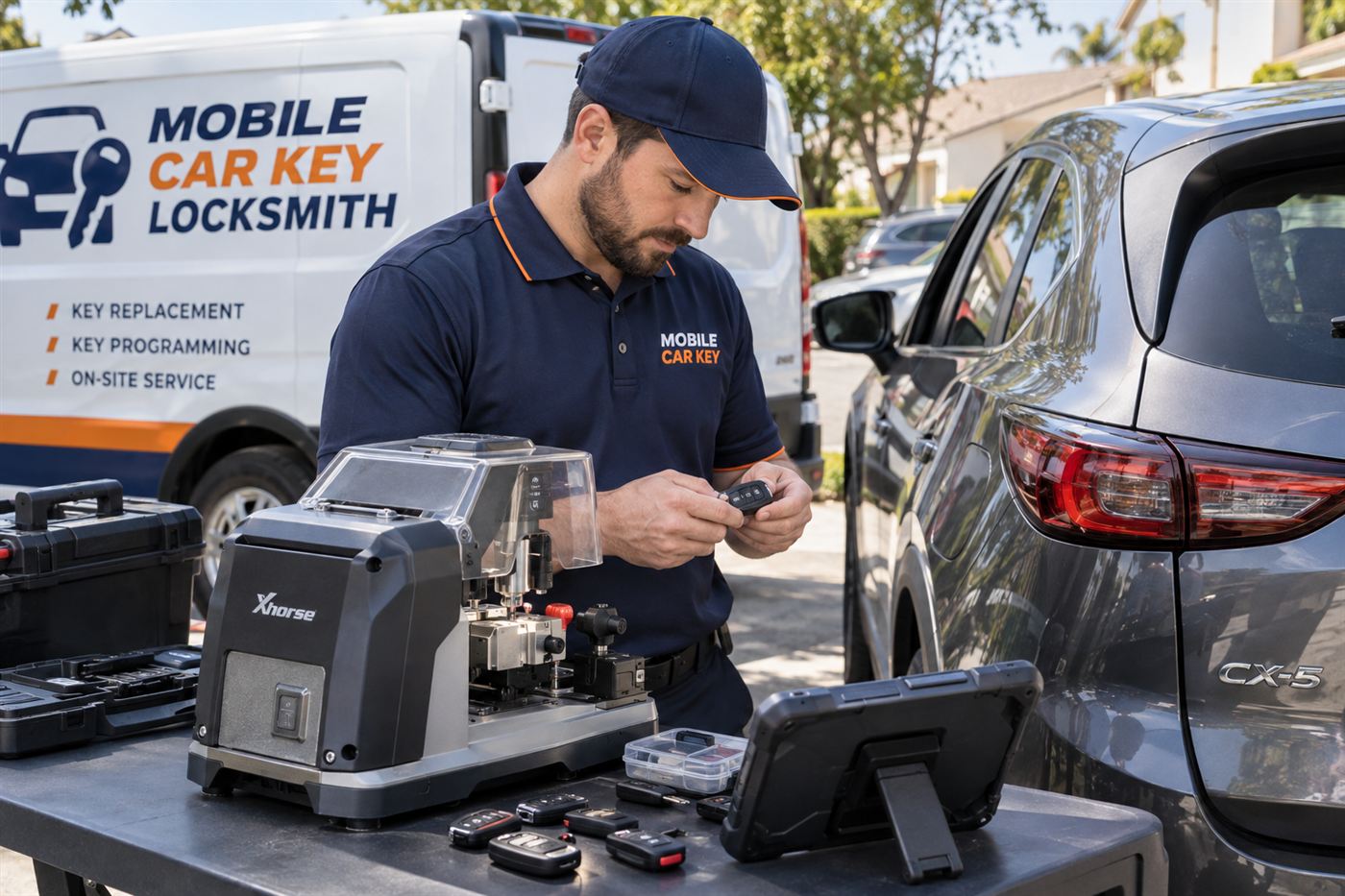
The technician identifies the key type, checks that the key is healthy, verifies ownership and adds a new key to the vehicle, then tests every function. The process can often be done where the vehicle is parked.
How a car ends up with only one key
There are many ordinary reasons. A second key may have been lost years ago and never replaced. A previous owner may have kept one. A car may have been bought at auction with a single key. A family member may have taken a key to another city. A key may have broken and been thrown away.
Sometimes a car was never supplied with two keys, and owners who bought it used often never noticed. Certain vehicles, particularly older or lower-trim models, came with only one key, with the second sold separately. Owners who never bought a spare simply carried on.
None of this signals a problem. It simply means that a decision is waiting. If you recognize your situation here, you are in good company, and the remedy is straightforward.
What can go wrong with the last key
The last key is exposed to every hazard a key faces. It can fall from a pocket, be left in a shop, drop in a parking lot or be taken by a thief. It can fail electronically: batteries die, circuit boards crack, moisture corrodes contacts.
Wear is slow but certain. Metal blades round off. Plastic heads crack. Key rings loaded with other keys strain the ignition and the key itself. A key that was fine last year can turn reluctant this year.
Heat is a particular enemy of electronic keys. A fob left on a dashboard in summer sun can warp its case, weaken its battery and shorten its life. Cold has its own effects, making batteries sluggish and plastics brittle. A key that rides in a pocket, near the body, usually ages more gently than one left in the vehicle.
The last key also carries the biggest consequence. If the vehicle is how you reach work, school or care appointments, losing the only key stops everything at once. A day of lost mobility can cost more than the effort of a spare. For households with a single vehicle, that is not a small matter. Children need school runs, appointments need keeping and work needs doing, and all of it depends on one small object.
Copy, clone or program: what the words mean
People use several words for making a second key, and they do not all mean the same thing. A copy of a plain metal key is a straightforward cut. A copy of a transponder key needs the chip to be recognized by the vehicle, which usually means programming. A clone duplicates the electronic identity of an existing key, where the vehicle and technology allow.
Which approach suits your vehicle depends on the make, model, year and key type. Some vehicles accept a new key added through the normal security procedure. Some work with a duplicated chip. Some require manufacturer involvement.
Be a little wary of promises that sound too simple. A plain duplicate of a transponder key that has not been programmed will turn in the lock but will not start the engine, and a cloned key can behave unpredictably on some vehicles. A technician who explains the method and tests the result is doing it properly. Do not worry about the vocabulary. Describe the key and the vehicle, and the technician explains which route applies. Our key fob programming page offers background on programmed keys.
Checking the health of your last key
Before duplicating, look at the key you have. Is the blade straight and sharp, or rounded and shiny? Does it turn smoothly in the ignition and the door? Is the head cracked? Do the buttons respond well? Does the fob case close properly?
A key in poor condition may not be a good source for a copy. A copy of a worn blade inherits the wear, and a fob with damaged electronics may not transmit reliably. A technician can sometimes cut a new blade from the lock or the vehicle's code, rather than from the tired original. If the fob case is cracked but the electronics work, a replacement case can sometimes extend the life of the key, though it depends on the design. Ask what is realistic for your key before deciding.
Be honest about the key's condition when you call. If you suspect it is about to fail, say so, because that changes the priority. A key in the last stage of life deserves attention soon.
Planning the new key's life
Once a spare exists, where does it live? The answer shapes its usefulness. A spare kept in the car's glove box is a gift to a thief and no help if you are locked out. A spare in a drawer where you live is better but does not help when you are away.
Reasonable choices include a trusted relative, a lockable cabinet at work or a secure spot at a friend's place. Choose someone reliable and agree on the arrangement. Make sure the spare is not left in conditions that damage it, such as a hot dashboard or a damp basement.
The spare key guide offers more thoughts on how many keys to hold and how to keep track of them. A written note of where each key is stored saves time in a crisis. Share the location with at least one other trusted person, so the spare can be retrieved even if you are away. Photograph the spare and its hiding place for your own records, and update the note if anything moves.
Should the new key be an exact twin
Some owners ask for an exact twin of the existing key. Others prefer a simpler key for emergencies, such as a basic transponder key that opens the door and starts the engine but lacks remote buttons. The right choice depends on the vehicle and the purpose.
A full-featured twin is convenient if the spare will be used regularly. A simpler key may be enough for emergencies, and some vehicles offer valet-style keys for limited use. Ask what options exist for your vehicle.
Think also about who will use the spare. If a family member needs it daily, a full-featured key makes sense. If it sits in a drawer for years, a basic one may do the job. Discuss the choice with the technician. If you travel often, consider a spare that travels with a companion rather than one that stays in a drawer, because a spare on the other side of the country does not help a stranded driver. Pick the arrangement that matches your real habits, not an ideal version of them.
If the last key is already lost
Perhaps you are reading this because the last key is already gone. The situation is more involved, but it is routine for a mobile automotive locksmith. You will need to verify ownership, describe the vehicle and let the technician decide what is possible on site.
Some vehicles can be handled where they sit. Others need dealer-level tools or manufacturer access, and a reputable service tells you that up front. Do not panic, and do not take shortcuts that could damage the vehicle. Avoid prying at the ignition, forcing the steering column or accepting offers from strangers who claim they can start the vehicle without a key. Those routes risk costly damage and may raise questions about ownership.
Our pages on losing your only car key and all car keys lost describe the process in plain language. Start by searching systematically, then gather your documents. Retrace your steps for the last day or two, check coat pockets, bags and vehicle seats, and ask anyone who was with you. Many keys turn up within an hour of careful searching, which would spare you the visit entirely. The car key replacement page explains the options if the search fails.
Ownership and paperwork
Making a key is a sensitive service. A reputable locksmith asks for proof that you own the vehicle or are authorized to use it, even when you hold the last working key. The key in your hand is not proof by itself.
Typical items include registration, title, a lease agreement and photo identification. If someone else owns the vehicle, bring their authorization. Having these ready speeds the visit.
Keep copies of your documents somewhere other than the car. A photograph on your phone and a printed set in a drawer are both useful. The paperwork will serve you again whenever you need service, whether for a key, a repair or a renewal, so a little organizing now pays off repeatedly.
Different vehicles, different urgency
Some vehicles make the single-key situation more urgent than others. A vehicle with a proximity fob and push-button start is typically more complex to replace from nothing than a vehicle with a plain metal key. A vehicle that needs the dealer for new keys is more urgent still.
Older vehicles are more forgiving in some ways and tricky in others. Our page on older and classic vehicle keys describes the issues. For used purchases, used cars and private sales covers what to check.
If you are unsure how urgent your case is, ask. A technician can usually tell from the make, model and year how the process would go if the last key failed.
Timing a spare around travel and seasons
Some times of year raise the stakes. Before a long drive or a holiday trip, a single key is a bigger risk than usual, since you will be far from your usual helpers. Making a spare before travel lets you leave one key with a relative at the starting point and carry the other, or split two keys between travelers.
Seasonal changes matter as well. Winter weather weakens batteries and makes lockouts more miserable. Summer heat shortens fob life and raises the stakes for anyone locked out with a child or pet. Planning a spare in mild weather lets you work calmly, rather than in a freezing lot or a baking driveway.
Life events are good prompts too. A new driver in the family, a move to another city, a vehicle purchase or a change of work schedule all alter who needs access and when. Use these moments as reminders to check how many keys exist and where they are.
What to tell the service when you call
The more precisely you describe the situation, the better the service can plan.
These details help:
- Make, model, year and trim.
- What the working key looks like and its condition.
- Whether the key has buttons or is a push-button fob.
- Whether you have ever had a second key.
- Where the vehicle is and when you can meet.
- Who owns the vehicle and what paperwork you have.
- Whether you want a full twin or a simpler spare.
Safety and next steps
If anyone is in danger, call 911 first. A child or pet locked in a vehicle in warm weather is an emergency.
Otherwise, treat the last key with care. Keep it in a consistent place, avoid loading the key ring and do not leave the key in the vehicle.
For wider reading, see the car keys by vehicle type hub. A conversation covering coverage, availability and terms is the right start, and nothing here creates an agreement until those are confirmed.
Common questions
Is it really easier to add a key while I still have one?
For most vehicles, yes. A working key gives the technician a reference and lets the vehicle accept a new key in a defined way. With no key left, the process involves more steps, and some vehicles then need dealer-level tools. The difference varies by make and model. Mention whether the working key is a plain key or a fob, because that detail changes how simple the process is.
How do I know if my last key is wearing out?
Look for a blade that has rounded edges, a key that sticks or needs jiggling, a cracked head, buttons that need hard presses or a case that no longer closes. Any of these suggests it is time to plan a spare. Treat intermittent starting problems seriously too. Photographs of both sides of the key, taken in good light, are useful when you describe the wear to a service.
Where should I keep a spare key?
Away from the vehicle, in a secure place you can reach. A trusted relative, a lockable cabinet at work or a secure spot at a friend's place all work. Avoid hiding it on the vehicle or in the glove box. Test it occasionally to confirm the battery still works. Check the spare every few months, and replace its battery along with the main key's battery to keep both reliable.
Do I need proof of ownership if I already have a key?
Yes. A reputable service asks for proof that you own the vehicle or are authorized to use it, because a key in hand is not proof by itself. Bring registration, title or lease papers and photo identification. Keeping copies away from the vehicle helps. Also bring the vehicle registration, even if the key is already in your hand, because the service will check it.
What if my vehicle needs the dealer for new keys?
Some newer vehicles require dealer-level tools or manufacturer access. A reputable service tells you that when you describe the vehicle. In that case, the window while your last key works is particularly valuable, because it can make the dealer process simpler. Ask early about the process, because arranging transport to a dealer takes longer than most owners expect.
Should my spare be identical to my main key?
Not always. A full twin is convenient for regular use, while a simpler key may suit emergencies. Options depend on the vehicle. Tell the technician who will use the spare and how often, and they can suggest what makes sense. Ask the technician how many keys the vehicle can hold, since some systems limit the total number.