
Why family vehicles have their own key story
Keys in a family vehicle are handled by more hands than keys in almost any other kind of vehicle. A parent drives, a second parent drives, a grandparent borrows it for the weekend, and a toddler in the back seat treats the fob as a favorite toy. Every one of those hands is a chance for a fob to be dropped, chewed, lost or locked inside.
The vehicle itself adds complexity. Minivans and larger family wagons often combine a smart fob, power sliding doors, a power liftgate and sometimes a remote start. That is a lot of functions riding on one small device, and when the fob misbehaves, several of those functions may stop at once.
This page is educational and general. It does not create a service agreement, and what a technician can do depends on your vehicle's make, model, year and equipment. Those details are confirmed with you before anyone is dispatched.
A typical morning that ends in a lockout
Picture a driver who buckles a toddler into a seat, sets the fob on the roof for a second to take hold of a bag, shuts the sliding door, and hears the vehicle lock itself. The fob is in the cargo area, in a bag, or on the roof, and the driver is outside with a child who needs to go somewhere. Nothing dramatic has happened, but everything feels urgent.
The useful move in that moment is to pause before doing anything else. Check the pockets, the roof, the stroller basket and the bag on your shoulder. Look through the windows to see exactly where the fob is, because a fob visible on a seat tells a technician something different from one that has vanished. Then decide whether the situation is an emergency or simply an inconvenience, and act on that.
Another common version: an older child plays with the fob while the parent loads groceries, presses the lock button, and the vehicle locks with the keys inside. A small hand and a small button create a large problem.
If a child is inside a locked vehicle, that is an emergency. Call 911 first and do not wait. Once everyone is secure, a mobile technician can help with the lockout itself, and the child or pet locked in the car page explains what to do in the meantime.
Sliding doors and what they change
Power sliding doors are a signature feature of minivans, and they affect how lockouts are handled. A technician has to consider the way the doors latch, the sensors that detect obstructions and the child locks that may be engaged. None of this is cause for alarm, but it means a minivan lockout is not identical to a sedan lockout.
Owners can help by noting which doors are locked and which are not. Sometimes a sliding door is unlocked even though the front doors are locked, and a technician can start there. Do not try to force a sliding door yourself. The mechanisms are intricate, and forcing them can damage the track or the latch.
It also helps to tell the technician about the age and condition of the doors. A door that already sticks, drags on its track or needs a hard pull to close may behave differently from one in good order. Mentioning that early lets the technician plan the approach, and it avoids the impression later that any existing problem was caused by the visit.
If you have a key fob with sliding door buttons that no longer respond, that is a different issue from a lockout. It might be a dead battery, a fob that has lost its connection, or a fault in the door module itself.
Child locks and rear doors
Child locks mean the rear doors cannot be opened from the inside. This matters in a lockout because a technician working from the front of the vehicle has to be sure that everyone, including pets, is accounted for.
The toddler and the fob
Toddlers are tough on fobs. They chew them, drop them in drinks, press every button and sometimes hide them in places that are hard to guess. A fob that went missing at the same time a child left the room may be in a toy bin, a snack cup or a stroller pocket.
Water and sticky substances are the worst enemies. A fob that has been in a drink may work for a day and then fail, because corrosion builds slowly on the circuit board. If your fob got wet, remove the battery and let it dry thoroughly before trying it again, and do not heat it. Our situation page on a key fob that got wet explains the drying process in more detail.
If the fob has been chewed, check for a cracked case, loose battery cover or exposed contacts. A technician can often swap a damaged case onto the same electronics, though it depends on the design of the fob.
Keep an eye on small parts as well. A battery cover that has come loose can leave the battery in a toddler's mouth, which is a hazard of its own. If you suspect a child swallowed a battery or part of a fob, treat it as a medical emergency and call 911 or poison control right away, then deal with the key afterward.
Teenagers, carpools and shared drivers
Many family vehicles are shared with teenagers who are just starting to drive. A new driver might lose a key at school, leave it in a gym locker or lock it in the vehicle at a friend's driveway. These are common mistakes, and they are handled well with a plan rather than a lecture.
For a teen driver, a dedicated spare that is kept at a trusted location can prevent a small mistake from becoming a large problem. Some families keep a spare with a grandparent or in a secure spot at the parents' workplace.
Carpools add another layer. If several parents rotate driving duties, the fob may travel in other people's bags. Make sure each driver knows how to lock and unlock the vehicle and where the emergency blade is. Our situation page for a teenager who lost the car key covers that scenario in more depth.
Car seats, strollers and cargo loaded to the roof
Family vehicles often carry bulky items. A car seat, a stroller, a bag of sports gear and a cooler can pile up around the cargo area. When the liftgate closes on a pile like that, a fob can end up wedged between items and locked inside.
One simple habit helps: before shutting the liftgate, touch your pocket and confirm the fob is on you. Some families clip the fob to a bag they always carry, and others keep it in a specific pocket every day.
If the fob does end up inside, a mobile technician can usually help you get in without damaging the vehicle. Tell them what is stacked in the cargo area, since heavy items may affect how the work is done.
When the fob is simply worn out
Fobs that live in a busy family do not last as long as fobs that sit in a drawer. Buttons wear out, cases crack and batteries die more often because of constant use. Warning signs include the need to press buttons repeatedly, a shorter unlocking range, and a dashboard message about the key battery.
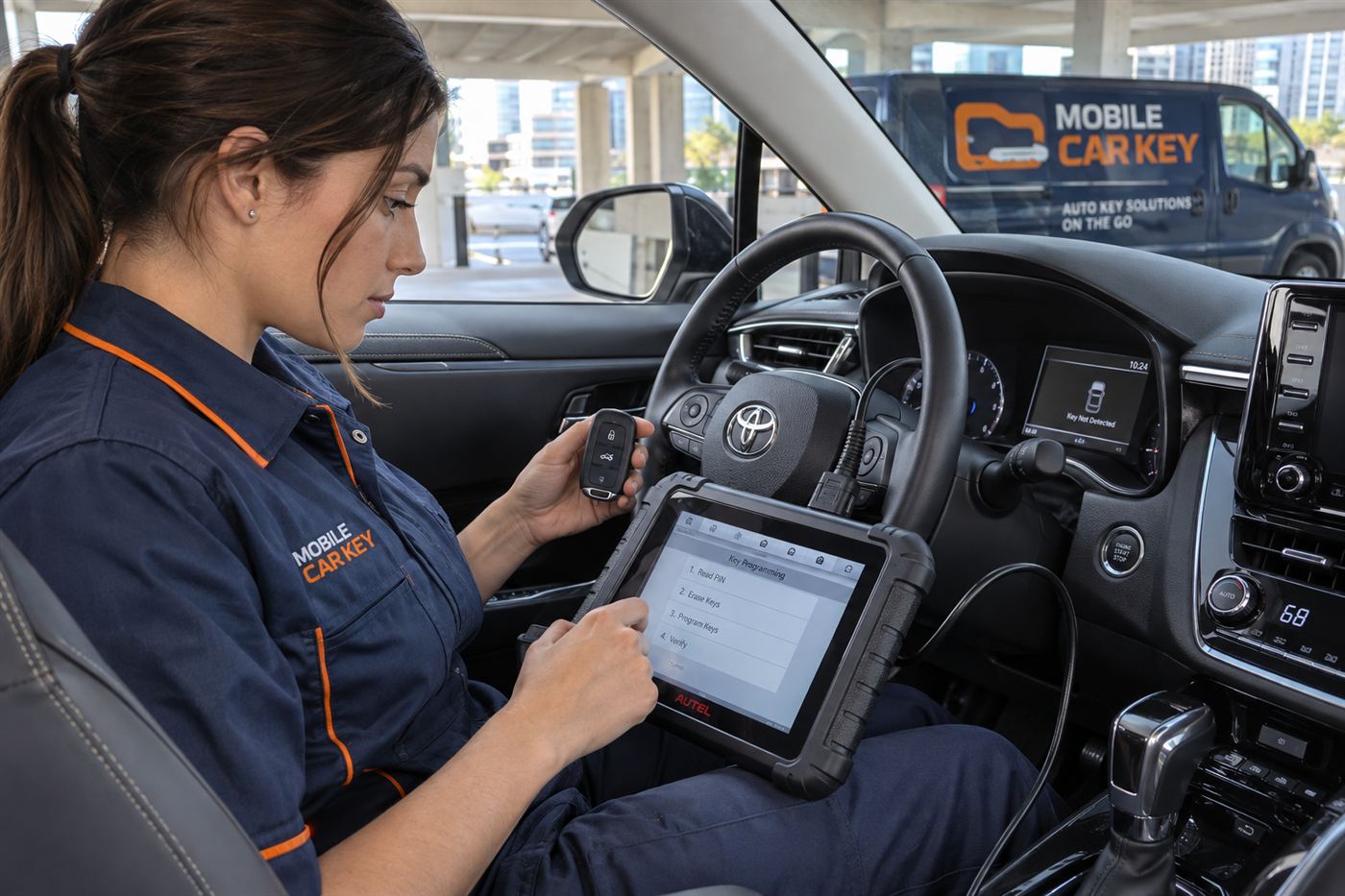
Replacing the battery is a small step, and it solves many issues. If it does not, the fob may need to be reprogrammed or replaced. Our key fob programming page explains what that process looks like and when a technician can do it on site.
For vehicles that use a standard key rather than a smart fob, wear shows up differently: a blade that turns reluctantly in the ignition, a head that has loosened or a chip that sometimes goes unrecognized. These are all reasons to plan a spare before the key fails completely.
Losing the only key to a family vehicle
If you lose the only key to a minivan, you may feel like the whole family schedule has stopped. Take a breath. A mobile automotive locksmith can often create a new key where the vehicle is parked, after confirming ownership and the vehicle's details.
Some newer vehicles require dealer-level tools or manufacturer access, and a reputable service tells you about that up front. If your vehicle needs the dealer, you will at least know before arranging anything else.
The all car keys lost page explains the process, including the paperwork a technician may ask for. Having your registration or title information ready makes the visit smoother.
Arranging the rest of the day
While you wait for a technician, think about practical needs: school pickups, appointments, a child who needs to eat. Arrange backup transport where you can, and tell the service if you have a hard deadline so they can be honest about availability.
Proof of ownership in a shared household
Family vehicles are often titled to one spouse, or to a parent whose name does not match the person calling. A reputable service asks for proof that you own the vehicle or are authorized to use it, and this can feel awkward when the title is in someone else's name.
Registration, insurance paperwork and identification that matches or relates to the owner can help. If the owner is not present, a phone call or a message from them can sometimes support the request, depending on what the service requires. Ask when you call, so you know what to gather.
Some households find it useful to keep a small folder with a copy of the registration, the insurance card and a note listing every key the vehicle has. When a key problem hits, the folder saves time and removes guesswork. Keep the folder somewhere other than the vehicle, since paperwork locked inside the vehicle is no help at all.
What is typically accepted varies, and the service explains its requirements before dispatch. Bring more paperwork than you think you need, and keep it together in one place so it can be shown without a search while a child waits.
Spare keys for the long run
The ideal moment to make a spare is while you still have a working key. For a family vehicle, that usually means at least one extra fob that stays out of the daily rotation. Store it in a spot away from the vehicle, and remind everyone it exists.
Think about whether every driver needs a fob of their own. If so, plan them together rather than one at a time. It is more efficient for a technician to make several keys in one visit than to return for each one.
Spares also protect against the unexpected. A fob that is lost at a playground, dropped down a storm drain or left in a rental stroller is gone for good, and a ready spare turns a crisis into a minor errand. Test spares from time to time. A spare that has sat for years may have a dead battery or may need re-pairing. The spare key guide has practical tips for tracking keys in a family.
Planning ahead for road trips and tournaments
Family vehicles go farther than most. A holiday drive, a youth sports tournament or a visit to relatives can mean hundreds of miles from the nearest familiar service. Before a long trip, check fob batteries, confirm the emergency blade is in the fob and know where the spare is.
If you travel with a second adult, split the keys between you rather than putting both in the same bag. That way a single lost bag does not strand you.
On the road, a key problem can happen at a rest stop, a hotel lot or a field next to a gym. Describe where you are as clearly as possible when you call, and a technician travels to the vehicle.
Keep a few practical habits in the vehicle for these trips: a printed copy of the registration kept with your wallet rather than in the glove box, a note of the vehicle's year, make and model on your phone, and the number for your insurance or roadside plan. Those small items make every later call shorter and calmer, whether the problem is a key or something else entirely.
What to prepare before you call
A clear picture of the situation helps the service decide how to help. You do not need technical language.
These details are helpful to have on hand:
- Year, make, model and trim if you know them.
- Whether the vehicle has a smart fob, a key with buttons or a plain key.
- Whether anyone, including a child or pet, is inside the vehicle.
- Exactly where the vehicle is parked.
- Whether you have another working key or fob.
- Who owns the vehicle and what paperwork you can show.
- Any special features, such as remote start or an aftermarket alarm.
Safety comes before keys
If a child or pet is locked inside a vehicle, call 911 immediately, especially in warm weather. Cabin temperatures can climb rapidly, and emergency responders are the right first call. Do not wait for a locksmith in that situation.
For other lockouts, move your family to a secure spot away from traffic. Keep children with you, keep your phone charged and stay near the vehicle if you can do so without risk.
When you are ready, a conversation with a mobile automotive locksmith will cover coverage, availability and terms. For related reading, the SUV and crossover keys page covers similar smart-fob issues, and car keys by vehicle type gives the wider picture.
Common questions
What should I do if a child locks the fob inside the vehicle?
If the child is still inside, call 911 first, because a locked vehicle can become dangerous in a short time. If the child is with you and only the fob is inside, stay calm and move to a secure spot. A mobile technician can then help with entry. Give them the vehicle details and your exact location. Tell them how many people are with you and whether anyone needs shelter.
Can a mobile locksmith help with a minivan's sliding doors?
A technician can often gain entry through the front or another door, and sliding door mechanisms are considered during the work. If the door itself is faulty rather than locked, that may be a repair question for a mechanic. Describe which doors respond and which do not, so the service understands the problem. Mention whether the child locks are engaged and whether the vehicle has a power liftgate, since both affect how the work is planned.
My toddler chewed my fob. Is it ruined?
Not necessarily. Check for cracks, exposed contacts and moisture. If it still works, consider a spare soon, since damage often worsens. A technician can sometimes move the electronics into a fresh case, though that depends on the design. If it has stopped working, replacement or reprogramming may be needed. Taking the fob out of reach of small children and keeping it in a consistent place also reduces the chance of damage.
Does the owner have to be present for a new key?
A reputable service wants proof that you own the vehicle or are authorized to use it. If the title is in someone else's name, bring registration, identification and any supporting paperwork, and ask the service what else they accept. The owner may also be able to confirm the request by phone, depending on the service's requirements.
How many fobs should a family vehicle have?
There is no fixed number. A common approach is one for each regular driver plus one spare stored away from the vehicle. Consider who actually drives, how often fobs get lost, and whether anyone travels with the vehicle. Planning several keys in one visit is simpler than ordering them one at a time. Mention any teenage drivers who need keys of their own, so that all the keys can be planned together in a single visit.
What if my fob works only sometimes?
Start with a fresh battery, then check for moisture or cracks. Try a second fob if you have one. If only one fob misbehaves, the fob is likely the problem. If both do, the vehicle's receiver or battery may need attention. Share these observations with the service so they can narrow down the cause. Mention also whether the problem appears at certain times, such as only in the cold, only after rain or only when the vehicle has been parked for hours, because patterns like that point toward a battery, a moisture issue or a failing receiver.