
The plain answer to a stressful question
If you are standing next to a car with no key at all, the first thing you want to know is whether the situation can be fixed. For a large share of vehicles, a mobile automotive locksmith can produce a new, working key without ever seeing the original. The word original matters less than people expect, because a key is really a set of instructions, a physical cut, an electronic identity, or both.
A locksmith does not need your old key to rebuild those instructions. What the technician needs is information about the vehicle, access to the car, and confidence that you are allowed to have a key for it. When those three things line up, the work usually becomes a matter of tools and patience rather than a mystery.
There are limits, and an honest service will say so. Some vehicles, especially newer ones from certain makes, need dealer-level tools or manufacturer access that a mobile technician may not have for that specific model. That is why the first phone call is about the vehicle, not about a promise.
What the word original really refers to
When drivers say original, they usually mean one of three different things. Some mean a working key they can still hold. Some mean a spare they cannot find. Others mean the key that came from the dealer, as though that one carries special rights. Locksmiths think about it differently.
A physical key blade is a pattern of cuts. An electronic key holds a transponder chip or a remote circuit that the car recognizes. Neither piece is magic, and neither belongs only to the dealership. Both can be reproduced or created when the correct information is available.
- A working key you can hold: the easiest case, because it can be read and copied or cloned in many situations.
- A broken key with part of the blade remaining: still useful, since the cuts or the chip may be recoverable.
- No key anywhere: handled as an all keys lost situation, which needs more steps but is routine for automotive locksmiths.
- A key that exists but is out of reach, such as one locked inside the car: this is a lockout, not a key creation job.
How a key gets cut when there is nothing to copy
Without a sample key, the cut pattern has to come from somewhere else. A technician can sometimes work from a key code, which is a number that maps to the exact cuts for a vehicle. Depending on the make, that code may be obtainable through manufacturer channels once ownership is shown, or it may be read from the vehicle itself.
Another path is reading the lock. A skilled technician can decode the wafers or pins in a door lock or ignition cylinder and work out the cuts by feel and measurement. This takes experience and is not possible on every lock design, but it is a long established part of automotive work.
A third path involves the vehicle identification number. In general terms, a VIN helps a locksmith confirm the exact make, model and year, and in some cases it helps identify the correct key blank and the codes tied to the car. It is a starting point for correct information, and the service uses it to ask the right questions.
Why the blank matters
A key blank is the uncut piece of metal and plastic that becomes your key. Choosing the wrong blank means the key may fit the door but not the ignition, or turn the ignition but never start the engine. Matching the blank to the vehicle is one reason the year, make and model are asked up front.
Cutting is only half the job
Most cars built in the past couple of decades will not start just because a key turns. The car has an immobilizer, and the key carries a transponder chip that must be recognized by the vehicle computer. A perfectly cut blade with the wrong or unprogrammed chip will open the door and then do nothing.
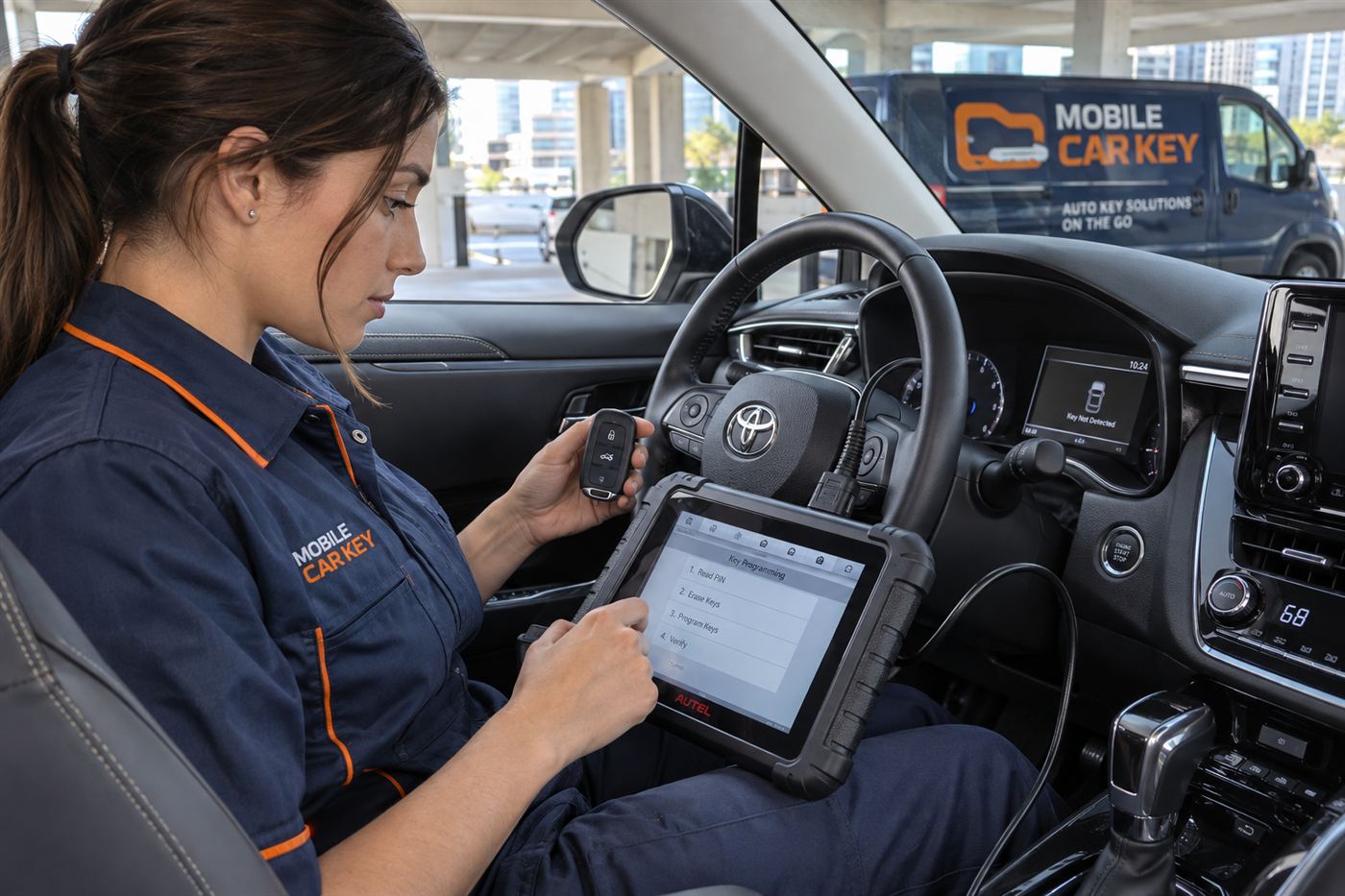
So making a key without the original often means two separate tasks: producing the physical cut, and teaching the car to accept the electronic identity. The second task is called programming. Some vehicles allow a technician to add a key through a diagnostic connection. Others require more steps when every existing key is gone.
If you want to understand how those chips work in more detail, the guide on how car immobilizers and chip keys work walks through the idea in plain terms. For now, the key point is that a locksmith who can only cut metal is not enough for most modern vehicles.
One working key versus none at all
The presence of even one working key changes the job. With one key, a technician can often add another through a straightforward process, and the car stays in its normal state throughout. This is usually the simpler road, and it is another reason to act before the last key disappears.
With no working key, the situation is classified as all keys lost. The technician may need to gain access to the diagnostic port, communicate with the car computer and register a new key in a way that the vehicle accepts. Some makes make this routine. Others add security barriers that raise the difficulty.
The difference is one reason a spare key is so valuable. If you are reading this with a spare in a drawer somewhere, finding it may turn the whole problem into a smaller one. The page about all car keys lost covers the harder case in full.
Where it gets harder
Not every vehicle is equally open to a mobile technician. Some newer vehicles, and some brands, protect their key systems with manufacturer access that is controlled and sometimes tied to an online approval. In those cases, a mobile technician may not be able to complete the work alone, or may need to coordinate with the manufacturer or a dealer for part of it.
Older vehicles can have their own quirks. A key system that is decades old may be fully mechanical and simple to reproduce, but a worn ignition or damaged lock can complicate decoding. A vehicle with a previous failed repair may carry a mismatch between its lock and its computer.
No honest service can promise that every vehicle is supported. What a reputable service can do is ask for the vehicle details, tell you in general terms whether that type of job is something they handle, and confirm availability and terms before sending anyone out.
- Newer vehicles from some makes may need dealer-level tools or manufacturer access.
- Damaged ignition cylinders or locks can slow or complicate decoding.
- Vehicles that have been modified or repaired with mismatched parts may behave unpredictably.
- Some luxury or specialty vehicles use systems that only a limited set of tools can program.
Proving the car is yours comes first
Creating a key from nothing is exactly the kind of work that could be misused, so a reputable service asks for proof that you own or are authorized to use the vehicle. This is protective, not personal. It keeps your car from being opened by someone with a good story and no right to it.
Proof can take a few forms. A registration, a title, a bill of sale, a lease or rental agreement, or a government photo identification that matches the paperwork are all examples of what a technician may ask to see. Which documents are acceptable can vary, and the service will tell you what it needs when you call.
If you are wondering what happens when paperwork is not on hand, you are not alone. The question has its own page: how do I prove I own the car. The short version is that there is usually a way forward, and it starts with explaining your situation honestly.
What to have ready before you call
The more clearly you can describe the vehicle and the situation, the more accurate the early conversation will be. A good call is not long, but it is specific. It helps to stand next to the car if you can, because several of the details are printed on or near it.
A service will typically ask about the year, make and model, the location of the car, what happened to the key, and how many keys have ever existed. It may also ask about the style of key, such as a traditional blade, a chip key, a flip key or a push button fob. If you are unsure, say so, and a photo of the ignition area can sometimes help.
- Year, make and model of the vehicle, and the trim level if you know it.
- The vehicle identification number, usually visible through the windshield on the driver side dash or on the door jamb sticker.
- Where the car is parked and whether it can be reached by a service vehicle.
- Whether any key still works, even one that only opens the door.
- Registration, title or other proof of ownership, plus matching identification.
- A note about anything unusual, such as a recent battery change, a prior key replacement or aftermarket alarm work.
The call itself
If you are unsure what the person on the other end of the line will want to hear, the page on what details to give when you call lays out a simple order for the conversation.
Three scenarios that show the range
Picture a driver who bought a used sedan and received one key. That key works, but the driver wants a second. This is the easiest version of the question, because a working key exists and the car is in its normal state. A technician can usually build a copy and register it without drama.
Now picture a driver whose only key fell from a pocket during a day outside the city. Nothing is left to copy, the car is locked, and the driver is miles from where the spare lives. A mobile technician can come to the vehicle, gain entry if needed, and work through the all keys lost process for that model.
Finally, picture a driver with a newer vehicle from a brand that guards its key system tightly. The technician may explain that the job needs manufacturer access, and may suggest a different path or a combined approach. The honest answer here is not no, it is it depends, followed by specifics.
What a service can and cannot say on the phone
A phone call cannot see your car. A responsible service will not claim certainty before it knows the year, make and model, and it will not describe a result as certain when the vehicle might need dealer-level tools. If someone promises a result before asking you a single vehicle question, that is a reason for caution.
A good service can explain the general process: vehicle details first, location and situation next, availability and terms confirmed before dispatch, ownership checked on site, work done and tested. It can say whether it generally handles your kind of vehicle. It can tell you what proof it will want.
What it generally cannot do over the phone is promise the exact technical path. Whether a code is available, whether the lock can be decoded, and whether programming is straightforward often becomes clear only when the technician examines the car. That is normal and not evasive.
Mistakes that make the situation harder
The most common mistake is buying a key or fob online without checking compatibility. A fob that looks identical may carry a different chip or frequency, and a technician may be unable to program it. Before buying anything, it is wise to ask about compatibility. Compatibility is the thing to confirm first.
Another mistake is trying to force a lock or to pry at the ignition. These attempts can damage the cylinder, and a damaged cylinder is harder to decode and sometimes needs replacement, which adds to the work.
A third mistake is waiting until the last key is gone. If you still have one key, making a spare while it works is simpler than recovering from nothing. A little forethought turns a possible crisis into an errand.
- Do not pry the ignition or door lock.
- Do not assume a lookalike fob will work.
- Do not give away personal documents to anyone who calls you first.
- Do not wait until the final key is lost if you can make a spare now.
What happens once the key is made
A new key is only done when it has been tested. The technician checks that the blade turns the ignition and opens the door, that the remote functions work if the key has them, and that the car starts and keeps running. Doing this on the spot is one of the benefits of a mobile visit.
If the old keys are lost, a careful service may also discuss removing them from the car memory so that a lost key cannot start the vehicle. This is a general practice in automotive work and depends on the model. The page on what happens to your lost key afterward covers the idea in more detail.
You should leave with a clear idea of what was done and with every working key in your hand. If you have a question about how the key behaves, ask before the technician leaves, because that is the easiest moment to find out.
How this fits with the other options
A mobile locksmith is one road among several. A dealer can also make keys, often by ordering parts and having the vehicle brought in. Roadside plans may help with a lockout, though key creation is a different service. Each option has strengths, and the right one depends on the vehicle and the situation.
The main advantage of a mobile technician is that the work happens where the car is. You do not need to arrange a tow just to start the process. For a driver stranded in a parking structure or at the side of a road, that matters. The page on a mobile locksmith or a dealership compares the two roads in detail.
If you want the broad service overview, the main page on car key replacement describes how replacement keys fit into the whole service.
A reminder about how this information is used
The material on this page is educational. It does not create a service agreement and it does not promise any particular result. Availability, coverage and terms are confirmed before dispatch, and the technician checks ownership or authorization on site.
If anyone is in danger, call 911 first. A child or a pet locked in a hot vehicle is an emergency, and emergency services should be contacted before anything else. Key questions can wait; a life cannot.
When you are ready to talk about your specific vehicle, the next step is a callback request or a phone call, and the conversation starts with the year, make and model. You can also browse other common driver questions in the questions drivers ask section.
Common questions
Can any locksmith make a key from nothing?
Not every locksmith has the tools or training for automotive key work. Making a car key without an original often requires decoding equipment and programming tools matched to the vehicle. Ask whether the service handles your specific make and model before you agree to anything, and expect questions about ownership as part of the process. Limits depend on the vehicle, and availability is confirmed first.
Do I need the VIN?
The vehicle identification number is very helpful because it confirms the exact vehicle and helps identify the right key blank. It is usually visible through the windshield at the base of the driver side dash, and on a door jamb sticker. If you cannot read it, tell the service, since other details may still be enough to begin.
Will the new key work as well as the original?
A properly made and programmed key should operate the door, the ignition and any remote functions that the vehicle supports. The technician tests these before leaving. Quality depends on the key and the programming, so it is reasonable to ask what type of key is being made and what functions it will include. Details vary by vehicle, so ask before work begins.
What if the car is a newer model?
Some newer vehicles use protected systems that require dealer-level tools or manufacturer access. A mobile technician may still help with parts of the job, or may tell you honestly that a dealer is the better road. Limits depend on the vehicle, which is why the make, model and year are asked first. The technician confirms what applies to your vehicle on site.
Can a key be made if the lock is damaged?
Sometimes, though damage can complicate decoding. If the ignition or door lock is worn or broken, the technician may need to repair or replace the cylinder before a new key will work reliably. It helps to describe any past damage or failed repair attempts during the first conversation. Availability and terms are confirmed before anyone is dispatched.
Do I have to be present?
Ownership or authorization is checked on site, so the owner or an authorized person with the right documents generally needs to be there. If someone else is acting for you, such as a family member or fleet manager, mention it on the call so the service can tell you what it will accept. Limits depend on the vehicle, and availability is confirmed first.