
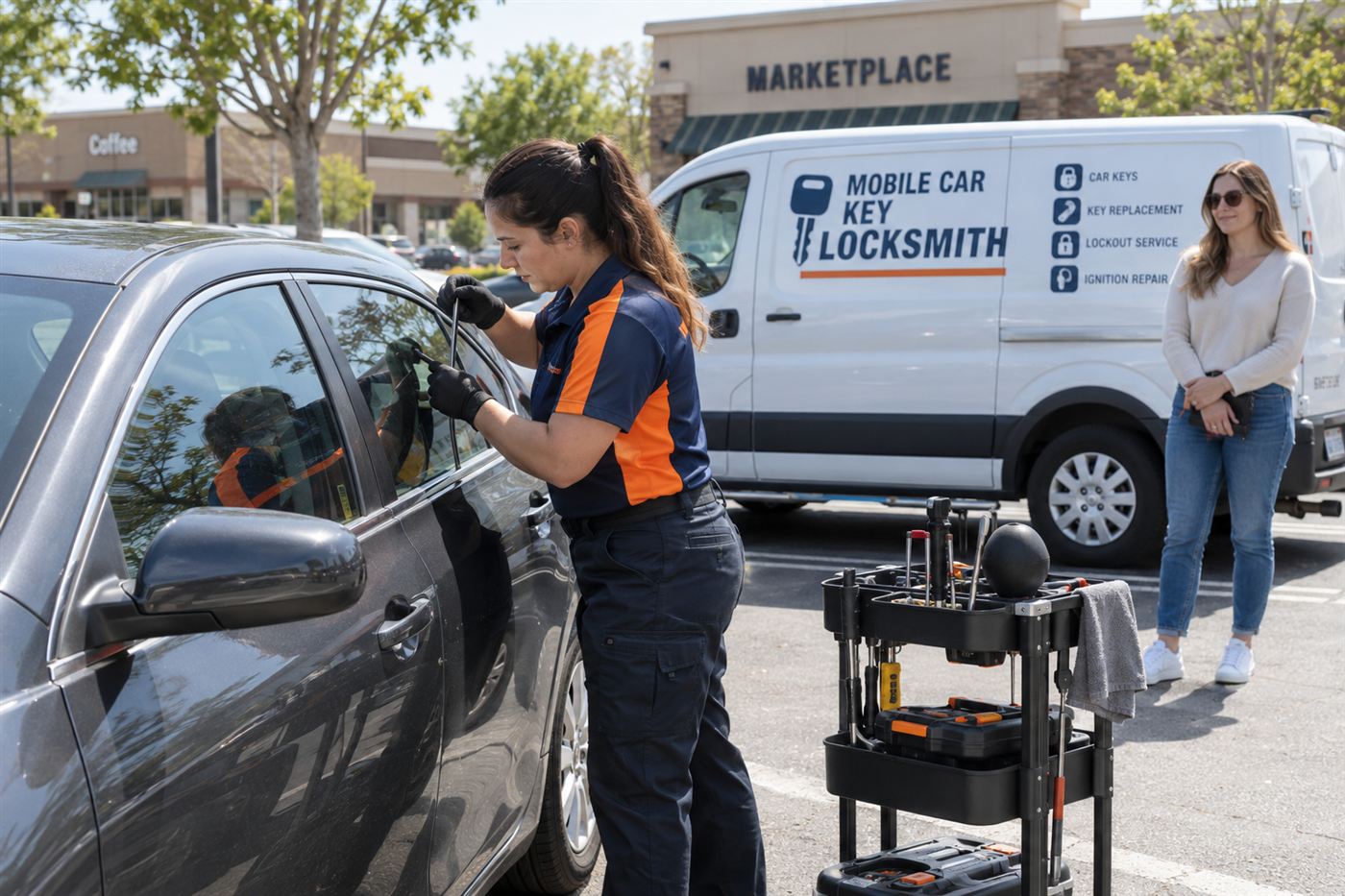
Start with what a spare actually protects you from
A spare key is insurance against four ordinary events: losing the key, locking it in the car, breaking it and having it stop working. Each of these happens to normal, careful people. A spare changes the outcome from a stressful search for help into a short delay while someone brings the other key.
The difference is largest on vehicles with chips and smart keys. When one working key exists and you lose it, a new key usually has to be created and matched to the car from scratch. When a working key still exists, adding another is generally a smoother process. That gap is the strongest practical argument for keeping a spare.
This page is general guidance, not a promise about any vehicle or service. Availability and terms are confirmed before any work is arranged.
The baseline: two working keys, in different places
Most vehicles come with two keys, and that is not an accident. Two gives you one for daily use and one in reserve. If you currently have only one working key, getting a second is the single most useful key decision you can make.
What counts is that the second key is genuinely working, not merely present. Test it. Make sure it unlocks the doors, starts the engine and, if it has buttons, operates the remote functions. A spare that has sat in a drawer for years might have a dead battery or a cracked case, and you do not want to learn that during an emergency.
Also consider the second half of the baseline: different places. Two keys on the same ring or in the same bag protect against nothing but a worn key. The point of a spare is that it survives the event that takes the main key.
How the number changes with who drives
A single driver living alone needs fewer keys than a family sharing a vehicle. Every additional driver adds a chance that a key will be misplaced, left in a pocket of a coat that went to the cleaners or locked in a trunk by someone in a hurry.
A reasonable rule is one key in daily use per regular driver, plus at least one reserve that nobody carries. If two adults share a car, that suggests three keys. If a teenager drives, think about whether a separate key is wise, and read when a teenager loses the car key for what tends to happen.
Couples and roommates
Each person who drives regularly will want a key within reach. Resist the temptation to hand over the reserve for convenience. Once the reserve becomes a daily key, you are back to having no spare.
Families with new drivers
A new driver is statistically more likely to lose keys, lock them in or leave them somewhere. Some families give a new driver a dedicated key and keep a clearly labeled reserve elsewhere. Others prefer a shared key that is returned each evening. Choose a system and stick to it.
How the number changes with your lifestyle
People who travel often, park in busy lots or hand keys to valets face different risks than people who drive the same two miles daily. A frequent traveler might keep a spare with a trusted friend in another city. A commuter who parks in a large structure might keep a spare at work and another where they live.
Outdoor enthusiasts have special concerns. Water, mud, sand and cold are hard on fobs, and a key lost on a trail may be gone for good. A person who kayaks, hikes or fishes may want a simple waterproof pouch plus a reserve left in a secure, dry place at the trailhead or with a companion.
Remote workers and seasonal residents, who may leave a vehicle parked for long periods, should think about battery health. A spare that sits for months may need a fresh battery before it is trusted again.
How the number changes with your key type
Simple metal keys with no electronics are inexpensive to duplicate and easy to replace. Owners of those vehicles can reasonably be relaxed about spares, though a spare is still wise. Chip keys and remote head keys add an electronic layer, so the spare should be treated as a more valuable item.
Smart keys and proximity fobs raise the stakes again. They can be more complex to replace, and some vehicles allow only a limited number of registered keys. Having a spare registered before you need it is often easier than starting from nothing. Some newer vehicles also need dealer-level tools or manufacturer access, which adds time and steps to replacement.
If you are not sure what your key type is, the page on transponder keys explains the differences, and what a transponder chip is explains why the electronics matter. A service can usually tell from the year, make and model.
Is there such a thing as too many keys?
Yes. Each additional key is another object that can be lost, stolen or copied. If a key goes missing and nobody notices, it may still start your car. More keys mean more places to check and more things to remember, and a casually stored spare may be less secure than you intend.
Many vehicles can erase lost keys from the list of accepted keys, but only when someone knows the key is missing. A key that quietly disappeared three years ago and was never reported remains a live key. The fewer keys you have, the easier it is to keep track.
A balanced approach is one daily key per driver plus one or two reserves, each with a known location. Beyond that, ask what problem an additional key actually solves.
Where to keep a spare, and where not to
The strongest spare locations are places that survive the same accident as the main key, without being easy to find. Keep a spare where you live, in a spot only trusted people know, and consider a second reserve with a relative or friend. A reserve at a workplace is useful if the workplace is secure.
Avoid hiding a key on the vehicle. Magnetic boxes under bumpers and wheel wells are well known to thieves, and heat and vibration can loosen them. Do not leave a spare in the glove box, console or visor of the car, since a thief who gets in finds it immediately. A key inside the car also defeats the point if you lock yourself out.
Do not label a spare with your address or the car's details. If it is lost, you want it to be useless to whoever finds it. A plain tag or no tag at all is a better choice.
- A drawer or hook in a secure place where you live.
- A trusted friend or relative who lives nearby.
- A secure locker or desk at work, if access is controlled.
- A small lockbox or key cabinet, if you have one.
- Never on or inside the vehicle itself.
Mechanical keys, fob backups and the hidden blade
Many smart fobs contain a small mechanical blade, sometimes called an emergency key. It lets you open the driver door when the fob battery is dead. That blade is easy to forget, and some drivers never learn how to release it. Practice once, in daylight, when nothing is wrong.
The blade can also be useful as a very basic spare. On vehicles that allow it, a plain mechanical key without electronics might open a door or a glove box but will not start the engine. It is no replacement for a working second fob, but it is better than nothing in a lockout.
Whatever your vehicle uses, find out what the mechanical backup is and where it lives. The guide to dead fob batteries explains how the blade and the backup start spot usually work.
Maintaining your spares so they work when you need them
A spare that has not been tested is a hope, not a spare. Once or twice a year, take each reserve key out and use it. Unlock the car, start the engine and press the remote buttons. If something fails, address it while it is a minor problem rather than during a lockout.
Replace fob batteries on a schedule instead of waiting for a failure. Batteries drain slowly in storage, and a fob that seems fine in autumn may be dead by winter. Cold weather makes the problem worse. Keep a spare battery of the correct type with the spare key if the fob uses one.
Inspect keys for cracks, loose cases and worn blades. A crack in the plastic can expose the chip. A worn blade can fail to turn the ignition or lock cylinder. Both are signs it is time for a replacement before the key breaks.
When you have only one key right now
If you are down to a single working key, treat it as a priority. Do not wait for it to fail. Many drivers delay because nothing is wrong yet, which is the easiest time to act. Adding a key while a working one exists is usually simpler than recovering from a total loss.
Compare the two situations. With one working key, a technician can often add another by copying or programming from what the car already knows. With zero working keys, the process requires proving ownership, identifying the key type and often more equipment. See all car keys lost for how much more involved that can be.
If you are in that position, write down today what your key does, who else has used it and where any other key might be. That short list helps whoever assists you.
Valets, repair shops and sharing keys
Whenever you hand a key to another person, you add risk. Valets and repair shops usually handle keys responsibly, but the safest approach is to hand over only what is needed. If a valet needs a key, many vehicles let you separate the valet key from the one that opens the glove box or trunk. Learn whether yours does.
Never leave your only reserve with a service shop. If something happens to the main key during the visit, you want the reserve to be somewhere else. Tell the shop which key they are getting and ask when you can expect to receive it back.
If you share the vehicle with a roommate, relative or coworker, agree on a place for the key and a procedure for what happens if someone cannot find it. Clear habits prevent most of the problems a spare is meant to solve.
Rentals, leases and vehicles you do not own
For a vehicle you own outright, the decisions above are entirely yours. For a leased or rented vehicle, the owner may have views about how many keys exist and who can authorize new ones. A lease company may restrict duplicates or require that all keys be returned at the end of the term.
If you drive a leased car, find out what the agreement says about missing keys. If you drive a rental, treat the single key as a responsibility. The rental car page explains who to contact when a key goes missing.
In all cases, authorization matters. A reputable service asks for proof that you own the vehicle or are authorized to use it, and it will not create keys for a car that is not yours to authorize.
Common mistakes people make with spares
The most frequent mistake is the untested spare. A key goes in a drawer on the day the car is bought and is never touched again. Years later, the battery has leaked, the case has cracked or the key was never programmed properly in the first place. The remedy is the simple testing habit described earlier.
The second mistake is storing the spare with the main key. Two keys on one ring, in one bag, in one coat, are one key for the purposes of a loss. Distance between the keys is the whole benefit. A spare in the glove box, a spare in the same purse and a spare in the same drawer as the main key all fail in the same way.
A third mistake is hiding a key on the vehicle. It feels clever and it is the first place a thief looks. A fourth is forgetting that the spare exists and then paying for a replacement when it was in a closet all along. Keep a short written note of where each key lives.
The last mistake is the opposite of neglect: copying keys freely without a plan. Extra keys given to friends, neighbors or workers and never tracked can leave you uncertain who can start your car. If a vehicle changes hands or a relationship ends, ask whether the keys held by others should be disabled.
A simple way to decide your number
Count the regular drivers. Add one reserve that no one carries. Then ask whether your lifestyle justifies a second reserve in another location. For many households, that produces three or four keys for a family, two for a single driver and a few extra only when there is a clear reason.
Write down where each key lives. A short list on your phone is enough. Review it when someone moves out, a key is replaced or a vehicle changes hands. A lost key that is not reported can matter later, so make a habit of saying so promptly.
If you want help deciding or want to add a key, the car key replacement page explains the process, and the questions hub has further reading. Terms are confirmed before dispatch.
Common questions
Is one spare key really enough?
For many single-driver households, yes, as long as the spare works and lives somewhere separate from the main key. The point is to survive a loss or a lockout without starting from nothing. If several people drive the car or you travel often, a second reserve in another location may be worth having.
Should I keep a spare key in my wallet or purse?
Generally no. A spare that travels with the main key usually shares the same fate when a bag is lost or stolen. Keep it elsewhere. If you do carry a mechanical emergency blade, understand that it will open a door but is unlikely to start a modern vehicle.
Can I make more spares later if I only have one key now?
Often yes, though the process depends on the vehicle. A working key makes it easier because the car already knows an approved key. Waiting until the last key is lost usually means a harder, more involved process. If you have only one, act while it still works.
Do spare keys need to be used regularly?
They do not need daily use, but testing them once or twice a year is wise. Use the spare to unlock, start and operate the remote functions. A fob battery may have drained in storage, and a cracked case can expose the chip. Finding that out during a calm test is much better than during an emergency.
What if I lose a spare I never use?
Treat it as seriously as a lost main key. A missing key can still start your car, so consider having it removed from the vehicle's list if the vehicle allows that. Ask a service whether the system can erase specific keys, and whether the process fits your vehicle.
Does the car limit how many keys I can have?
Some vehicles do limit the number of keys that can be registered, and the limit varies by make and system. If you have several already, an additional one may require removing a key from the list first. A service can tell you whether your vehicle has such a limit once it knows the year, make and model.
Is a valet key a good spare?
A valet key is a limited key, designed to start the engine but not open the trunk or glove box on some vehicles. It can serve as a backup in a lockout in certain cases, but it is not a full replacement for a working second key. Check your manual to see what yours does.