
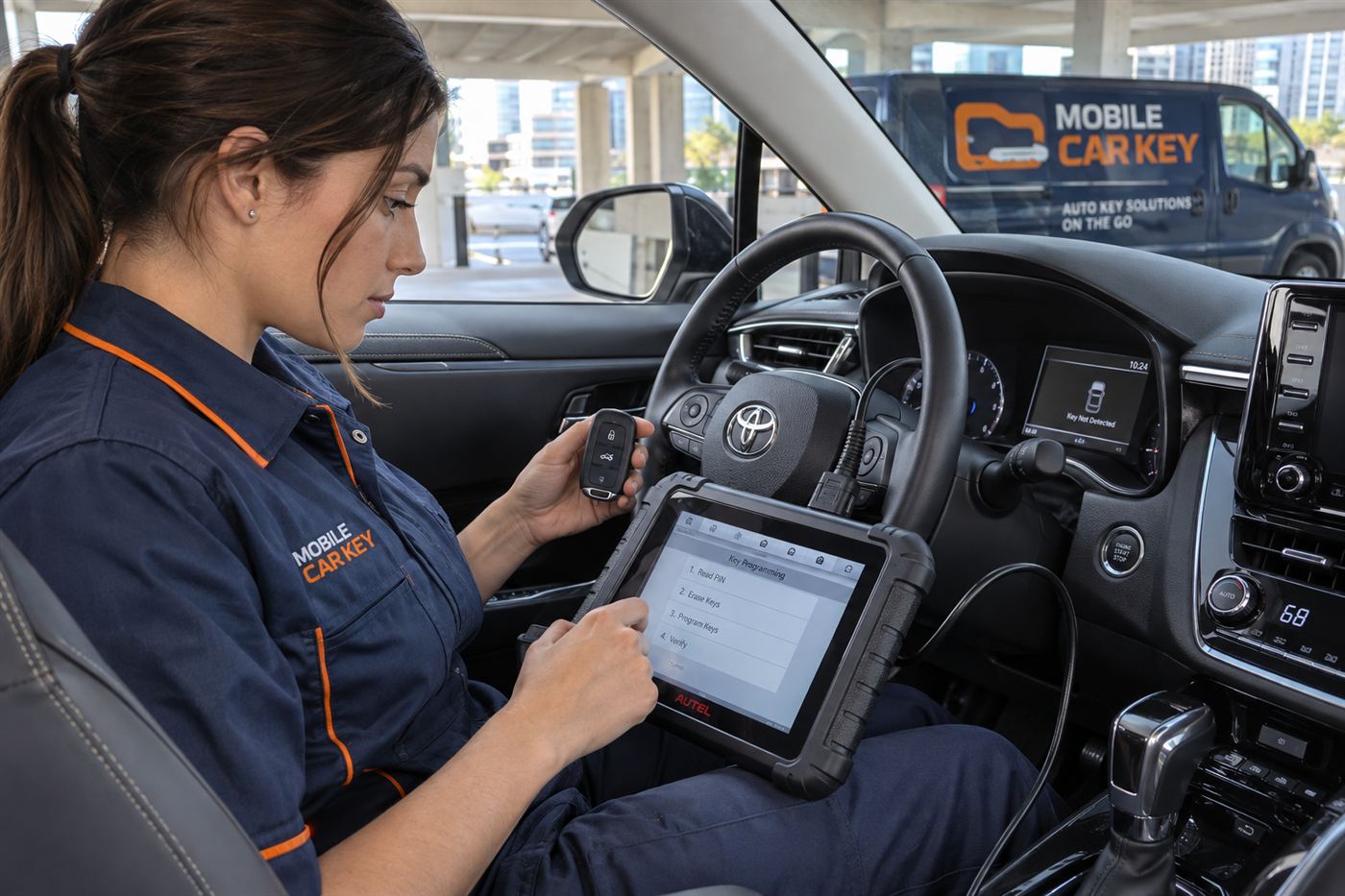
Why spare keys are the story with Mitsubishi
Mitsubishi has sold compact cars, small crossovers and larger utility vehicles to a wide range of drivers. Many of those vehicles are still on the road long after their first owner moved on. A car that has had three owners often has fewer keys than it started with, and the key that remains has seen years of wear.
That pattern shapes most Mitsubishi key calls. The driver is not usually dealing with a brand-new problem but with an old one that finally caught up: a worn key, a cracked fob or a missing spare that nobody noticed until the last key stopped working.
This page is general information about how mobile automotive locksmiths approach the brand. Mitsubishi has built many models over many years, so details vary, and nothing here is a service agreement. Availability, coverage and terms are confirmed with you before dispatch.
If you want to see how brand pages fit together, the car makes overview lists the others.
Practical thinking helps here. If you own a Mitsubishi with a single key, the most useful thing you can do today is find out how the car starts and what the key looks like, then decide when to make a spare. That small bit of planning saves the harder conversation later.
The kinds of keys Mitsubishi drivers commonly meet
Depending on the model and year, a Mitsubishi may use a plain metal key, a key with a chip that the car must recognize, a remote head key with buttons built into the head, or a keyless fob for a push-button start. The range is wide, because the cars span many years.
A driver of an older compact and a driver of a newer crossover can be holding entirely different hardware under the same badge. That is why the first thing a technician asks about is the exact vehicle: year, model and how it starts.
If you are not sure what kind of key you have, look at it closely. A thick plastic head often suggests a chip inside. Buttons suggest a remote. No blade at all suggests a keyless fob. Share what you see.
Smaller Mitsubishi crossovers and compact cars tend to have more modern keys as the years go on, while the older ones lean on simpler hardware. That does not mean older is easier. A simple key on an older car can still carry a chip, and a car with a chip needs more than a cut blade to run.
- Plain metal keys on some older cars
- Chip keys read by the immobilizer
- Remote head keys with lock and unlock buttons
- Keyless fobs with push-button start on many newer models
The worn key and the stiff ignition
High mileage takes a toll on both the key and the ignition cylinder. A key that once slid in easily starts to catch, and the cylinder starts to need a wiggle. The two wear each other down, and the result is a car that starts only if you hold the key at just the right angle.
Do not keep forcing it. A badly worn key can snap, and a snapped key is a bigger problem than a worn one. If the key sticks, stop and describe the symptoms to a technician, who may be able to cut a fresh key from the code instead of copying the worn one.
If the ignition cylinder itself is failing, no new key will fix it. The key and the cylinder are partners. A technician can tell you which part is at fault once they see the car. The broken key in ignition guide explains what to do if a piece is stuck.
Weather and use matter. A key that rides on a heavy ring with dozens of other keys puts constant strain on the ignition. If your ring is heavy, consider using a lighter ring for daily driving and leaving the extras elsewhere. That one change can slow wear a great deal.
Copies of copies
A key copied from a copy carries small errors from each generation. If your only key is already a duplicate, ask about cutting from the code or from the lock instead. The result is usually more accurate and works more smoothly.
When the last key is gone
Losing the last Mitsubishi key is stressful, but it is routine work for a mobile automotive locksmith. The technician gathers the year, model and VIN, confirms the location, checks ownership and then determines how to create a key the car will accept.
On a chip-key car, that usually means cutting a key and then introducing it to the car. On a keyless car, it means making and programming a new fob. In both cases, whether the work can be done at your location depends on the model and on the tools and access required.
Some newer vehicles from many makes need dealer-level tools or manufacturer access, and a reputable provider will say so early. The all car keys lost page describes the larger picture, including what to gather before the call.
If you find any key, even a broken one, keep it. Pieces of a broken key can help identify the part, and a chip inside may survive the damage.
Take a moment to confirm the location of the vehicle before you call. A car parked on a side street, a long-term lot or a friend's driveway needs different instructions than one at your own curb. Include whether there is a gate, a permit requirement or a time limit on the space.
A fob that has seen better days
A fob that has been through years of pockets, bags and cup holders often shows it. Buttons wear through, cases crack, and the contact points inside oxidize. Typical symptoms include needing several presses, a shorter range or an intermittent response.
Start with the battery. A fresh cell of the correct type is the simplest fix and costs little. If the case is cracked, the battery may be loose, and a loose battery produces the same symptoms as a weak one. Check that everything sits firmly.
If a new battery does not help, the fob may need to be re-paired or replaced. A technician can help sort out which is which. The dead fob battery guide walks through the steps.
Do not fall for a shop-window repair that promises to fix a worn fob by gluing a cracked case. If the circuit board is damaged, the glue will not help.
A final word on repairs: do not let anyone solder, glue or tape a failing fob to keep it alive for a long time. Short-term tricks sometimes work for a day, but a fob that is held together by luck is likely to fail when you can least afford it.
Buying a used Mitsubishi and counting keys
The used market is where many Mitsubishis find their second and third owners. When you buy, count the keys. Ask the seller how many came with the car, whether they are original or copies, and whether any were ever replaced.
If you are handed only one key, treat the spare as a task for the first week of ownership. Making a spare from a working key is generally simpler and more predictable than starting from nothing after the only key is lost.
Be wary of keys that arrive without a story. A fob that came from an online listing with no vehicle details may not be reusable on your car. The used car keys guide lists questions to ask before you pay.
Ask the seller for any maintenance records that mention keys. A record showing a replaced ignition or a new fob is useful, because it tells you which parts are newer and which are original. Also ask the seller to start the car with every key they are handing over, so you know each one works.
Lockouts in everyday places
Lockouts happen at grocery stores, school pickup lines, work lots and gas stations. When it happens, describe your location clearly: the name of the lot, the nearest landmark, the cross street or the level of a parking structure.
If the key is visible on the seat and the car has remote locking, tell the technician whether the engine is running and whether any doors are unlocked. A running engine in an enclosed space is a hazard, so move away from exhaust.
If a child or pet is inside a closed car, call 911 first. For ordinary lockouts, the vehicle lockouts page explains how technicians approach entry without damaging the door or the seals.
Try not to improvise with tools from the trunk. A coat hanger or a wedge can scratch paint, tear weatherstripping or trigger an alarm, and the damage can cost far more than the lockout.
If you are locked out in the middle of a cold night or a hot afternoon, try to stay with the car in a visible, comfortable place. Let someone know where you are. Keep your phone charged and your hands clear of clutter so that you can show identification when the technician arrives.
Proof of ownership on an older car
A reputable service asks for proof that the car is yours or that you are authorized to use it. Typical items include a registration, a title, a lease or purchase document and a matching photo identification. The step protects owners everywhere.
Older cars bring their own paperwork challenges. The title may be in a drawer at a relative's place, the registration may be expired or the car may have been bought for cash with only a handwritten receipt. Tell the person on the phone early so that they can tell you what will work.
A signed bill of sale together with identification is not always enough on its own, but it is a start. The technician will explain what else is needed. The ownership proof guide covers the usual situations.
If you inherited the car, the paperwork may be in the name of someone else. Bring whatever documents you have, including the estate papers if relevant. A technician is accustomed to unusual cases and will explain what is acceptable, but the process works better when you tell them early.
The Mitsubishi visit in order
You call or send a callback request. The service asks about the vehicle, the location and what happened. Availability, coverage and terms are confirmed before dispatch. A technician then comes to the vehicle.
On arrival the technician checks ownership, inspects the situation and explains the plan. The work follows, and the new key or fob is tested with the car. Test everything you depend on: door locks, the ignition, the trunk and any remote functions.
The process is the same in every state, which is why the service is nationwide. The how it works page has the full walkthrough.
After the visit, keep a short note of what was done: which keys now work, which were removed from the car's memory, and where the spare is stored. That record helps a future owner or a future technician and costs you nothing but a few seconds.
- Describe the vehicle and the problem
- Wait for availability and terms to be confirmed
- Meet the technician at the car
- Show proof of ownership
- Test the key together before the technician leaves
Planning spares the practical way
A spare key should live in a known place, away from the car and away from the main key. A drawer, a lockbox at a trusted relative's place or a small pouch in a bag you do not carry every day all work. The worst place for a spare is the glove box.
If more than one person drives the Mitsubishi, agree on who holds which key. A short note on the refrigerator or in a phone list prevents the situation where everyone assumes someone else has the spare.
If your car came with a plain metal key and a remote, ask a technician which of the two is more important to duplicate first. The spare key guide has a clear way to think about it.
Also think about the second key's habits. A spare that sits unused for years may have a dead battery or a corroded contact. Check it twice a year by using it, even if only to unlock the door. A spare that has not been tested is only a theory.
When the second key is a fob
A spare fob must be programmed to the car, not simply cut. Ask whether programming is part of the job and whether the fob will carry all the functions of the original.
Neighbors in the same corporate circle
Mitsubishi has worked with other manufacturers over the years, and drivers sometimes assume that parts are interchangeable. A key that fits one car will not necessarily work on another with a similar shape. Differences in chips, blades and programming are common.
For context, you can read about Nissan keys and Mazda keys, which describe other Japanese makes. The comparison is for background only, and nothing about one brand's key applies to another's car.
If a seller says a fob is universal, ask which exact vehicle it was made for and whether it has been programmed to anything else. A fob that was previously paired to another car may not be reusable.
Remember that heritage does not equal compatibility. Even when two vehicles share a platform, their keys, chips and programming steps can differ. If anyone suggests a shortcut based on a shared platform, ask for the exact part and the exact steps in writing before you agree to anything.
Rural roads, long drives and travel
Mitsubishi vehicles often carry commuters long distances and tourists on rental plans. A key problem in a rural area or at a rest stop has a different shape than one in a city. Distances are longer, coverage is weaker and options are fewer.
If you are far from a town, give your location as precisely as you can, including a mile marker, an exit number or a landmark. Mention whether your phone has a steady signal. Availability and coverage are confirmed before dispatch, so be ready for an honest answer.
If you are in a rental, call the rental company first. Their keys and their rules are different from a private car. The rental car key guide explains why.
Weather on long routes can compound the problem. A winter storm or a summer heat wave changes what a driver should do while waiting. If conditions are dangerous, prioritize shelter and safety, then deal with the key. A tow may sometimes be the practical answer.
Pre-call notes for Mitsubishi drivers
Look in the usual places once more. Check the car, the pockets of the coat you wore and the bag you carried. A key that is merely misplaced saves everyone a trip.
Gather the registration, a photo identification and the year and model of the vehicle. Note your exact location. Write down any message the dashboard showed and how the car behaved before the problem began.
When you are ready, ask for a callback through the contact page. Nothing is booked until availability and terms are confirmed, and if anyone is in danger, call 911 first.
As a last step, decide what you will do about a spare before you hang up. Mention it to the technician, so that a second key can be made during the same visit if that makes sense for your car. Doing both jobs at once avoids a second problem later.
Common questions
Can a mobile locksmith make a new Mitsubishi key if I lost the last one?
In many cases yes, depending on the model and year. The technician confirms ownership, then creates a key the car will accept. Some newer vehicles need dealer-level tools or manufacturer access, and a reputable provider will tell you that before dispatch so you can plan around it instead of waiting at the car for no reason.
My Mitsubishi key sticks in the ignition. Is it the key or the ignition?
It can be either, and often it is both wearing together. A badly worn key may drag against the tumblers, while a worn cylinder may grip even a good key. Stop forcing it and describe the symptoms to a technician, who can inspect the key and the cylinder and tell you which part is at fault.
Does my Mitsubishi key have a chip?
Many keys from the later part of the transponder era contain a chip that the car reads before it will start, while some older cars use a plain metal key and newer ones use a keyless fob. Look at the key head and how the car starts, then share both details when you call so the plan fits the car.
I bought a used Mitsubishi with one key. Should I make a spare?
Most technicians would say yes. Duplicating a working key is generally simpler than starting from nothing after the only key is lost. Ask what is possible for your model, and ask whether the car's memory can be updated so that unknown keys from a previous owner no longer start the engine at all. This single step often prevents a second visit.
What proof of ownership will I need for an older Mitsubishi?
A registration or title and matching photo identification are typical. If paperwork is missing, a bill of sale or other document may help, and the technician will tell you what is acceptable. Tell the person on the phone early about any gaps in the paperwork so you do not arrive unprepared for the check. Early honesty makes the check go smoothly.
Can I use a key blank I bought online?
It depends. A blank made for a different vehicle, or one with the wrong chip, may not work and may waste your money. If you plan to buy one, confirm that it matches your exact year and model, and ask a technician whether they can work with parts you supply before the visit, not after they arrive.