
A City Full of Visitors and Their Cars
Orlando draws visitors from all over the world, and many of them arrive by plane, collect a rental car and spend a week moving between theme parks, resorts, restaurants and shopping. Residents share the same roads, along with workers who commute into the tourist corridor each day. The result is a city with an unusual number of unfamiliar drivers in unfamiliar cars.
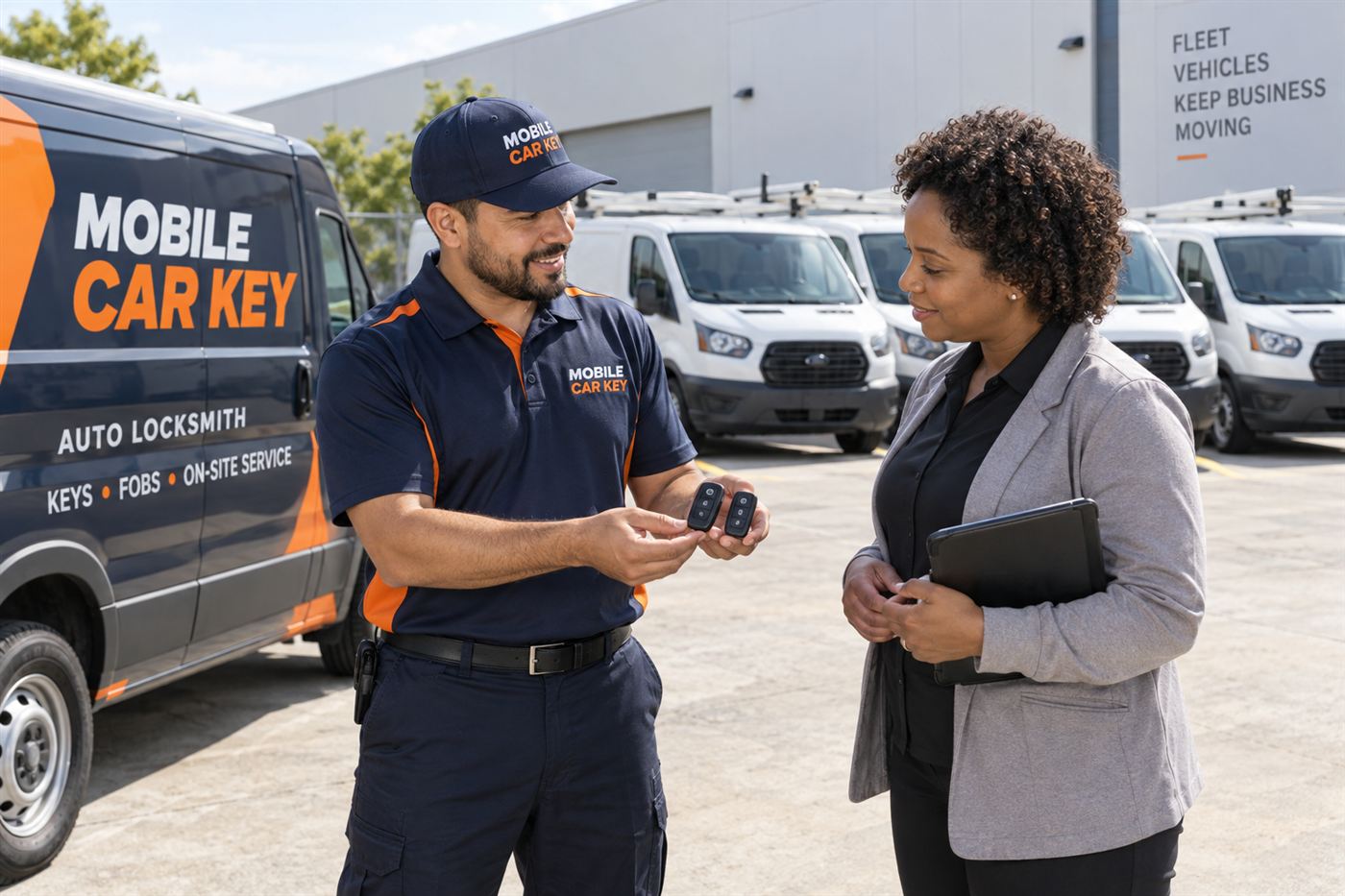
Mobile Car Key Locksmith is an automotive service that covers the entire United States, and Orlando is among the cities this site describes. The technician comes to the vehicle, which suits a place where cars are parked in huge lots, resort decks and curbside pickup zones.
This page is educational. It describes what is common, what you can try before calling, and how the service works in general terms. Availability, coverage and terms are always confirmed before dispatch, and nothing here is a service agreement.
Two kinds of reader
If you are a visitor, the sections on rentals, lots and airports will help most. If you live here, the sections on commuting, storms and everyday wear will apply more.
Theme Park Lots After a Long Day
The large theme parks have parking areas that cover enormous fields, and the walk from the entrance to the car can be long. Visitors typically arrive early, spend ten or twelve hours on their feet, and leave tired, sunburned and carrying souvenirs. In that state, key mistakes multiply.
A key may be tucked into a stroller pocket, dropped on a ride, placed in a locker and forgotten, or left in a bag that got swapped with someone else. A fob can get soaked on a water ride. A key can slip out of a swimsuit pocket on a slide. Search thoroughly before assuming the worst, including the stroller, the diaper bag and every jacket.
If the key is gone, contact guest services at the park. They keep lost and found for items turned in during the day. Then think about what to do about the car. Our page on being locked out at the airport shows a similar approach to a lot-based lockout.
- Photograph your lot sign and row on arrival
- Zip the key into a bag pocket you will not open
- Give the spare to someone who stays at the resort
- Check strollers, ponchos and bags before assuming a key is lost
Describing a huge lot
Lots are labeled by theme, animal, character or letter. Take a photo of the sign when you park, and quote the section and row number to the dispatcher. Mention the tram or shuttle stop if there is one.
Children and heat
If a child or pet is in a locked car, call 911 immediately. Do not wait for a locksmith. Central Florida heat makes the inside of a car dangerous within a short time.
Rental Cars and Unfamiliar Keys
Most visitors drive a rental, and rentals often have push-button start with a smart key. A driver used to a metal key may not realize that the car keeps running with the fob out of the cabin, or that closing the door with the fob inside can lock it in, depending on the model.
If a rental key is lost or locked inside, call the rental company first. The vehicle belongs to them, and they often have roadside programs or replacement procedures. Our rental car key guide explains the usual order of steps and who is authorized to approve work.
If the company asks you to arrange your own help, keep the rental agreement, photo identification and vehicle details ready. A technician checks ownership or authorization on site, and for a rental that means your agreement and the rental company's confirmation.
Return day hazards
On the way to the airport, everyone is hurried. Keys are left in the room, in a cup holder or in a jacket packed into a suitcase. Do a last check of the car and the room before leaving.
Do not leave the fob in the car at drop-off
Unless the agent says otherwise, hand the key to a person, not into a slot. Mixed-up keys at return counters create more trouble than people expect.
Orlando International Airport and Long-Term Parking
Orlando International Airport is among the busiest in the country, and many local residents park there while traveling. Garages and surface lots hold vehicles for days or weeks. When the traveler returns, the usual problems appear: a drained fob battery, a weak car battery, or a key lost in transit.
Orlando travelers often come back tired, with small children and plenty of luggage. If the car does not respond, the first step is simply to breathe and look at clues. Do the interior lights glow? Does the dash show a message? Does the manual key blade work? Share these with the dispatcher.
Garage operators set the rules about who may work on their premises. Ask staff what is allowed, and pass the answer along. Note the level, row and nearest pillar marker.
Meeting someone with a spare
A friend or relative with a spare key can solve a lockout in minutes. If that option exists, use it before arranging service.
Resort Garages, Valets and Hotel Check-In
Resorts along the tourist corridor have large garages, valet stands and drop-off circles. Valet is convenient and also a classic source of mix-ups. Fobs hang on boards, drivers swap cars during busy times, and a key can go missing between the stand and the vehicle.
If your fob is not returned, speak to the manager and ask staff to check the board and each pocket. Take photos of the ticket and the car at drop-off. Remove keys you do not want to share. After the facility confirms the key is lost, you can look at replacement.
For self-parked cars in resort garages, give the dispatcher the garage name, the level and the nearest elevator. Resorts sometimes require that outside workers check in with security, so ask.
Keycard confusion
Hotel room keycards look a lot like each other, and some travelers mistake them for car fobs. Check each card in your wallet before concluding the fob is missing.
Afternoon Thunderstorms and Wet Pockets
Central Florida is famous for afternoon thunderstorms in the warm months. A sunny morning can give way to a violent downpour with lightning, then clear again in an hour or two. Drivers dash from attractions to cars, and wet hands and bags bring moisture into the cabin.
A fob that has been soaked may stop working until it is fully dry. Remove the battery if the case opens, let it air dry, and do not press buttons. If you suspect the fob is wet, avoid heating it. Heat can warp the case and damage the circuit board.
Lightning is a real hazard. If a storm is overhead, wait inside a building rather than standing beside your car in an open lot. Let the dispatcher know where you are sheltering.
Poncho pockets
Rain ponchos hide pockets. A key slipped into a poncho can end up in a trash bin. Check the poncho before you throw it away.
Commuting on I-4 and the Toll Roads
Residents and workers move across the region on Interstate 4 and the toll roads that wrap around the city. Traffic can be slow, and congestion often lasts well into the evening. Drivers spend long periods in their cars and stop frequently for fuel and food.
At a fuel pump, a driver steps out, closes the door and finds the doors locked with the fob inside. Another leaves the engine running while grabbing a drink. Our vehicle lockouts page explains what is checked and how the work is done.
Toll roads add a curious problem. Without a transponder, drivers sometimes pull over to sort out payment and leave the keys behind. Pull into a proper lot before you deal with paperwork.
Shoulders and stopped cars
If your car stops on a highway shoulder, exit away from traffic, stand well back and call 911 if you feel in danger. Do not try to fix a key problem next to moving traffic.
UCF, Workers and Everyday Locals
The University of Central Florida sits east of the city and brings a very large student community. Students and staff park in big garages, share cars and lose spares in the usual ways. Many drive older used cars, and many own only one key.
Local workers in hospitality drive at all hours. Late shifts end in dark lots, and a worker who locks the key in the car at midnight needs a plan. Wait in a lit, staffed place, tell someone your location, and give the dispatcher the nearest entrance.
A spare held by a trusted person is the most effective protection. For people who lack a spare, our page on key fob programming explains how new fobs are taught to a car.
Ownership proof
A reputable service asks you to show you own the vehicle or are authorized to use it. If the car is titled to a parent, the parent may need to take part.
Day Trips to the Coast and the Space Center
Orlando is a base for day trips. Drivers head east to Cocoa Beach, the Kennedy Space Center area and Daytona, and west toward the Gulf Coast. Beach parking brings sand and salt water into the picture, and our Miami page covers the effects of salt air in more detail.
If you are traveling toward the Gulf, see our page for Tampa. All of the covered cities are on the major cities hub.
Before a day trip, check the fob battery, bring the spare and keep it away from the primary. Beach lots and launch viewing areas can be crowded, and remote stretches have limited signal.
Launch days
On busy viewing days, roads and lots fill up early and traffic is heavy. If you are locked out in a crowd, patience and clear location details help.
A Walkthrough: The Last Night of a Family Trip
Picture a general scene, not a real customer. A family finishes a week of parks and heads to the resort garage with tired children and shopping bags. Standing at the rental, the driver reaches for the fob and finds the pocket empty. The children are fretting and the evening is hot.
Instead of panicking, the driver sends everyone to the shade of the garage entrance, gives the oldest child a bottle of water, and searches methodically. The stroller pocket is empty. The bags come out one by one. Under a pile of souvenirs, the fob appears. In another version of the story, it does not, and the next steps matter.
The driver calls the rental company, which explains its procedure. If the company directs the driver to arrange service, the driver gathers the rental agreement and photo identification, notes the garage name and level, and requests help. Availability and terms are confirmed before dispatch. A technician then comes to the vehicle, checks authorization and makes or programs a key where the vehicle allows.
The point of the story is its calm order: search, shade, documents, location, request. That order works for nearly everyone.
What helps families
Keeping one adult available to handle the car while another handles the children, and keeping a photo of the rental agreement on a phone.
Smart Keys, Push Buttons and What Visitors Misunderstand
Many modern cars, including a large share of rentals, use a smart key that stays in a pocket or bag. The car detects the fob by radio, so the driver can unlock the door by touching the handle and start the engine with a button. The system is convenient, and it creates several misunderstandings that show up every week in a tourist city.
The first misunderstanding is that the car needs the fob to keep running. Usually the car checks for the fob only when starting or when a door opens, so it may keep running after the fob has been taken out. A driver who hands the fob to a passenger and walks away may be surprised later when the car will not restart.
The second is that closing the door with the fob inside is harmless. Depending on the model and the settings, the doors may lock. A fob left in a cup holder, a bag in the trunk or the pocket of a jacket on the back seat is a common cause.
The third is that a low battery means the fob is dead. Most smart keys have a backup. A short, marked spot on the steering column or console can read the fob at very short range even when the battery is weak. The owner manual shows where. Our remote and proximity fob page describes these systems in more detail.
The hidden mechanical key
Most smart fobs contain a thin metal blade that slides out of the case. It opens the driver door when the electronics fail. Look for a small release button or slot on the fob.
Alarms after a manual unlock
Using the blade may trigger the alarm on some vehicles until the car recognizes the fob again. Placing the fob at the backup spot and pressing the start button usually quiets it.
Simple Maintenance That Prevents Resort-Week Disasters
A key problem on vacation costs more than money. It costs time that was meant for the family. A few habits protect a trip. Before you leave for Orlando, check your own fob battery, make sure your spare is with someone at your residence, and save a photo of your registration on your phone.
On arrival, learn the rental's key system. Ask the agent how the car starts, where the backup spot is and what to do if the fob fails. Take a photo of the fob and the dashboard. Decide which adult carries the fob and keep it in a zipped pocket, not a stroller bag.
For locals, the same ideas apply all year. Replace coin batteries on a schedule, keep spare keys in a dry place, and avoid hanging a heavy bunch of keys from the ignition. Put the vehicle information in a note on your phone, including the VIN, so you can read it out to a dispatcher without hunting.
- Ask the rental agent how the key system works
- Keep the fob in a zipped inner pocket
- Never leave the fob in the car when you step out
- Save the agreement and plate number in your phone
A short checklist for visitors
Know the key type, know the backup start spot, keep the rental agreement handy, photograph your parking location and keep a charged phone.
How the Service Works and What to Have Ready
You call or send a callback request. The service asks about the vehicle, the location and what happened. Availability, coverage and terms are confirmed before dispatch. A technician is sent to the vehicle, ownership or authorization is checked on site, and the work is done and tested. The how it works page lays it out in detail.
Have ready your agreement or registration, photo identification, vehicle details, any old keys and a precise location. Many vehicles can be handled by a mobile technician, but limits depend on the make, model and year, and some newer vehicles need dealer-level tools or manufacturer access. The dispatcher will tell you early.
- Rental agreement, registration or title
- Photo identification or passport
- Year, make, model and VIN if visible
- Old keys or broken fob pieces
- Lot, row, garage level or nearest cross streets
Common questions
I lost my rental car key at a theme park. Who do I call first?
Call the rental company first, since the vehicle belongs to them and they have their own procedures and sometimes roadside programs. Also check park lost and found. If the company asks you to arrange help, keep the rental agreement and photo identification ready. Ownership or authorization is checked on site, and terms are confirmed before dispatch.
How do I describe my location in a giant parking lot?
Photograph the lot sign when you park and share the section name, row number and nearest tram or shuttle stop. Add the vehicle color and make. If you forgot to take a photo, walk to the nearest sign and send that. Clear details help the dispatcher confirm availability and plan the visit.
Is a locked car with a child inside a locksmith call?
No. Call 911 first. A child or pet locked in a hot car is an emergency, and emergency responders can act immediately. Central Florida heat makes the inside of a car dangerous within a short time. Once everyone is out and accounted for, you can deal with the key.
My fob got soaked in a storm. Should I try to start the car?
Wait. Remove the battery if the case opens and let the fob air dry fully. Use the manual key blade for the door and the backup start position if your car has one. Pressing buttons while wet can cause damage. If it still fails after drying, a technician can test it.
Can a technician program a new fob for a rental?
Only with authorization. The rental company owns the vehicle, so contact them first. If they direct you to arrange service, the technician will check your agreement and their confirmation. Some rental models need dealer-level tools or manufacturer access, and the dispatcher will say so before sending anyone.
What if I get back from a trip and my car battery is dead?
A dead car battery can look like a key failure. Dim or dark lights and no clicks point to the battery. Share what you see with the dispatcher. A technician can test the key and the car, and if the battery is the issue, a jump or battery service may be the right answer rather than a new key.