
Why Miami Is Hard on Car Keys
Miami sits on the edge of the Atlantic and Biscayne Bay, with warm, humid air that carries salt almost everywhere. Moisture, heat, sand and sunscreen are constant companions. Electronic keys contain tiny metal contacts and small batteries, and those parts do not thrive in damp salt air.
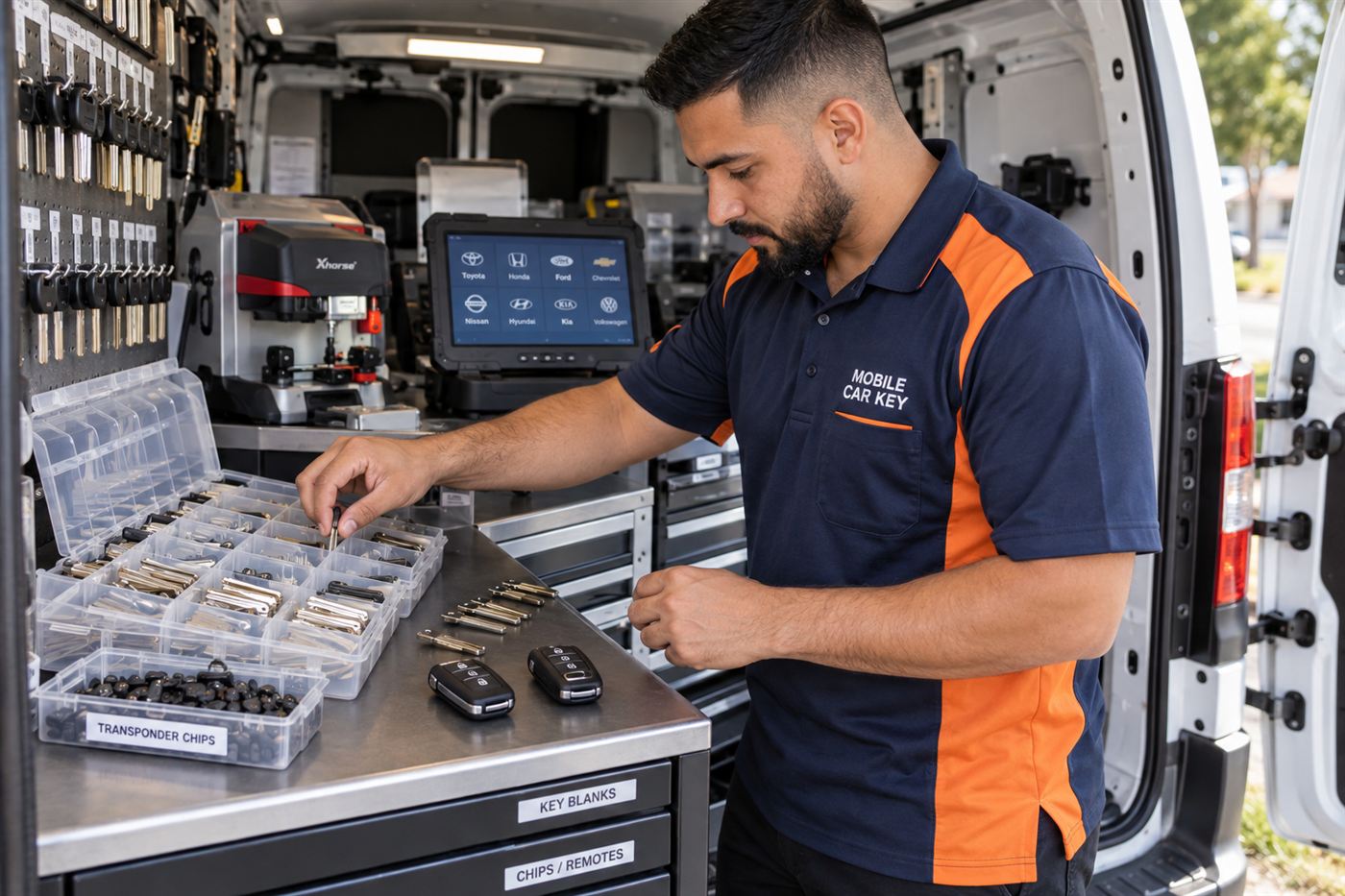
Mobile Car Key Locksmith is an automotive service that covers the entire United States, and Miami is among the cities this site describes. The technician comes to the vehicle, whether it is on a beachfront street, in a high-rise garage or beside a boat ramp.
This page is educational. It explains the usual causes of key trouble in a coastal city, what you can try yourself, and how the service works in general terms. Availability, coverage and terms are always confirmed before dispatch, and nothing here is a service agreement.
The Miami pattern
Most problems fall into one of five groups: wet or corroded fobs, keys lost at the beach or on a boat, valet mix-ups, travelers with rentals, and keys locked in a car in the heat. We take them in turn.
Salt Air, Humidity and Corroded Contacts
A fob that lives in a humid, salty environment slowly corrodes. The battery contacts turn dull and green, the circuit board collects a film, and the buttons start to feel unreliable. The first sign is often a fob that works only when you press the button several times or hold it near the door.
If you suspect corrosion, open the case with care, look at the battery and its contacts, and wipe them gently with a dry cloth. A tiny amount of isopropyl alcohol on a cotton swab can clean contacts, but let everything dry fully before reassembling. If the circuit board shows heavy green or white residue, the fob may be beyond a simple fix.
A replacement battery of the correct type is inexpensive protection, and so is a spare fob stored in a dry spot. Humidity can also affect the car's own key slot, so a key that feels sticky in the ignition is worth checking.
Silica and dry storage
A small sealed container with a silica packet is a good place for a spare fob. Avoid bathrooms and kitchens where steam is common.
Do not use a hair dryer
Heat can warp the case and lift components. Air drying is gentler and better.
After the Beach: Swim Bags, Sand and Wet Fobs
Miami beach days produce the most predictable key problems in the country. A driver walks across sand with a fob in a swim shorts pocket, goes into the water, and discovers later that the fob is soaked. Another leaves the key in a beach bag that ends up in the wrong car. Another drops the fob in sand and loses it entirely.
If the fob has been in water, take out the battery if you can and let the pieces dry in open air. Do not press buttons while wet, because moisture can short a circuit. Our page on a key fob that got wet explains what to try and when to stop.
Sand is a separate problem. Fine grains jam buttons and scratch contacts. A soft brush clears most of it. Never blow into the fob, since breath adds moisture.
Waterproof pouches
A small waterproof pouch or a lanyard with a sealed case keeps a fob dry on the beach. Some people leave the fob locked in the trunk or with a friend who stays on the sand.
If the car is locked and the key is in the water
Never dive for a key in unsafe waters. If the key is lost in the sea, treat it as lost and look at replacement options. Your safety comes first.
Valet Culture and Handing Over Your Keys
Valet parking is part of Miami life. Hotels, restaurants, nightclubs and condo buildings all use it. The practice is convenient, and it also means your key spends hours out of your control.
At the end of a busy night, fobs get mixed up. Valets may give back the wrong key, hang a fob on the wrong hook, or misplace a key in the rush. If your fob is missing, speak to the manager and ask staff to check every hook and every pocket before you decide anything. Photograph the valet ticket and the car when you hand it over.
Remove any keys you do not want to share. A valet needs only the vehicle key, not a ring with other keys attached. Some cars have a valet key that opens the doors and starts the engine but not the trunk or glove box. Ask whether yours does.
What to do if the valet lost the key
Stay calm and ask for the manager. The facility may have insurance for this. Take notes, keep your ticket and keep a record of who you spoke to. Once the facility confirms the key is lost, the question becomes how to make a new one.
Ownership proof still applies
Even when a valet is at fault, a reputable service asks you to show you own the vehicle or are authorized to use it before any work begins.
Cruise Terminals, Port Parking and Long Absences
PortMiami is one of the busiest cruise ports in the world, and many cruise travelers leave their cars in nearby garages for a week or more. During that time, the fob may sit in a bag or an in-room lockbox, and the car battery may weaken in the heat.
Returning travelers face a particular set of problems. They are tired, sunburned, sometimes sick from travel, and carrying luggage. The car will not unlock, or the key is missing. Before panicking, check pockets and bags thoroughly, since a key tucked into a toiletry kit is easy to overlook.
If the key cannot be found, tell the dispatcher the garage name, the level and the nearest elevator. Note any rules from the garage staff about outside workers. Terms and availability are confirmed before dispatch.
Leaving a spare with someone
Before a cruise, leave a spare key with a trusted friend who can bring it to you if needed. Mention which car it fits and where it is parked.
Miami International Airport and Rental Cars
Miami International Airport handles huge volumes of visitors, and the rental car center is a busy place. A rental key is often a smart key with a push-button start, and a traveler unfamiliar with it can easily lock it inside or lose it at a fuel stop.
If a rental key fails, call the rental company first. The vehicle belongs to them, and they have agreements about roadside help. Our rental car key guide explains who authorizes what. If the company directs you to arrange your own help, have the rental agreement and your ID ready.
Visitors should also know that proximity fobs can lock themselves inside, depending on the model, when the car senses that no fob is outside. Read the car's short instructions at pick-up, and ask the agent about the backup method.
Foreign travelers
Visitors from abroad often carry a passport and a driving permit. These work as photo identification. Bring the rental agreement and keep the vehicle details on your phone.
Causeways, Bridges and Traffic
Miami is full of bridges and causeways that link the mainland to Miami Beach and the islands. Drivers cross them daily, often in heavy traffic. A breakdown or stop on a causeway is stressful, and a key problem in that setting needs careful handling.
If your car will not start on a bridge, turn on hazard lights, stay inside if traffic is heavy and call 911 if you feel in danger. Moving to a shoulder is better than stopping in a lane. Once you are in a secure spot, check whether the issue is the key or the battery.
On the mainland, major roads feed Brickell, Coral Gables and the airport, and parking garages are common. A fuel stop on the way is a typical lockout location.
Describing a bridge location
Give the name of the causeway, the direction of travel, the nearest mile marker or exit and the lane or shoulder side. Do not leave your car in a live lane.
Brickell, Coral Gables and Downtown Garages
Brickell and downtown Miami are crowded with high-rise buildings and parking decks. Residents, workers and visitors share the same garages, and tight turns and low ceilings are normal. A lockout in a deck is very common.
Coral Gables has tree-lined streets, and the University of Miami draws students and staff. Students park on campus and nearby streets, and key trouble follows the usual student pattern: used cars with one key, spares lost, fobs dropped, keys left in gym lockers.
For students and residents alike, a spare held by a trusted person is the strongest protection. For anyone who is stuck, our vehicle lockouts page explains what is checked and what is done.
Condo garages with access control
Some buildings require a resident or manager to authorize outside workers. Tell the dispatcher about any access rules in advance.
University drivers
If the vehicle is titled to a parent, expect the parent to take part in ownership confirmation.
Hurricane Season and Flooded Streets
Hurricane season brings evacuations, storm preparation and flooding. Streets can flood during heavy rain or high tides, and cars can be damaged by standing water. Electronics, including key systems, are especially vulnerable.
Before a storm, gather your spare keys and documents in one waterproof place. If you evacuate, take the keys with you and tell someone where the car is. After a flood, do not try to start a vehicle that sat in standing water. Water in the engine or the electrical system can cause expensive damage. Tell the dispatcher what happened so the situation can be assessed carefully.
If anyone is in danger, call 911 first.
King tides and street flooding
Even without a storm, high tides can flood low streets. Parking on higher ground when you can helps protect both car and key.
Road Trips to the Keys, Orlando and Tampa
Miami is also a starting point. Drivers head south to the Keys on a long highway over the water, north toward Fort Lauderdale and Palm Beach, and across the state to the Gulf Coast. If you travel to Central Florida, see our page for Orlando. For the Gulf side, Tampa is another covered city. All are listed on the major cities hub.
Long drives raise the odds of a roadside key problem. Replace tired batteries before leaving, keep the spare in a different bag, and keep the vehicle details on your phone. On the highway to the Keys, services can be far apart, and a lockout at a scenic pullout needs careful location detail.
Snorkel stops and boat ramps
Keys fall out of pockets at boat ramps and in shallow water. Use a floating key ring or leave the fob in a dry bag on the boat.
A Walkthrough: A Beach Day That Ends at a Locked Car
Picture a general scene, not a real customer. A driver parks near the shore in the morning, locks the car with the fob, and wraps the fob in a towel at the bottom of a beach bag. After hours of sun, sand and swimming, the driver returns, digs through the bag, and finds the fob damp and gritty. The button does nothing.
The driver stays calm. First, the manual key blade hidden inside the fob works on the driver door, but the dashboard shows a message about the key and the engine will not start. That points to the immobilizer not recognizing a damaged fob. The driver dries the fob and holds it against the marked spot on the steering column, which many cars have for exactly this situation. Nothing changes.
Now it is time to ask for help. The driver notes the street, the nearest cross street and the nearest beach entrance, finds the registration in the glove box, and gets photo identification from a wallet. The request goes to the service. The dispatcher asks about the vehicle, the location and what happened. Availability and terms are confirmed before a technician is sent.
On arrival, the technician checks ownership, tests the fob, and explains what went wrong. Depending on the vehicle, the answer may be a new battery, a repair, a new fob or a combination. The work is tested before the technician leaves.
What helped
Using the backup method, noting the location carefully, and having documents ready. None of this required special skill.
What would have prevented it
A waterproof pouch, or leaving the fob with a friend who stays dry. A spare fob in a dry place at the residence of a trusted person would have solved it in one phone call.
Sunscreen, Sweat and Everyday Wear
Beyond the dramatic cases, Miami's warm weather causes quiet wear. Sunscreen and sweat leave a film on fob buttons and key blades. Over months, the film attracts dust, and the rubber pads under the buttons lose their spring. A key with a greasy blade can also slip in a lock and wear unevenly.
A gentle routine goes a long way. Wipe the fob and the blade with a dry cloth every few weeks, and replace the coin battery once a year if the fob is used heavily. Keep the fob out of cup holders where drinks can spill, and avoid leaving it in direct sun on a seat.
If a button has stopped working, do not press harder. The contact beneath may be worn or corroded, and a technician can often repair or replace the part without replacing the whole fob.
Lanyards and keychains
A heavy keychain strains the ignition and the key. A light ring with only the vehicle key is kinder to both.
Spare key habits
Test the spare once a year. A spare with a dead battery is not a spare.
What to Prepare Before You Call
Gather proof of ownership or authorization, photo identification and the vehicle details. Note the VIN if you can read it through the windshield. Keep any damaged key, case or fob pieces. Describe your location with a garage name, level, street, intersection or landmark.
Heat is a factor in Miami, so wait in shade or air conditioning. If a child or pet is in the car, call 911 immediately. Then follow the steps on the remote and proximity fob page if you need to understand your key type, and the how it works page for the service sequence.
- Registration, title or rental agreement
- Photo identification or passport
- VIN, year, make and model
- Old keys, shells or fob pieces
- Garage name, level, row or street details
Limits to Keep in Mind
Many vehicles can be handled by a mobile technician. Limits depend on the make, model and year, and some newer vehicles need dealer-level tools or manufacturer access. A good dispatcher says so early.
This page is general information and does not create a service agreement. Terms and availability for your particular request are confirmed before dispatch.
Common questions
My fob went swimming with me. Is it ruined?
Not necessarily. Remove the battery if the case opens, dry everything in open air and avoid pressing buttons while it is wet. Do not use a hair dryer. Many fobs recover after thorough drying, but corrosion can appear later. If it still fails, a technician can test the key and tell you whether repair or replacement makes sense.
The valet cannot find my key. What should I do?
Ask for the manager and have staff check every hook, pocket and the vehicle. Keep your ticket and notes. If the facility confirms the key is lost, a technician may be able to make a new one for many vehicles, once ownership or authorization is confirmed. Limits depend on the make, model and year.
I returned from a cruise and the car will not start. Is it the key?
It might be the car battery instead. A week in the heat can drain a battery, and dim interior lights are a clue. Try the spare, check the dashboard and share what you see with the dispatcher. A technician can test the key and the car to find the cause.
Can I get help with a rental car in Miami?
Call the rental company first, since they own the vehicle and often have roadside programs. If they ask you to arrange help yourself, have your rental agreement and photo identification ready. Ownership or authorization is checked on site, and availability and terms are confirmed before dispatch.
What if my car sat in floodwater and the key stopped working?
Do not try to start the vehicle. Water can damage the engine and the electronics, including the key system. Tell the dispatcher what happened so the situation can be assessed carefully. Some cases need a tow or specialist repair, and an honest technician will say so before work starts.
Does the service cover drives to the Florida Keys?
The service covers the entire United States, which includes the roads to the Keys. Remote stretches can be long, so give precise details such as the mile marker, the direction and a landmark. Availability and terms are confirmed before a technician is dispatched.