
Why Milwaukee Drivers Meet Car Key Problems
Milwaukee sits on the western shore of Lake Michigan, and the lake shapes almost everything about how people drive here. Winters are long and cold, summers are busy with outdoor events, and the spring thaw brings potholes, salt residue and wet pavement. Each season creates its own kind of key trouble.
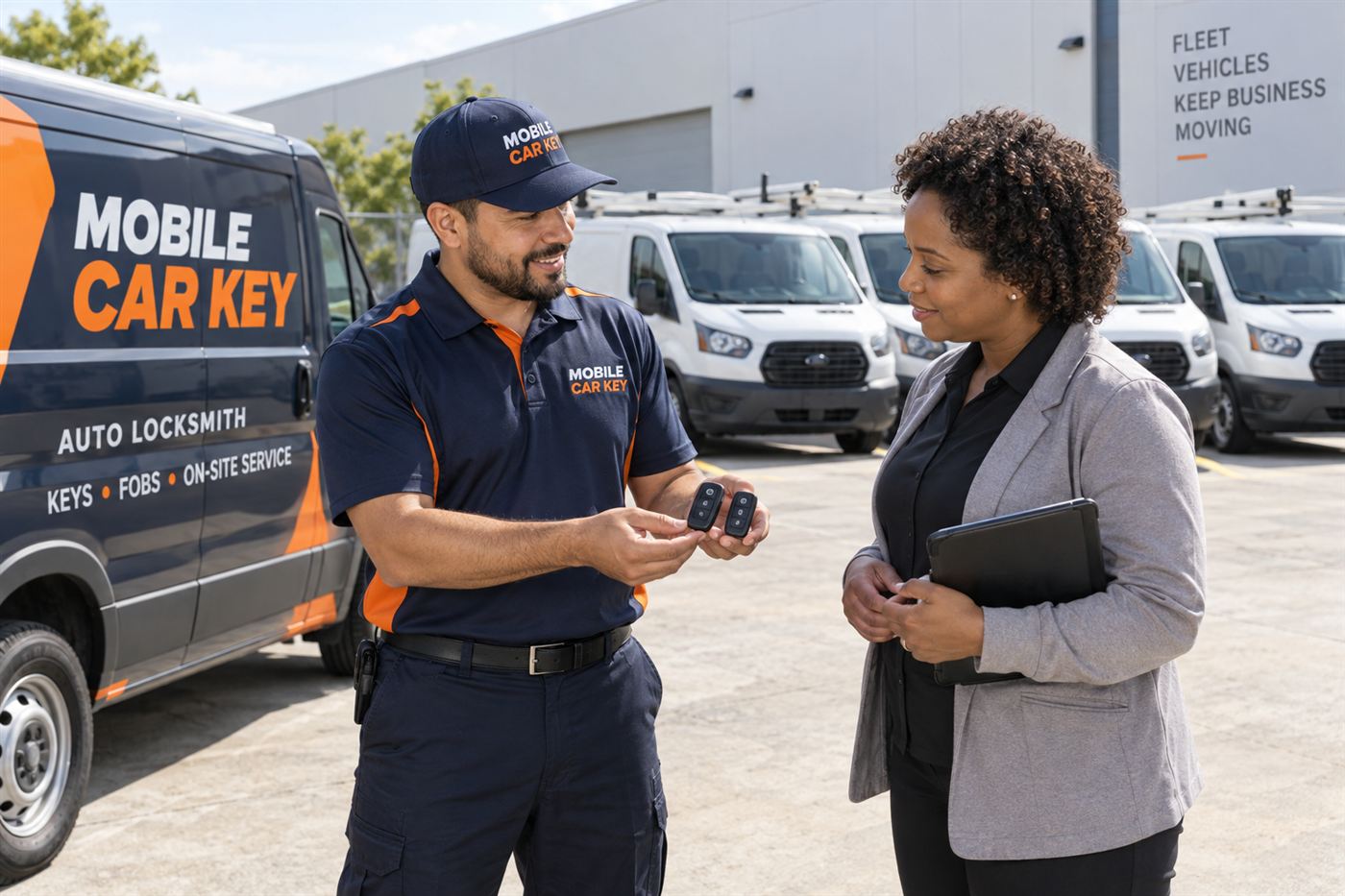
Mobile Car Key Locksmith is an automotive service that works across the United States, and Milwaukee is one of the cities this site covers. The technician comes to the vehicle, which matters in a city where so many cars sit on the street, in a driveway behind a plow ridge, or in a ramp downtown.
The goal of this page is to help you understand what is likely happening to your key or fob, what a mobile technician can usually do about it, and how to prepare so the visit goes smoothly. Everything here is educational. Availability and terms are always confirmed before anyone is dispatched.
- Dead or weak fob batteries after cold nights
- Keys locked inside while the engine runs to warm the cabin
- Lost keys after crowded events or long days outdoors
- Worn or broken keys that finally fail in a frozen ignition or door lock
Four common Milwaukee key stories
A commuter walks out of an office on a freezing evening and the fob does nothing. A student leaves a spare key in a jacket that stayed in a dorm room. A fan returns to a stadium lot after a late game and finds the key is missing from a pocket. A traveler lands at the airport after a long trip and the car will not recognize the key. These are ordinary events, and each one has a practical path forward.
What Lake Michigan Winters Do to Keys and Fobs
Cold is hard on small batteries. The coin cell inside a remote fob loses output as temperatures fall, so a battery that was marginal in October may be unable to send a clean signal in January. Drivers often read this as a failed fob when it is really a tired battery.
A proximity key, the kind that lets you start the car with a button, is even more sensitive. The car must detect the fob inside the cabin, and a weak battery can make the dashboard show a key not detected message even when the fob is in your hand. Many vehicles have a backup method, such as holding the fob against a marked spot on the steering column or console. Your owner manual shows where it is.
Cold also stiffens plastic. A key blade that has been worn smooth for years can bind in a frozen lock, and a plastic fob shell can crack when it is dropped on ice. Heavy keychains add to the problem because the extra weight strains the ignition cylinder.
Try this before you call
Warm the fob in your hands for a minute, press the button close to the driver door handle, and check whether the vehicle has a manual key hidden inside the fob. If a spare key exists, use it. If the spare works, the original probably needs a new battery or a repair. Our dead fob battery guide walks through the steps in more detail.
When it is not the battery
If a fresh battery does not help, the fob may have lost its link with the car, the transponder chip may be damaged, or the car may have a separate fault. A mobile technician can test the key and the vehicle on site and explain which part is failing before any work begins.
Road Salt, Slush and the Lakefront
Road salt is part of Milwaukee life from late fall into spring. It clings to door handles, trunk locks and the small gaps around ignition surfaces. Over a season it can stiffen lock cylinders and corrode metal contacts on older keys. Moisture then freezes in the cylinder, and a key that turned easily in autumn now sticks.
Wet slush is also hard on fobs. A key carried in a coat pocket through a snowy walk can pick up moisture, and moisture reaching the circuit board may cause intermittent behavior. If a fob has been soaked, remove the battery if you can, let it dry in a warm room, and avoid heating it with a hair dryer. Our page on a key fob that got wet covers the details.
Lakefront parking and spray
Lakefront lots and streets near the water see wind-driven moisture, and in cold months that spray can freeze on handles and locks. Drivers sometimes pull hard on a frozen door and end up with a bent key or a damaged handle. Gentle warmth, patience and a little lock de-icer, applied sparingly, are safer than force.
A habit that helps
Wipe the key blade clean when you notice grit, avoid forcing a key that resists, and carry the spare somewhere other than the same pocket as the primary. A spare kept in a different place is the simplest protection against a locked-out evening.
Festival Season and Stadium Parking
Summer in Milwaukee means crowds. Large music festivals along the lakefront, ballgames, and neighborhood fairs bring thousands of people to the same few parking areas. Keys get lost in these settings for predictable reasons: pockets are jostled in crowds, bags get set down at tables, and fobs fall out on the grass.
If you suspect your key fell out near an event site, retrace your steps, ask at lost and found desks, and check the vehicle for a spare. Contacting the event office is worth doing before you assume the key is gone for good. If the key does not turn up, the next step is to find out whether a new key can be made for your vehicle without the old one, which is the topic of our all keys lost service page.
Lot etiquette when you are locked out
Event lots are busy with moving cars and people on foot. If you are locked out in a crowded lot, stay somewhere well lit and out of traffic, and let the dispatcher know the lot name, the nearest gate or sign and any section markers. Clear location details help a technician find the right vehicle among hundreds of similar ones.
After the game
Late departures mean low light and tired drivers. Keep your phone charged, since you may need to share your location, and avoid walking long distances alone. If anyone feels unsafe, move toward staff or security and call 911 if there is an emergency.
Mitchell International Airport and Long Trips
Mitchell International Airport serves Milwaukee and a wide area around it, and many travelers park for days at a time. Parking structures and surface lots are common key trouble spots. A fob can sit in a bag for a week, and after a long flight a battery that was weak on departure may be dead on return.
Travelers also lose keys in transit. A key can slide out of a coat pocket in a security line or get left in a rental car return area. If you return from a trip and your key will not work, check the spare at your residence if someone can bring it, and tell the dispatcher exactly where the car is parked, including level and row if it is a structure.
Arriving late
A midnight arrival leaves fewer options. Parking staff can tell you what is allowed in the lot, such as whether you may wait with the vehicle. A technician's arrival depends on availability, which the service confirms before dispatch, so it helps to start the request while you are still gathering bags.
Rental cars on a Wisconsin trip
If the key problem is on a rental, call the rental company first because the vehicle belongs to them. Our rental car key guide explains who should authorize what.
Campus Life Near Marquette and UW-Milwaukee
Milwaukee has a large student population, with Marquette University and the University of Wisconsin-Milwaukee among the most widely known campuses. Student drivers face their own mix of key problems. Cars sit parked for days between classes, spare keys are stored in a dorm room or a parent's residence, and fobs travel in backpacks that get thrown around.
A student whose key is lost may not know the exact make, model and year details a technician asks for. Looking at the registration or insurance card in the glove box, if it is reachable, or at a phone photo of those papers helps. Parents who own the vehicle may need to take part in the conversation because ownership or authorization is checked on site.
Shared cars and borrowed keys
Roommates and friends sometimes borrow a car and return the key to the wrong person. Before assuming a key is lost, ask everyone who may have used it, and check bags, jackets and the vehicle itself.
Why ownership proof matters
A reputable service asks you to show you own the vehicle or are authorized to use it. That protects owners from strangers who want access to cars that are not theirs. See our ownership proof guide for the kinds of documents drivers typically use.
Freeways, Bridges and Suburban Commutes
Many people live in the suburbs around Milwaukee and drive into the city, with towns such as Waukesha, Wauwatosa and West Allis often named as part of the metro area. Commuters spend long stretches in the car, stop for fuel on the way, and leave vehicles in garages and lots near work.
A common scene is a driver who steps out at a fuel station to pay inside and closes the door with the keys on the seat. Another is a commuter whose key breaks off partway while locking a door in snow. Both are covered by our situation pages, including keys locked in the car at a gas station and a key that broke off in the door lock.
Winter commuting also adds the remote starter factor. Many drivers start the car from a distance to warm it, and a vehicle left running can lock itself if the doors are closed and the key fob is inside. This is a classic reason for a cold-weather lockout.
Running engine, locked doors
If the engine is running and the doors are locked with the key inside, note whether any person, child or animal is inside. Anyone in danger changes everything: call 911 first. If the cabin is empty, tell the dispatcher the engine is running so the technician can plan around it.
What a Lockout Looks Like in Practice
Lockouts are the most common reason someone searches for help. The service for lockouts is designed to open the vehicle without damaging the door, the paint or the weather seal. The method depends on the vehicle, and some newer models need specific tools or approach because of how their doors and electronics work.
Before dispatch, the service asks what happened, where the vehicle is, and whether the keys are visible inside. Ownership or authorization is checked on site, and the work is tested before the technician leaves. You can read the full description on our vehicle lockouts page.
- Year, make and model of the vehicle
- Exact location, including level or section in a ramp
- Whether anyone or anything is inside
- Whether you have a spare key reachable by someone else
Do not use a coat hanger
In cold weather people try coat hangers, shoelaces and tennis balls they saw online. These tricks can scratch paint, tear weather stripping and set off side airbag or alarm systems on modern cars. A short wait for a trained technician is usually less costly than a repair.
Things to tell the dispatcher
Describe the vehicle, say whether doors, trunk or both are locked, and mention if the alarm is sounding. Mention the ground conditions too, such as deep snow or ice, since a technician may need space to work.
Lost Keys, Spare Keys and Copies
When the only key is gone, the situation is called all keys lost. A mobile technician can often create a new key on site for many vehicles, though the exact process depends on the vehicle. Modern keys carry a transponder chip or a proximity fob that must be coded to the car, and some makes require dealer-level tools or manufacturer access.
Having a spare is the most economical protection in any city, but especially in a place where weather punishes keys. If you still have one working key, a copy is much simpler than starting from nothing. Read our spare key guide for why a duplicate made now spares you a bigger problem later.
Key types you may encounter
A basic metal key with no chip, a transponder key with a chip in the head, a remote head key with buttons built in, a switchblade-style folding key, and a smart key for push-button start. Each type is handled differently, and a technician can identify yours at the vehicle.
Tell the dispatcher if the car is parked on a slope or a tight spot
Street parking in older Milwaukee neighborhoods can be tight. Sharing details about the surroundings helps the technician plan the visit.
How Dispatch Works for a Milwaukee Location
The process is the same across the country. You call or send a callback request, and the service asks about the vehicle, the location and what happened. Availability, coverage and terms are confirmed before dispatch. Only then is a technician sent to the vehicle.
Milwaukee is spread out, and a request from a far suburb may be treated differently from one downtown. The service does not publish a promised arrival time here, because it depends on availability. What you can do is give clear information so nothing needs to be repeated. Our how it works page lays the steps out, and the coverage page explains how service areas are handled.
A callback request
If you cannot talk, such as in a loud stadium lot or at work, a callback request lets you share the details and wait for someone to contact you.
While you wait
Stay warm. If the car is unreachable, wait inside a business or a building lobby rather than outside in the cold, and keep your phone where you can answer it.
What to Have Ready on a Cold Milwaukee Day
Preparation shortens every visit. Gather proof of ownership or authorization, a government photo ID, and the vehicle details. If the vehicle is financed or leased, the registration or title may show the owner, and that is fine to bring.
If you have an old key, even a broken one, keep it. It may help identify the key type. Charge your phone, since cold drains batteries, and be ready to share your location by text.
- Registration, title or a lease agreement showing your name
- Photo identification
- The vehicle identification number, visible through the windshield on many cars
- Any old keys, fobs or remote shells
- A clear description of the parking spot
Why the VIN matters
The vehicle identification number lets a technician confirm exactly what vehicle is in front of them and what key it takes. It is usually readable at the base of the windshield on the driver side.
Wisconsin Road Trips and Nearby Cities
Milwaukee drivers often head to Madison, Green Bay or the Wisconsin Dells, and many drive south toward Chicago. A key problem can strike far from the city, and the service works across the country, so you are not limited to one metro area. If you are traveling toward a larger city, see our page for Chicago drivers or the one for Detroit, and you can browse every covered city on the major cities hub.
Rural stretches in Wisconsin can be long, and cell coverage may drop in places. Before a long drive, make sure a spare key is accessible to someone who can reach you, and keep the vehicle details saved on your phone.
Lake effect and surprise weather
Weather can turn suddenly near the lake. A sunny departure may turn into snow squalls, and a fob that was fine at noon may be sluggish by evening. Carry a charged phone and a jacket, just in case you wait outdoors.
Limits to Understand
No service can promise to handle every vehicle. Many vehicles can be handled by a mobile technician, but limits depend on the make, model and year, and some newer vehicles need dealer-level tools or manufacturer access. If your vehicle falls into that group, the dispatcher will tell you before anyone is sent.
Nothing on this page creates a service agreement. It exists to explain what is common and what to expect. Terms and availability are confirmed with you directly before dispatch.
Common questions
My fob stopped working on a freezing morning. Is it broken?
Not necessarily. Cold lowers battery output, so a fob that worked in warmer weather may fail on the coldest day. Warm it in your hands, try the manual key hidden inside many fobs, and check whether a spare works. If a new battery does not help, the fob may need testing. A mobile technician can check the key and the vehicle together and explain what failed.
Can a technician come to a parking ramp in Milwaukee?
Technicians come to the vehicle, and that includes many parking structures. Give the dispatcher the structure name, level, row or nearest marker so the right car is found. Some structures have height limits or access rules, so mention anything the operator has told you. Availability and terms are confirmed before dispatch.
I left my keys in the car with the engine running. What now?
First check that nobody, including a child or pet, is inside. If someone is in danger, call 911 first. If the cabin is empty, tell the dispatcher the engine is running. Avoid forcing the door or using improvised tools, which can damage paint, seals and sensors. A technician can open the vehicle with methods suited to the model.
Do I need proof of ownership if I am locked out?
Yes, a reputable service asks you to show you own the vehicle or are authorized to use it. Registration, title, a lease agreement or insurance paperwork usually works, along with photo identification. This protects owners and keeps strangers from gaining access. Have the documents ready before the visit, or keep photos of them on your phone.
Can a lost key be replaced if I have no spare at all?
For many vehicles, yes. A technician can often make a new key on site by coding it to the car, though the process varies by vehicle. Some newer models require dealer-level tools or manufacturer access, and the dispatcher will say so up front. Having a VIN and ownership paperwork ready makes the process smoother.
Does this service work if I am visiting Milwaukee from another state?
Yes, the service covers the entire United States and works with drivers wherever the vehicle is. Visitors should be ready with registration and identification, and for a rental car the rental company should be contacted first. Tell the dispatcher where the vehicle is parked and what happened, and terms are confirmed before dispatch.