
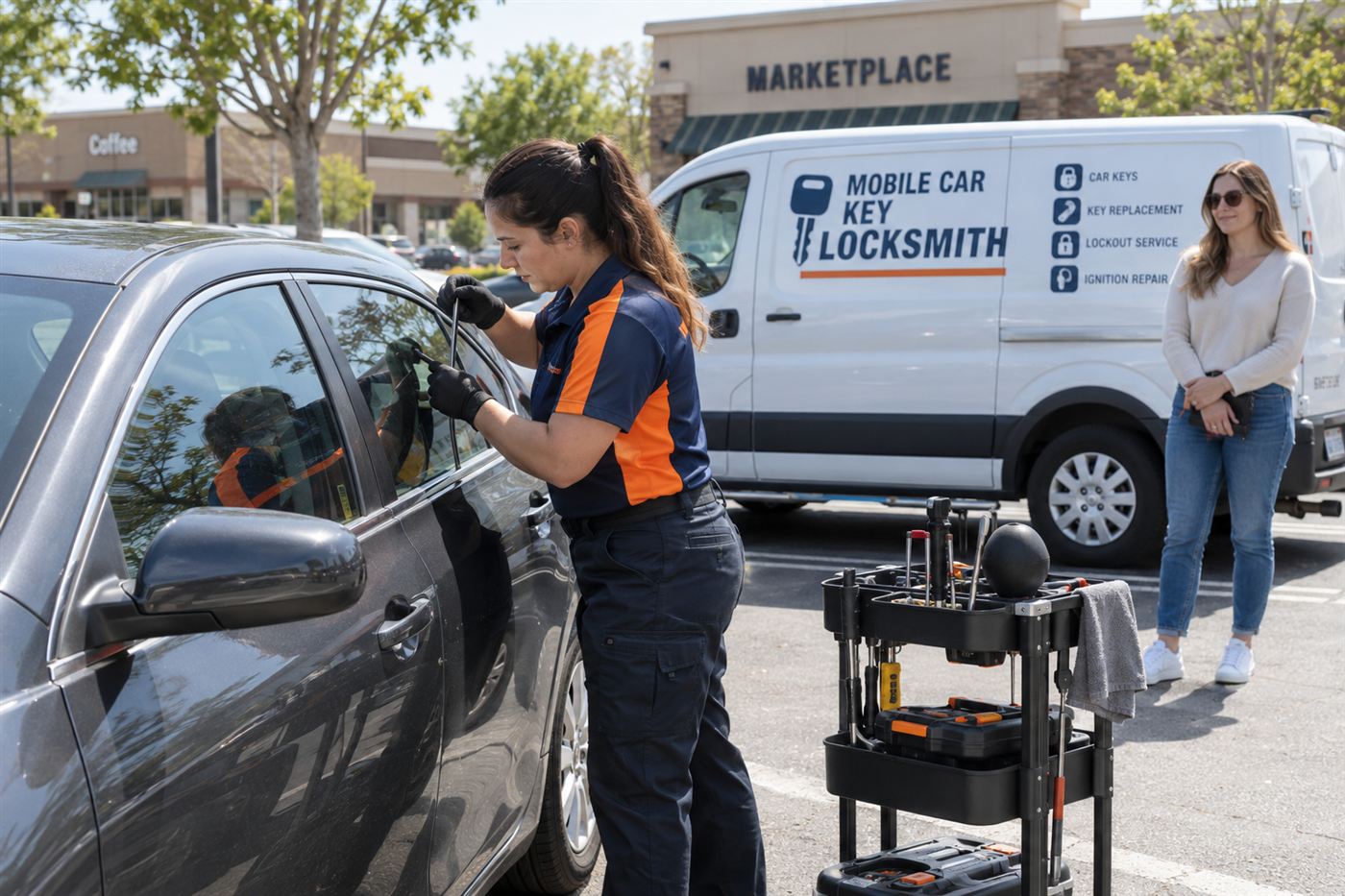
A calendar that decides when keys go missing
In Louisville, the time of year says a lot about the kind of key trouble you might meet. Spring brings the biggest crowds of the year, summer brings heat and humidity, autumn brings football and festivals, and winter brings cold mornings that expose tired fob batteries. Each season has its own pattern.
Because the city hosts large events and welcomes visitors who come to tour distilleries and trails, a good share of the drivers on its roads do not know the layout. They park where they can, walk off with a fob in a pocket and return hours later to find it missing.
This page follows that calendar. It covers the Derby season first, then the river bridges, the overnight workforce, the heat and the winter, and it ends with the practical steps of a call: what to say, what to show and what to expect.
Derby season and the weeks around it
The spring racing season fills hotels, restaurants and parking lots across the city. Visitors arrive from across the country and the world. Streets around the track and downtown close or slow, and shuttle buses run on set routes. Drivers who rent cars for the week add to the crowd.
A lot of the key trouble in these weeks comes from distraction and celebration. Fobs are tucked into hat bands, jacket linings and small bags that get checked at the gate. Cars are left at remote lots and reached by shuttle. When the shuttle returns at the end of the day, the crowd is tired and the key is nowhere to be found.
If you lose a key during a major event, check the shuttle seat, the gate check bag and the event lost-and-found. Then tell the dispatcher about the event, since roads may be slow and some areas may be closed. A realistic plan depends on honest details.
Hotels near the track and downtown fill up weeks in advance, and many guests park in garages that charge by the day. If you are staying in one, the front desk can often help with a master list of found items, and the garage office may have a camera view of the area where you parked. Both are worth asking about before you assume a key is gone.
- Check hats, jackets, bags and the shuttle seat.
- Ask event staff about found items.
- Tell the dispatcher which lot you used and how you got to the venue.
- Keep your registration or rental paperwork with you, not in the car.
The bridges to Indiana
The Ohio River separates Kentucky from Indiana, and several bridges carry daily commuters, shoppers and visitors across. A driver who lives in Jeffersonville or New Albany may work in Louisville, and the reverse is just as common. A key problem on either side is handled the same way, but coverage is confirmed from where the vehicle actually is.
Bridge approaches are busy and tight. If your car will not start on or near a ramp, turn on hazard lights, stay clear of the lane and tell the dispatcher which bridge, which direction and the nearest exit. A technician cannot work in a place that puts anyone at risk, and the dispatcher may ask you to wait elsewhere. A nearby parking lot, a gas station or a side street just off the ramp is often a better place for the visit than the bridge itself.
The page on Indiana and the page on Kentucky both describe the state context, and the Indianapolis page shows how the service works farther north.
Interchanges and the daily commute
Several interstates meet near downtown, and the interchange is known to locals for its tangle of ramps. Commuters spend long stretches there at peak hours, and a stalled car in the wrong lane is dangerous.
If a key problem leaves you stuck in traffic, put your hazard lights on and stay in the vehicle with your seat belt fastened unless there is an obvious hazard. Call for help and describe your position by road name, direction and exit number. Do not step into moving lanes.
Daily wear matters here, too. A key used four times a day for years loses its edges, and the ignition cylinder wears as well. A key that sticks or needs a wiggle is warning you. Replace it before it fails, as described on the car key replacement page.
The overnight workforce and the late-shift lot
Louisville is known for a large air freight operation that runs through the night, and many workers start or end shifts when most of the city is asleep. Warehouses, hospitals and hotels also run through the night. Drivers walk to cars in lots where few people are around.
A key problem at that hour is stressful. If you are alone, wait near a guard station, a lit entrance or another visible spot. Tell someone you trust where you are. Do not wander in search of help, and do not accept rides from strangers.
When you call, mention that it is late at night and describe where you are standing. The dispatcher will confirm availability and terms before dispatch, and may suggest a different place to meet. A calm, clear description of the lot helps a great deal.
Many shift workers keep their key on a lanyard or clip, which is convenient but risky. A clip can open when a bag is dropped, and a lanyard can catch on a door. Check the clip each time you leave the building, and keep a spare at your residence or with a trusted friend who lives nearby.
Employer lots and badge access
If the lot is controlled by a badge or gate, tell the dispatcher how the technician can enter. Security staff may be able to meet the technician at the gate.
Bourbon trails and vineyard drives
Visitors in rental cars tour distilleries and country roads, and the trails extend into the countryside. A driver who tastes samples and then leaves the car overnight may find a fob missing in the morning. A rental key lost on a rural road is a bigger issue than one lost in town.
Rental cars belong to the rental company, which must confirm authorization before a locksmith proceeds. Call them first, and keep your agreement and identification handy. If the key is simply inside the car, the work is a lockout rather than a lost-key job, which is usually simpler.
On country roads, distance and signal matter. Give the dispatcher the name of the nearest town and the road, and write down the mile marker if there is one.
Tour days often include several stops and a driver who is not used to the car. A fob can end up in a gift bag, a tasting room or a rental van. Ask the staff at each stop to check lost items. Many small tour operations keep a box behind the counter and will gladly look if you give a clear description of the fob.
Heat, humidity and the river valley
Summers in the Ohio Valley are warm and sticky. A fob in a pocket picks up sweat. A key in a hot car bakes. Moisture creeps into cases and settles around the battery. Over a season, the contacts corrode and the range shrinks.
If your fob has become unreliable, replace the battery first, and clean the contacts lightly. If it still behaves oddly, the board may be damaged. Keep the fob out of direct sun and do not leave it in a closed car.
Heat is also dangerous for anyone left inside a car. If a child or pet is inside a closed vehicle, call 911 first. Do not wait for a locksmith. Emergency responders can reach the occupant.
Spring storms and river rises
The river valley sees heavy rain at times, and low areas can flood. A parking lot near the waterfront can fill with water, and a car left there may be stranded. Never try to move through standing water, and never wade into floodwater to reach a car.
A fob that has been soaked should be dried carefully. Remove the battery, wipe the contacts and let it dry in a warm, airy place. If the car itself was in water, have it inspected before trusting the electronics.
If a replacement is needed, a technician can often program a new fob at the vehicle, though limits depend on the model and year.
Winter mornings and the dead battery
Kentucky winters are not as long as northern ones, but cold snaps and ice happen. A morning at the freezing mark can expose a weak fob battery or a tired car battery. Drivers often assume the key is broken when the real problem is power.
Try the simple checks. Do the dash lights come on? Does the car click? Does a spare key work? Does the fob show a light when you press a button? Describe what you saw to the dispatcher. If you can, note whether the dash lights are bright, dim or completely dark, since that tells a technician a great deal about whether the battery is to blame.
If a jump start brings the car back, the key may be fine. If not, a technician can sort out whether the fob, the immobilizer or the battery is at fault.
Ice adds a separate risk. Do not pour hot water on a frozen window or lock, since it can crack glass and refreeze. A de-icing product made for car locks is safer. If the key will not enter the lock at all, do not hammer it. Describe the problem and wait for guidance.
Campus life and shared cars
The University of Louisville and other schools bring students who share cars, borrow vehicles and drive older family cars. Football weekends and move-in days are busy. A student with a single key and a crowded bag is a common caller.
In these cases, ownership questions arise. The title is often in a parent's name. The owner may need to confirm that the student may use the car. Keep a photo of the registration and ask the owner to be reachable. Roommates who borrow the car should know who owns it and who holds the paperwork before a key goes missing.
Making a spare for a young driver's car is worth doing. It prevents a hard evening later, and it lets a parent hold the second key at their residence. Teach new drivers to keep the key in the same pocket or the same bag compartment every time, and to put it there before leaving a room. A habit is stronger than a reminder.
How a Louisville call is handled
The dispatcher begins with the vehicle's year, make and model, then asks where it is, what happened to the key and whether any working key exists. Photos help but are not required.
Availability, coverage and terms are confirmed before dispatch. Nothing on this page is a service agreement; it is general education. This step lets you hear the plan before anyone is sent.
At the vehicle, the technician checks ownership or authorization, does the work and tests it. The test confirms the key starts the car, the remote works and the vehicle recognizes the key reliably.
Proof of ownership
A registration or title in your name, with a government photo ID, is the usual proof. Insurance cards and bills of sale can help.
For a rental, the company must confirm authorization. For a company vehicle, the fleet manager may need to confirm. For a family car, the owner may be asked to confirm that you may use it, ideally by phone while the technician is present.
If your documents are locked in the car, say so. The dispatcher can explain what else may be accepted.
All keys lost: starting from nothing
When no working key exists, a locksmith cannot copy one. The vehicle must learn a new key, which takes specialized equipment. Many cars can be handled where they sit, but newer models from certain makes need dealer-level tools or manufacturer access.
If you think the key was stolen, say so. A technician can explain whether old keys can be removed from the vehicle's memory, and whether it makes sense for your particular model.
After you have a working key, make a spare. The page on all keys lost describes the full process.
Roads out of the city
Louisville sits at a crossroads between Nashville, Cincinnati, Indianapolis and the Appalachian foothills. Road trips are common, and a key problem on the road can strike anywhere. The pages on Indianapolis and Columbus describe how the service works in those directions.
To compare other places, visit the cities hub.
Wherever you are, describe the vehicle, describe the place, prove ownership and let the technician work at the car.
Before any long trip, spend a few minutes on the basics. Test the spare key, replace aging fob batteries, take a photo of your registration and save the dispatcher-style details of your car in your phone: year, make, model and color. If you travel with others, make sure at least two people know where the spare is. These small steps turn a bad afternoon into a minor delay and let you handle a roadside key problem with a clear head.
Common questions
I lost my key during a big event. Where should I look first?
Check your hat, jacket, bag and any shuttle seat you used. Ask event staff and the lost-and-found about found items. If the key is not found, tell the dispatcher about the event so the plan accounts for road closures and crowds. Keep your identification and registration ready, and avoid leaving them in the locked car where you cannot reach them.
Can a technician work on the Indiana side of the river?
Coverage is confirmed from the vehicle's actual location, so tell the dispatcher which side of the river you are on, the road and the nearest exit. A short drive can cross a state line, so be specific about where the car is parked right now and name the bridge or highway you used to arrive.
What should I do if I work overnight and feel uneasy waiting?
Wait near a guard station, a lit entrance or another visible spot, and tell someone you trust where you are. Tell the dispatcher it is late at night. If you feel threatened, move to a populated area and call 911. Your personal safety matters more than the vehicle, and a calm, lit meeting place is always better than a dark corner.
My rental car key is lost on a country road. What now?
Call the rental company first. It owns the key and must confirm that you are authorized. Then tell the dispatcher the nearest town, the road, the direction you were heading and any mile marker. Distance affects availability and is confirmed before dispatch, so be honest about how remote you are and whether you have phone signal while you wait.
Why does my fob only work some of the time in summer?
Heat and humidity can corrode the contacts and weaken the battery. Replace the battery, clean the contacts lightly and keep the fob out of direct sun. If it still works only some of the time, the circuit board may be damaged and a replacement fob may need to be programmed to the vehicle, which can often be done where the car is parked.
Do I need my title to prove I own the car?
Not always. A registration, insurance card or bill of sale, together with a government photo ID, may be accepted. What matters is that the documents link you to the vehicle. If you do not have them with you, explain that on the call so the dispatcher can tell you what else might work, and the owner may be able to help by phone.
What if a child is locked inside the car?
Call 911 immediately. A closed car becomes dangerous in heat and can be uncomfortable in cold. Do not wait for a locksmith. Emergency responders can reach the occupant, and once everyone is out of danger a technician can help with the vehicle and the keys afterward. The car can be dealt with later, but the person or animal inside cannot wait.