
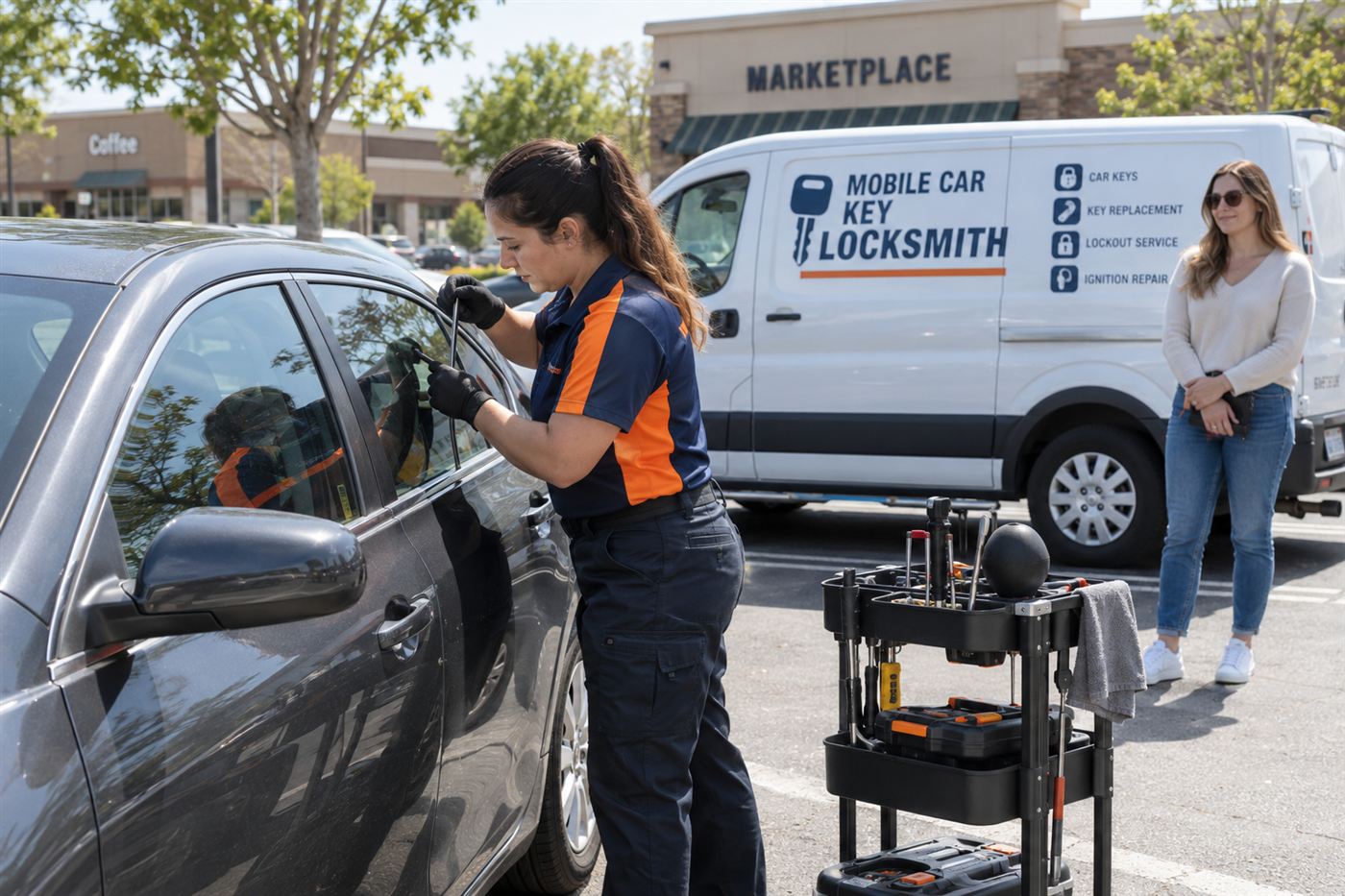
Why Buick keys deserve their own page
Buick has a long history of building comfortable sedans and, more recently, roomy crossovers. A lot of those vehicles stay with one owner for many years, and that changes how key problems show up. A key that was fine for a decade starts to wear, a fob button stops responding, or a spare that was supposed to live in a drawer cannot be found anywhere.
This page is for the driver standing next to a Buick that will not cooperate. It is general information about how mobile automotive locksmiths approach the brand, not a promise about any particular vehicle. Buick has sold many different models over many years, and the key hardware changed along the way.
Nothing here is a service agreement. Availability, coverage and terms are confirmed with you before anyone is dispatched. If you would like the broader picture first, the car makes overview shows how brand pages fit together, and neighbors such as GMC keys and Cadillac keys share some General Motors family traits.
The kinds of keys Buick drivers commonly meet
Across the years, Buick drivers have used several styles. Older cars often have a plain metal key. Many vehicles from the later part of the transponder era have a key with a chip inside the plastic head that talks to the car. Newer crossovers and sedans commonly use a keyless fob with a push-button start.
Which style your car has depends on the model and the year. A driver of a long-running sedan and a driver of a recent crossover may be holding completely different hardware even though both badges say Buick. That is why the first question from a technician is usually about the exact vehicle.
Do not assume that two Buicks in the same family share a key. Even within one model name, changes in generation can change the key blank, the chip and the programming method.
- Plain mechanical keys on some older cars
- Chip keys that need the car to recognize them
- Remote head keys that combine a key blade with lock and unlock buttons
- Keyless fobs with push-button start on many newer models
Reading your own Buick before you call
You can learn a lot about your car in half a minute. Look at how you start it. If you turn a key in a slot on the steering column, you have a different situation than if you press a button with your foot on the brake. Say which one it is when you call.
Look at the key itself. Does it have a metal blade that folds out, a hidden emergency blade inside the fob, or no blade at all? Is there a button panel? These details help the person on the phone picture what you are holding, or what you used to hold.
If a spare exists anywhere, say so. A working spare changes the problem from lost keys to a duplicate, and that often keeps the job simpler.
Finally, notice what the car does when you try. Does the dashboard light up when you press the button? Does the steering wheel unlock? Do the interior lights come on when you open a door? Each answer tells the technician something about the battery, the fob and the electronics, so share what you see in plain words.
Details worth noting
Write down the year, the model name, the trim if you know it and any text printed on the fob. A photo of the old key or fob, if you still have one, can be useful. Keep the vehicle identification number handy too, since it is often visible on the lower corner of the windshield on the driver's side.
When the only key is gone
Losing the only key to a Buick is stressful, but it is a situation mobile automotive locksmiths handle as part of ordinary work. The technician goes to the vehicle, confirms ownership, and then works out how to create a new key that the car will accept.
On cars with a chip in the key, that usually means cutting a new key and then introducing it to the car. On keyless cars, it means making a new fob and programming it to the vehicle. In both cases, whether the work can be done at your location depends on the model and on the tools and access needed.
Some newer vehicles from many makes need dealer-level tools or manufacturer access, and Buick models are no exception. If your car falls into that group, a reputable provider will tell you so up front instead of letting you wait around for nothing. You can read more about the whole situation on the all car keys lost page.
Be realistic about the order of events. First comes the conversation about the vehicle and the location, then the confirmation of what is possible, then the visit. A driver who has searched the whole car, the coat pockets and the last place the key was seen will usually save everyone a trip. Check the obvious places once more before you call, including the gap between seats and the cup holders.
When the key breaks or the fob quits
Not every problem is a lost key. A key can snap in the door or the ignition, a rubber button pad can wear through, or a fob can get cracked after a fall. If you still have the broken pieces, keep them. They can help identify the part, and sometimes the chip survives even when the plastic does not.
A fob that stops working is often a battery issue rather than a failure. Weak signal range, a button that needs several presses, or a dashboard message about the key are common early signs. Replacing the battery is worth trying if you can find the right type, and the dead fob battery guide walks through the steps.
If a new battery does not help, the fob may need to be re-introduced to the car or replaced. That is the point where a technician can look at it properly.
Locked out with the key inside
Locking the key in a Buick is one of the most common calls a driver makes. The details matter, though. If a child or a pet is inside a closed car, treat it as an emergency and call 911 first. Heat builds up faster than most people expect.
If everyone is fine and the key is on the seat, a mobile technician can usually help with entry using methods designed to avoid damage to the door, the weatherstripping and the paint. Describe the situation honestly, including whether the engine is still running.
Fobs and keyless cars add a twist. Some will not lock the doors if the fob is detected inside, while others will. Do not rely on a guess. Tell the person on the phone what you saw and heard when the doors closed. A single chirp, a double flash or silence can each mean something different about what the car believes happened. The vehicle lockouts page covers this in more detail.
What the Buick visit looks like
The process is meant to be simple. You call or send a callback request. The service asks about the vehicle, where it is parked and what happened. Availability, coverage and terms are confirmed before dispatch. A technician is then sent to the vehicle.
On arrival, the technician checks that you own the car or are authorized to use it. That step is normal for any reputable service. After that, the work is done at the vehicle and the new key or fob is tested before the technician finishes.
This sequence is the same in every state, which is why the service describes itself as nationwide. You will find the full walkthrough on the how it works page.
- You describe the vehicle and the problem
- Availability and terms are confirmed first
- A technician comes to the car
- Ownership is checked on site
- The key or fob is made, programmed and tested
Proving the Buick is yours
Expect to be asked for proof that you own the vehicle or are authorized to use it. Typical items include a registration, a title, a lease or purchase paperwork, and a photo identification that matches. A service that never asks is not protecting you or your neighbors.
If the paperwork is in the glove box and the car is locked, plan ahead. Think about who else might have a copy, such as a family member, a lender portal or an insurance document stored on your phone. Not every case needs the same document, and the technician will tell you what is acceptable.
The ownership proof guide explains the usual items in plain language, and it helps to read it before you are standing in a parking lot.
Buick drivers and spare keys
The ideal time to make a spare is before you need one. The practical truth is that duplicating a key from a working original is a simpler job than starting from nothing. That holds for Buick the same as for every brand.
If you own a Buick that has served your family for years, consider where the spares are. A spare in a coat pocket from last winter is not a spare. A spare in a locked drawer that you can find in the dark is.
The spare key guide lays out the thinking behind where to keep extras and how many are sensible for different households.
A shared car, a shared problem
When two or three people drive the same Buick, keys wander. Agree on one hook, one pocket or one box, and make sure every driver knows where the spare lives. A short family conversation prevents most late-night calls.
Cars passed down
A car handed from parent to child often arrives with one worn key. If that is your situation, treat the first week as the moment to arrange a second key while the original still works.
Older Buick sedans and the aging key
Many Buick sedans on the road today are well past the age when most cars change hands. After years of daily turning, the teeth on a metal key wear down and the ignition tumblers wear with them. The result is a key that sticks, turns only with a wiggle, or lets go of the cylinder reluctantly.
Do not force it. A key that is badly worn can break off, and then you have a bigger problem. If the key feels rough, a technician can sometimes make a fresh cut from the code instead of copying the worn one, which is a cleaner starting point than a copy of a copy.
If the ignition itself is worn, the issue is no longer the key alone. Describe the symptoms, such as a steering lock that will not release or a cylinder that will not turn, so the technician can plan correctly. The broken key in ignition guide covers what to do and what not to do.
Newer Buick crossovers and keyless entry
Newer Buick crossovers lean on keyless access, where the car senses the fob as you approach. Families with a roomy crossover often keep a fob in a bag or a purse, which can trip the car's detection in odd ways. That convenience comes with its own failure modes. A fob battery that is nearly gone can produce a warning message, a car that will not start on the first try, or doors that unlock only when you hold the fob right against the handle.
If your car does not start, many vehicles have a backup spot, often in the center console or near the start button, where a weak fob can be held. Your owner's manual shows the location for your specific car. Try that before assuming the fob is dead.
For a fob that is truly gone, a new one must be paired to the car. This is the area where dealer-level tools or manufacturer access can come into play, and where limits depend on the vehicle. Read the push-to-start guide if your Buick has a button instead of a key slot.
Used Buicks and unknown key histories
Buying a used Buick from a private seller often comes with a missing spare. Ask how many keys exist before you hand over any money. A seller who says there were always two but only has one deserves a polite follow-up question.
Be cautious about keys or fobs that came from an unknown source. A fob that was used on another vehicle may not be reusable, and a key that was cut by someone you have never met may not behave like a key made for your car.
A technician can often help a new owner by making a key that is known to the car, though what is possible depends on the model. In some cases the old keys can be removed from the car's memory so that a previous owner's leftover key no longer starts it, which is a sensible step after any private purchase. Ask whether that option exists for your vehicle. The used car keys guide lists questions to ask before you buy.
Safety and common sense around a locked Buick
If anyone is in danger, call 911 before you call a locksmith. That includes a child or pet in a closed car, a medical emergency, or any situation where you feel unsafe on a dark road. A key problem can wait. A person cannot.
If you are on a busy road, move to a protected spot if you can. If you are in a parking lot, stay with the vehicle where other people are around. If you are waiting for a technician at night, let a friend know where you are.
A reputable technician will ask for proof of ownership and will explain the work before doing it. If a person arrives and refuses to explain what they are doing, you are allowed to say no.
Weather matters too. Cold can drain a fob battery and stiffen a key in a lock, and heat inside a closed car climbs to dangerous levels sooner than most people expect. Rain and wind make a roadside wait unpleasant. Plan for the conditions, keep your phone charged, and do not stand in traffic to wait.
Making the call: what to say about your Buick
The shorter the conversation, the less stress it adds. Give the year, the model, where the car is, and what has happened. Say whether you have any key at all. Say whether the car has a push button or a key slot.
Mention anything unusual, such as a recent battery replacement, a dead battery, a previous attempt at a repair or a key that was cloned elsewhere. These details save time on arrival.
When you are ready, use the contact page to send a callback request. Terms and availability are confirmed before dispatch, and nothing on this page replaces that conversation.
- Year, make and model of the Buick
- How it starts: key slot or push button
- Where the vehicle is parked
- Whether any working key exists
- Whether anyone is in the car
Common questions
Can a mobile locksmith make a new key for a Buick if I lost every key?
In many cases yes, but it depends on the model, the year and the tools needed. The technician confirms ownership, then creates a key that the car will accept. Some newer vehicles need dealer-level tools or manufacturer access, and a reputable provider will tell you that before dispatch rather than after you have already waited at the vehicle.
Does my Buick key have a chip in it?
Many Buick keys from the later part of the transponder era contain a chip that the car reads before it will start, while some older cars use a plain metal key. Keyless fobs are common on newer models. Check how your car starts and what your key looks like, then share both details when you call so the right approach is planned.
My Buick fob stopped working. Is it the battery?
A weak battery is a common cause, especially if range has shrunk or buttons need several presses. Try the correct replacement battery first and make sure it sits the right way round. If the problem continues, the fob may need to be re-paired or replaced. A technician can check which situation you are in once they see the fob itself.
What do I need to prove ownership of my Buick?
Technicians typically ask for a registration, title, lease or purchase papers, and a photo identification that matches. The exact items accepted vary, and the person you speak with will tell you what works. Having a digital copy on your phone can help if the paperwork is locked in the car along with everything else you need.
Can a locksmith unlock my Buick without damaging it?
A trained technician uses methods intended to avoid harm to the door, the seals and the paint. Results depend on the vehicle, and the technician should explain the approach before starting. If a child or pet is inside the closed car, treat it as an emergency and call 911 first, before you contact any locksmith at all.
Should I make a spare Buick key now even if mine works?
Many drivers find it simpler to duplicate a working key than to start from nothing after losing it. A spare kept in a known place can turn a bad day into an inconvenience. Ask a technician what is possible for your model, since limits depend on the vehicle and some newer cars need special access.